


Cancer is not a single disease, but a family of over 100 different illnesses. Among them, one type is uniquely devastating as the most common cancer in children: leukemia.
This post, based on a TED-Ed lesson by Danilo Allegra and Dania Puggioni, breaks down the science of leukemia—from its origins in our bone marrow to the cutting-edge treatments that save lives.
It Starts in the Bone Marrow
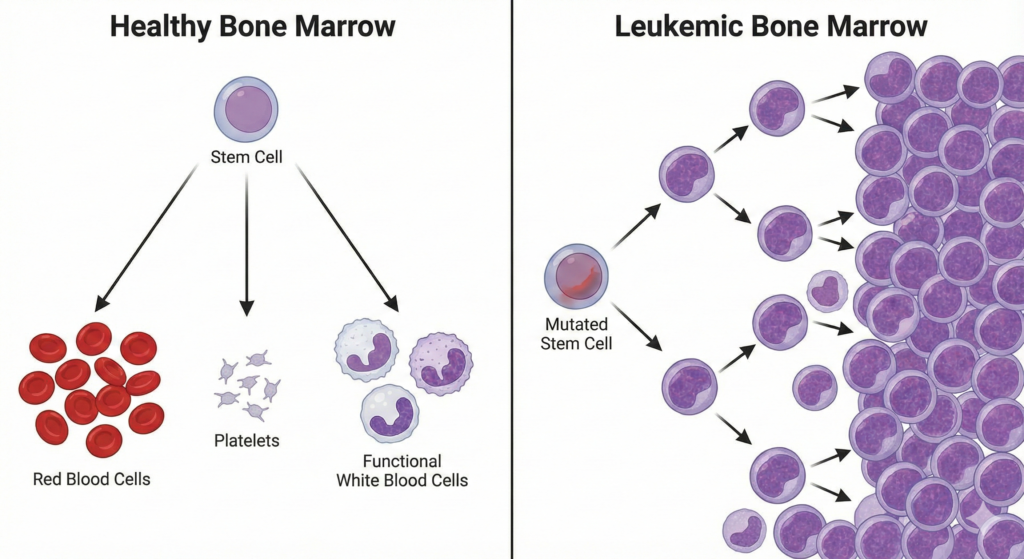
To understand leukemia, you first need to understand stem cells. These are undeveloped “infant” cells found inside our bone marrow that have the incredible potential to become different types of cells.
In a healthy body, blood stem cells differentiate into three vital types:
- Red Blood Cells: Carry oxygen to your body’s tissues.
- Platelets: Help your blood clot to stop bleeding.
- White Blood Cells: Your immune system’s soldiers that fight infections.
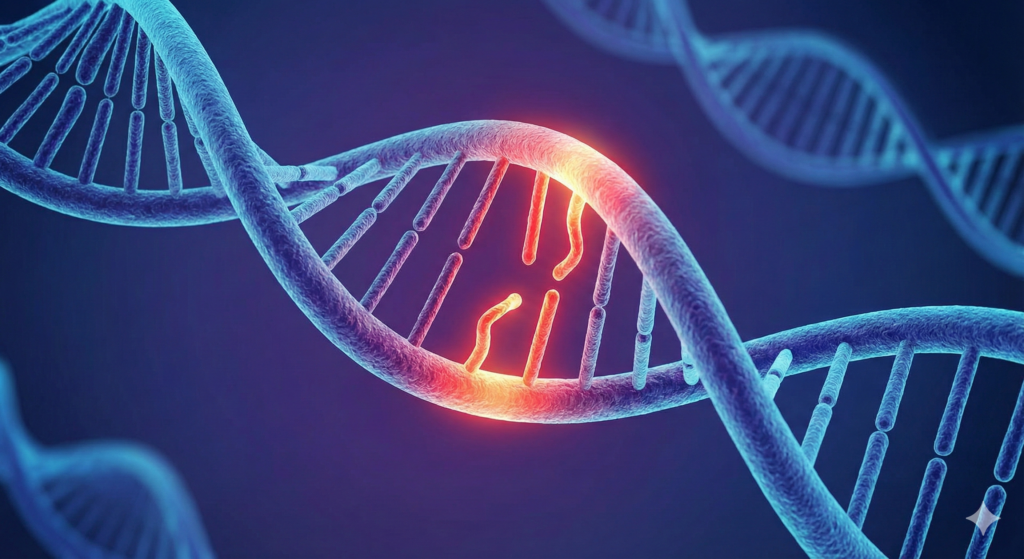
Leukemia begins when this process goes wrong. A harmful DNA mutation occurs in a stem cell. Instead of self-destructing as a damaged cell should, it begins to replicate uncontrollably, creating a swarm of abnormal, immature white blood cells.
Why Is Leukemia So Common in Children?
While most cancers require many mutations accumulated over a lifetime, leukemia is different. Scientists believe it can be caused by just one or two DNA modifications.
This allows the disease to develop much faster than other cancers. Some of these genetic alterations can even occur during fetal development, increasing the risk of leukemia at a very young age.
The Devastating Effect on the Body
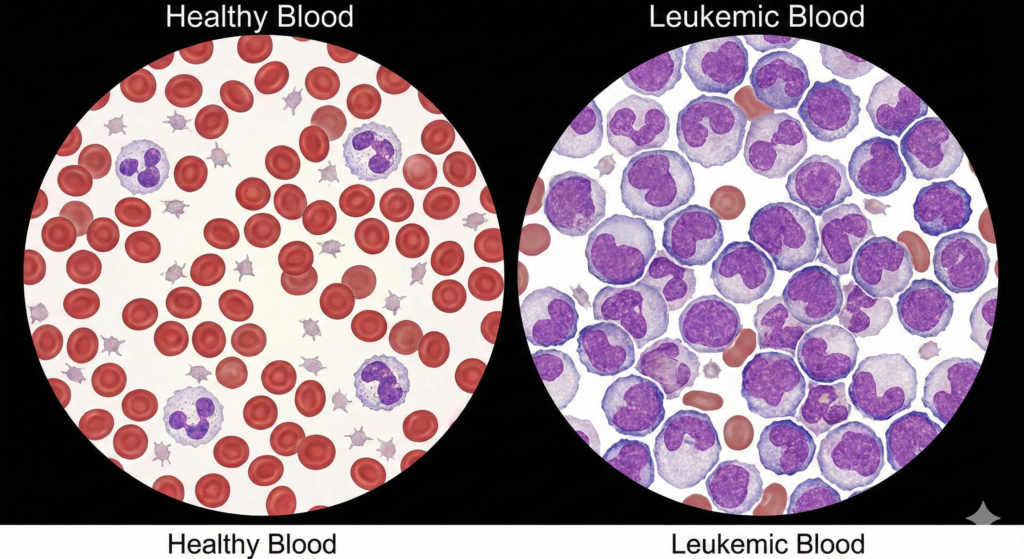
Once leukemia takes hold, the cancer cells don’t just sit idly. They reproduce rapidly, filling up the bone marrow and spilling into the bloodstream. They take up all the space and resources, preventing the body from producing healthy blood cells.
This leads to the three primary symptoms of leukemia:
- Anemia: From a lack of oxygen-carrying red blood cells.
- Excessive Bleeding & Bruising: From a shortage of platelet clotting cells.
- Frequent Infections: From a lack of functional white blood cells to fight off pathogens.
How Is Leukemia Treated?
Because leukemia is a cancer of the blood, it cannot be removed with surgery. Doctors must use systemic treatments like chemotherapy to kill the rapidly dividing cancer cells. However, chemotherapy is a powerful weapon that also harms healthy cells, including those in the bone marrow.
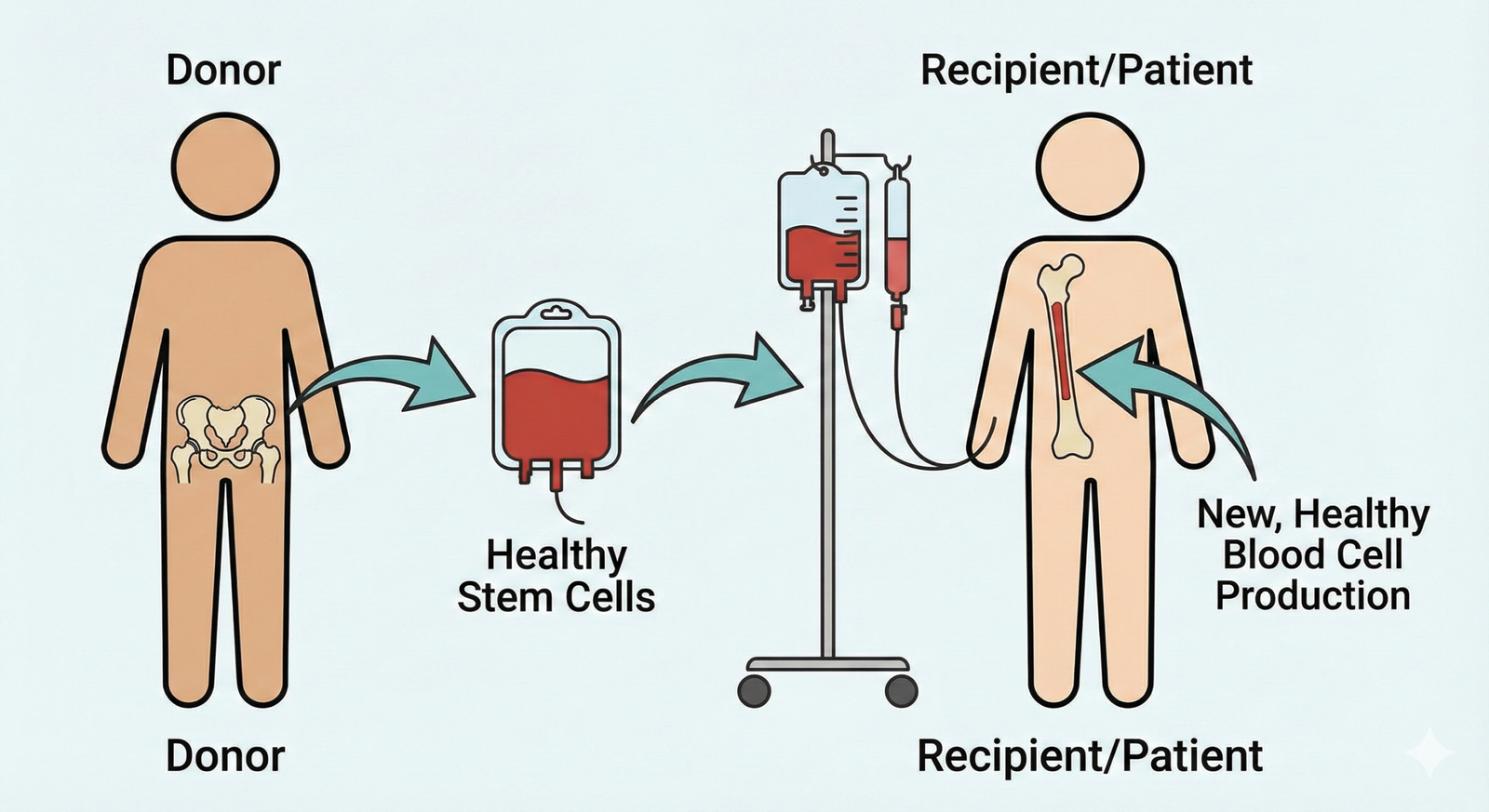
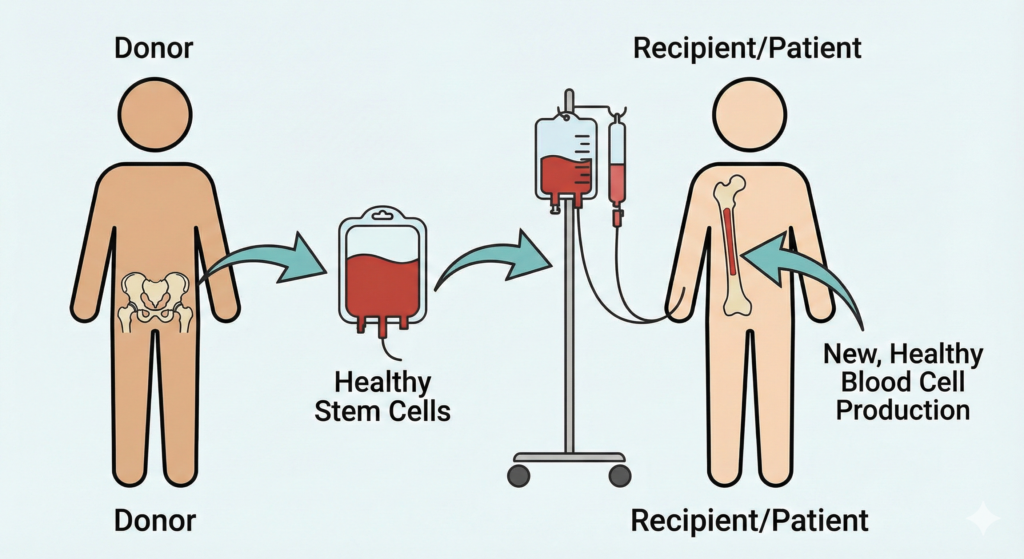
In severe cases, the patient’s bone marrow is destroyed and must be replaced with a bone marrow transplant. This procedure involves taking healthy stem cells from a matched donor and infusing them into the patient, where they can begin producing new, healthy blood cells.
Conclusion: Hope Through Science and Community
Leukemia is a frightening disease, but thanks to advances in medical science and the generosity of bone marrow donors worldwide, survival rates are improving. Finding a donor match can be difficult, which is why international donor registries are so critical.
By understanding the science behind the disease, we can better appreciate the treatments that save lives and the importance of supporting cancer research.












Leave a comment