


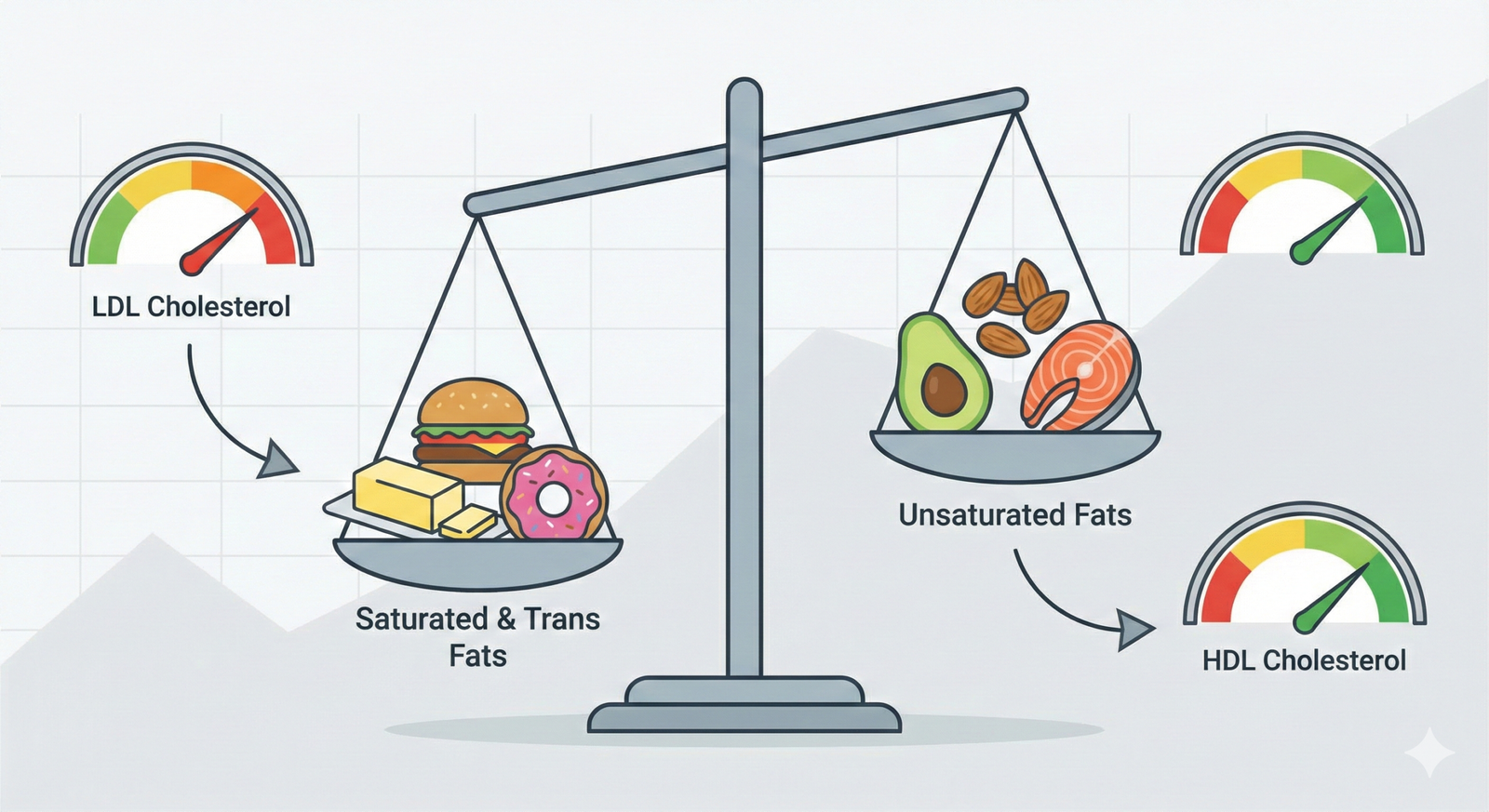
In 1968, the American Heart Association issued a warning that changed breakfast tables forever: limit your egg consumption to no more than three per week. The reasoning seemed sound: eggs are high in cholesterol, so eating them must raise your blood cholesterol and risk of heart disease.
But as it turns out, the reality of human digestion is far more complicated. Decades later, we now know that dietary cholesterol doesn’t translate directly to blood cholesterol for most people. So, if it’s not just the eggs, what actually causes high cholesterol?
🚛 The Science: It’s All About the Package (Lipoproteins)
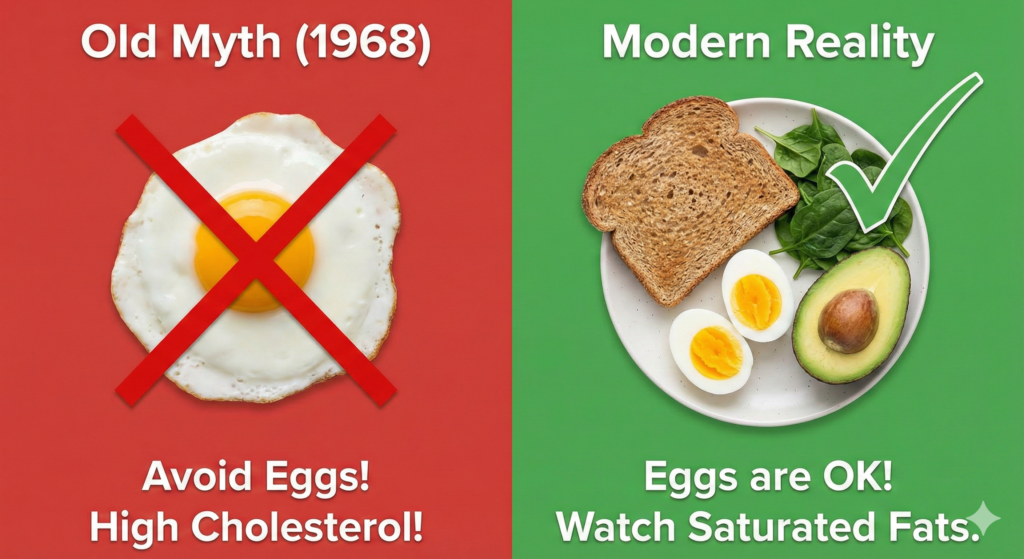
To understand cholesterol, you have to understand how fat moves through your body. Your liver packages fats into Lipoproteins—specialized vehicles designed to flow through your bloodstream.
There are three main types, forming a continuous cycle in your body:
- VLDL (Very Low-Density Lipoprotein): The initial package from the liver, full of fat for your body to use.
- LDL (Low-Density Lipoprotein): What VLDL becomes after dropping off its fat payload.
- HDL (High-Density Lipoprotein): The “cleanup crew” that returns excess cholesterol to the liver.
😈 The “Bad” Cholesterol: Why LDL is Dangerous
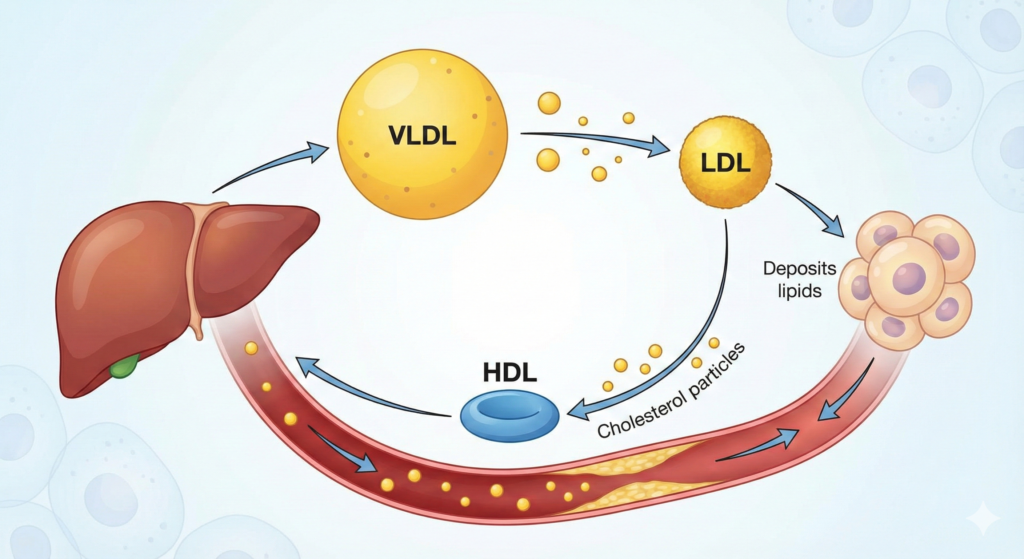
LDL is famously known as “bad cholesterol,” but why? The problem isn’t the cholesterol itself, but where it ends up.
LDL is prone to getting stuck on the walls of your blood vessels, causing inflammation. Your body sends white blood cells (macrophages) to “eat” the stuck LDL. If there’s too much, these cells get overstuffed, die, and clump together, forming a plaque that narrows your arteries.
🍔 The Real Culprits: Saturated vs. Unsaturated Fats
So, why was the 1968 egg advice wrong? Because the cholesterol you eat has a relatively small impact on your blood cholesterol. Your body produces most of it itself.
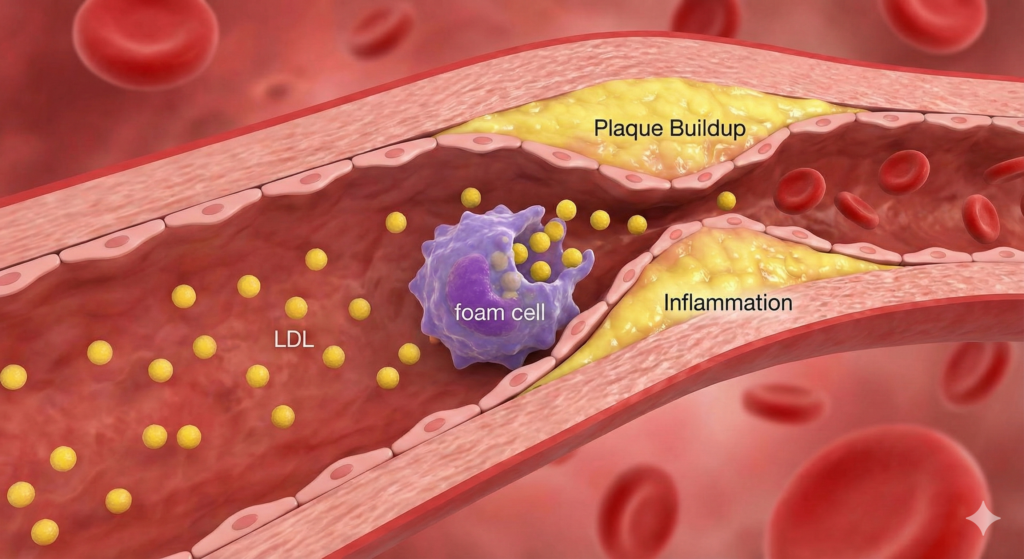
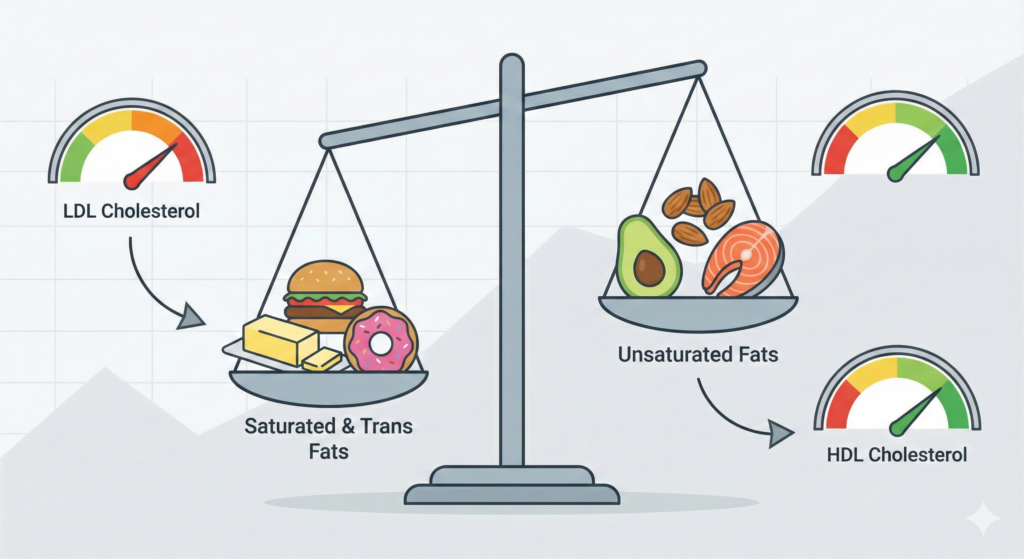
The real driver of high LDL levels is the type of fat you consume. It’s a balancing act:
- Saturated & Trans Fats (butter, processed foods) signal your liver to produce more LDL.
- Unsaturated Fats (avocado, nuts, fish) help lower LDL and fight inflammation.
Final Thought
Cholesterol isn’t inherently evil—it’s essential for your body’s function. The goal is to balance the “delivery trucks” (LDL) with the “cleanup crew” (HDL) through a healthy diet of unsaturated fats and fiber, regular exercise, and medical support when needed.












Leave a comment