


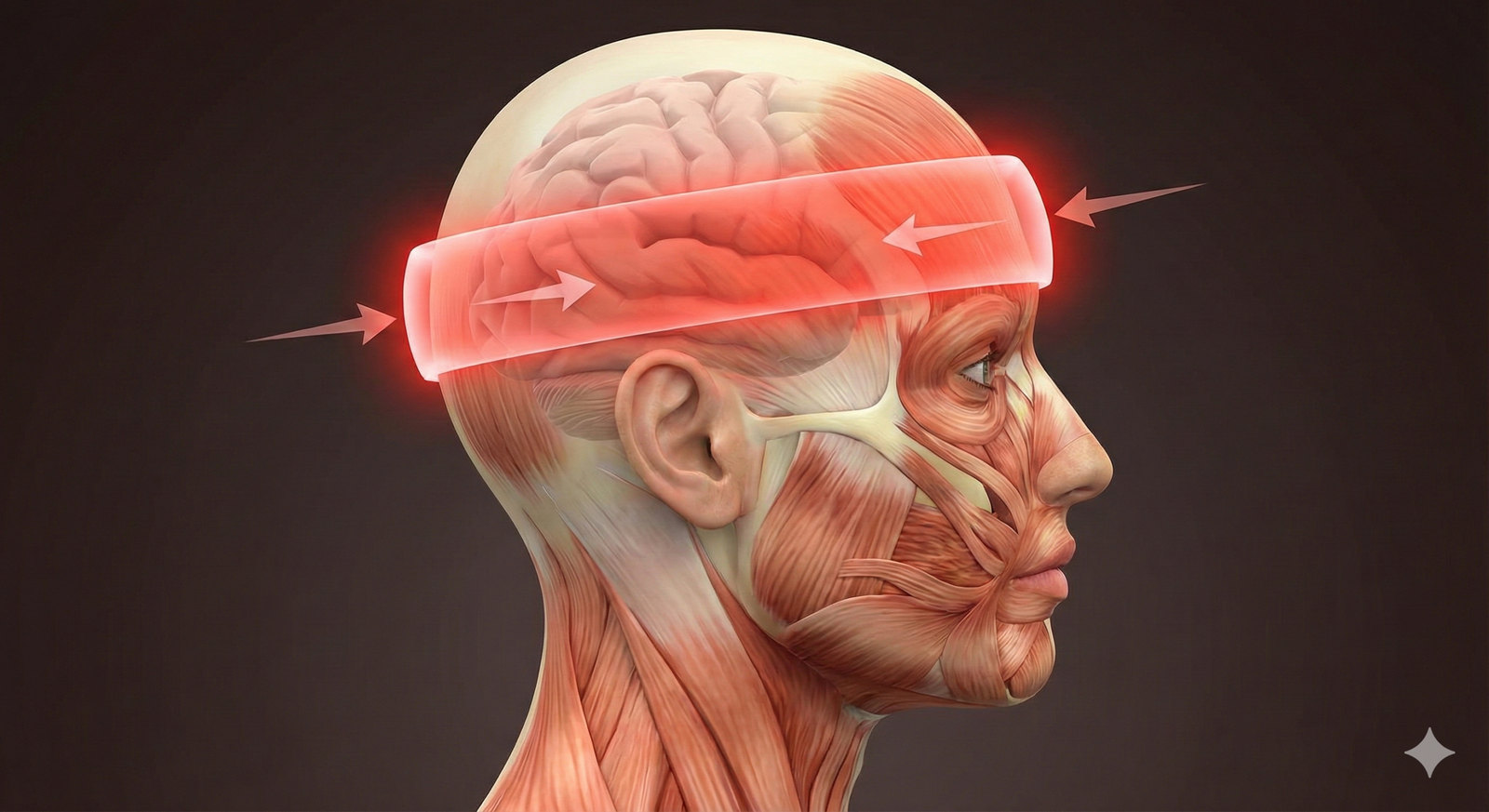
In ancient Greece, a headache was considered a powerful affliction from the gods. If praying didn’t work, doctors would resort to a terrifying remedy: Trepanation. This involved drilling a small hole into the patient’s skull to drain “infected blood.”
Thankfully, we’ve moved past power tools. But the biological cause of this ancient ailment remains one of medicine’s most complex mysteries. Today, scientists classify headaches into two distinct camps: Secondary and Primary.
Secondary Headaches: The “Warning Sign”
Secondary headaches are the ones we understand best. They aren’t the condition themselves; they are a symptom of an underlying health problem. Common triggers include dehydration, caffeine withdrawal, and head injuries.
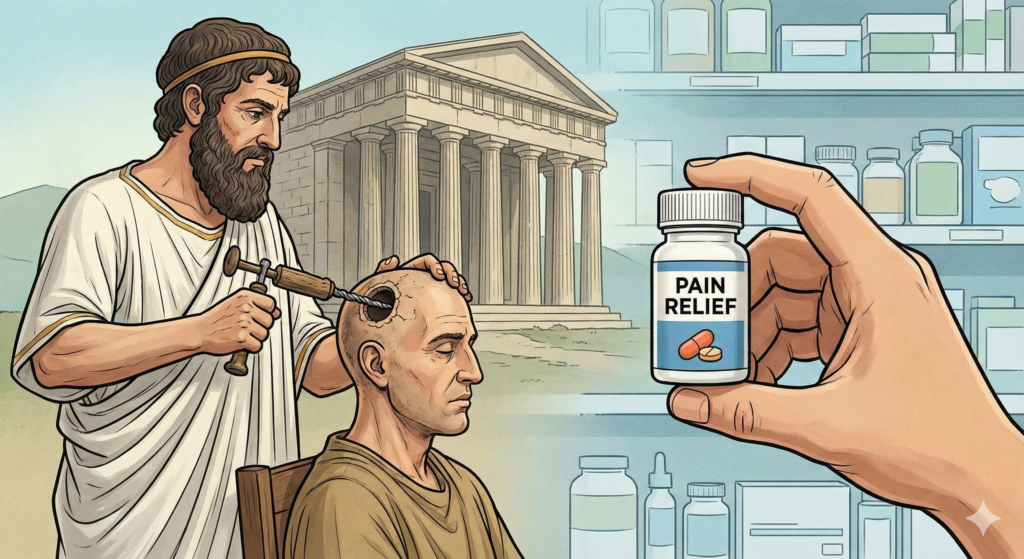
The Anatomy of a Sinus Headache
Take a sinus infection. When your sinuses get infected, your immune system heats up the area to roast the bacteria. This inflames the cavities, putting immense pressure on your cranial arteries and veins. Pain receptors called nociceptors trigger a flood of neuro-peptides, causing your blood vessels to swell. This swelling creates that familiar, throbbing pain.
Primary Headaches: The Mysterious Condition
While secondary headaches are just symptoms, for 50% of reported cases, the headache is the disease. These are called Primary Headaches, and their exact triggers remain a mystery.
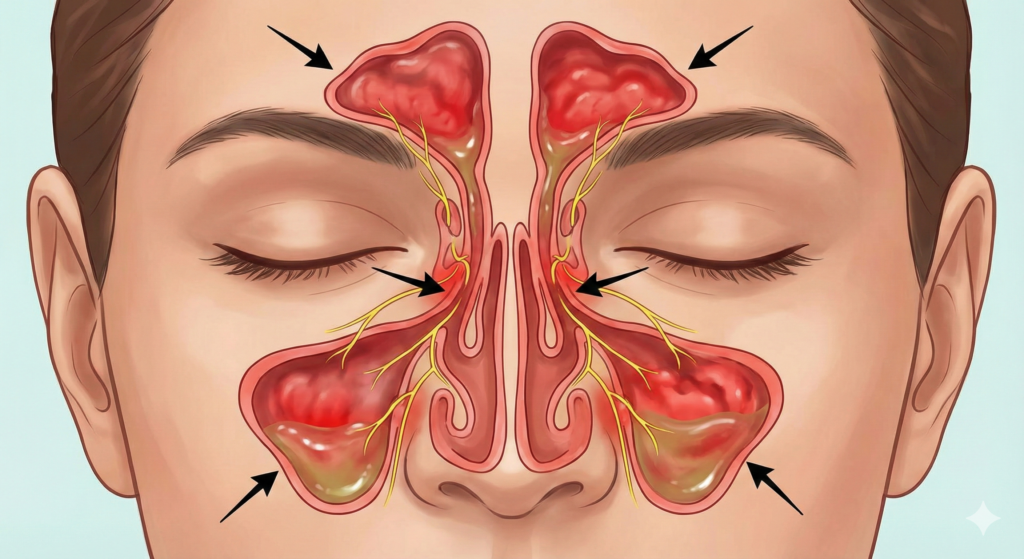
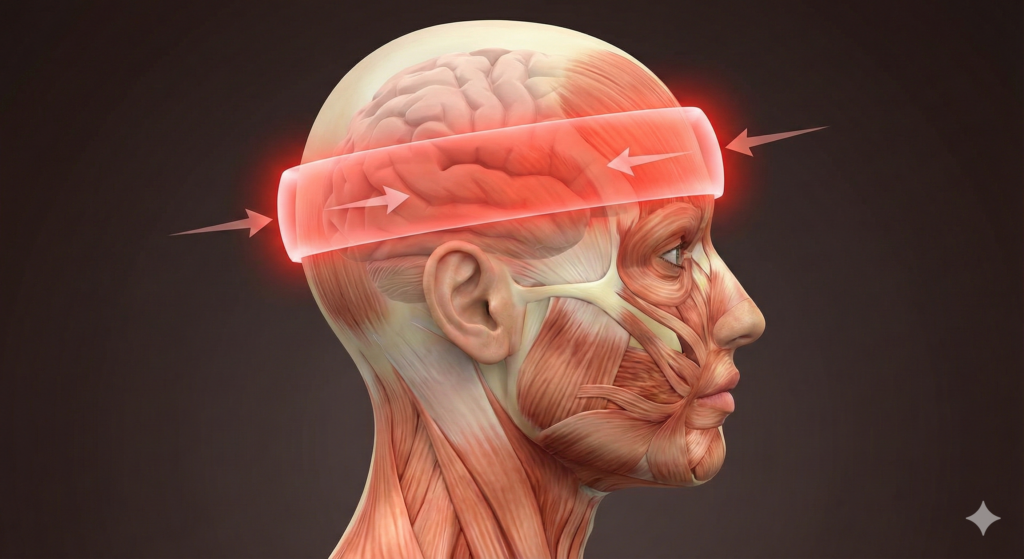
1. Tension Headaches (The Most Common)
Known for creating the sensation of a tight band squeezed around the head, tension headaches increase tenderness in the muscles around your skull, which then pulse painfully. While often blamed on stress, the exact biological cause is unknown.
2. Migraines (The Electrical Storm)
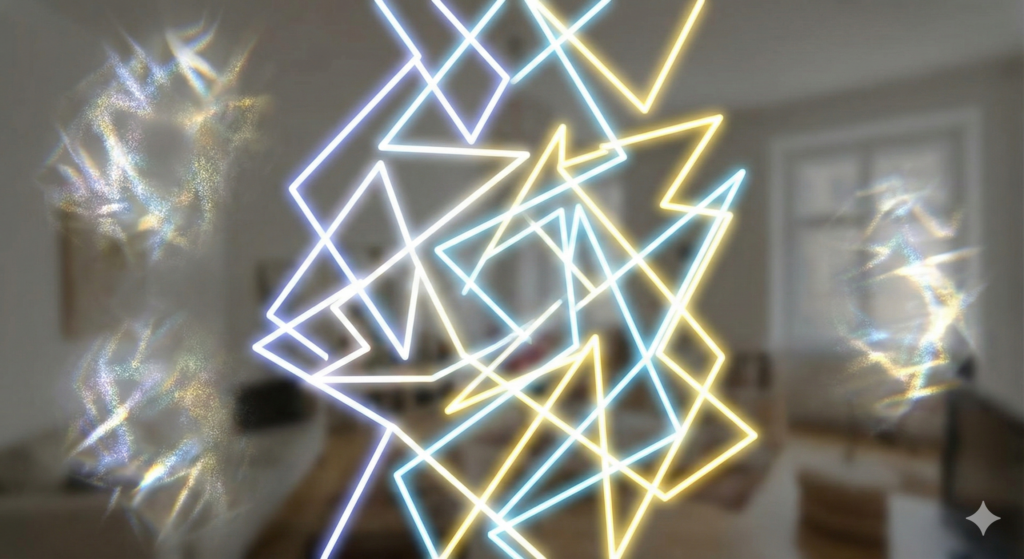
Migraines are recurring, vice-like attacks that can last from 4 hours to 3 days. In 20% of cases, they are intense enough to overload the brain with electrical energy, hyper-exciting sensory nerves and causing hallucinations known as auras—like flashing lights or geometric patterns.
3. Cluster Headaches (The Intense Burst)
These are short, intensely painful, stabbing bursts of pain, usually located behind one eye, leading to a red eye and a drooping eyelid.
Treatment: Can We Stop the Pain?
For tension and secondary headaches, over-the-counter anti-inflammatory drugs can reduce cranial swelling, and addressing triggers like dehydration helps. However, for migraines and cluster headaches, a reliable “cure-all” remains elusive as neurologists continue to work on cracking these complex biological mysteries.













Leave a comment