


Hearing the words “brain tumor” is terrifying, but it is crucial to understand that a brain tumor does not necessarily mean brain cancer.
According to the Stanford Center for Health Education, there are over 150 different types of brain tumors. Some are slow-growing and benign, while others are aggressive and malignant. Understanding the difference is the first step in navigation.
Whether you are researching for yourself or a loved one, here are the 11 essential things you need to know about brain cancer, symptoms, and treatment.
1. Tumor vs. Cancer: What’s the Difference?
The terms are often used interchangeably, but they mean different things.
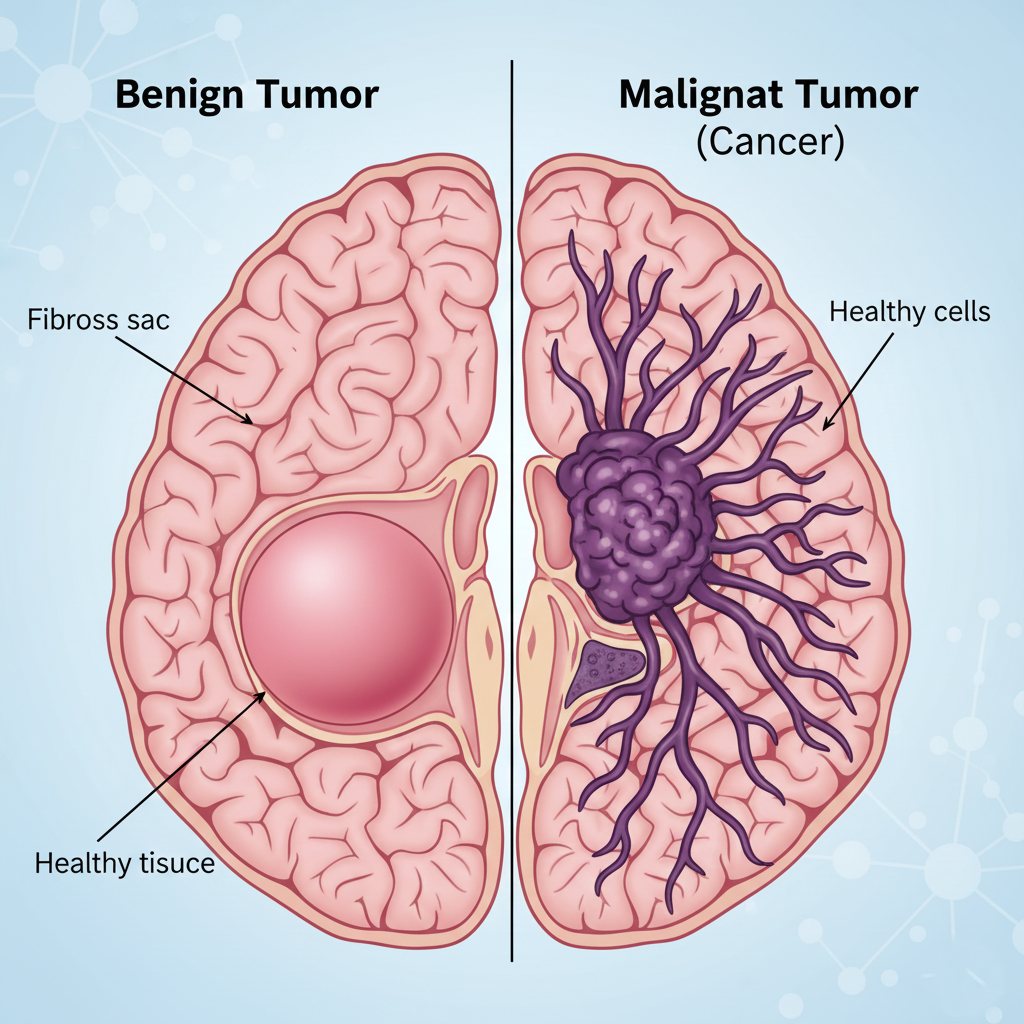
- Brain Tumor: A mass of tissue formed by abnormal cell growth.
- Brain Cancer: A malignant tumor that grows uncontrollably and spreads into nearby brain tissue.
Key Concept: You can have a “Benign” brain tumor. These do not contain cancer cells and do not spread to other parts of the body. However, they can still be dangerous if they press against sensitive areas of the brain.
2. Primary vs. Secondary Tumors
- Primary Brain Tumors: Start inside the brain.
- Secondary (Metastatic) Brain Tumors: Cancer that started elsewhere (like the lungs or breast) and traveled to the brain.
- Note: Secondary tumors are actually more common than primary ones, but this guide focuses on primary brain cancer.
3. How Common is It?
In the United States, approximately 25,000 people are diagnosed with primary brain or spinal cancer each year. While this sounds high, the lifetime risk of developing brain cancer is actually less than 1%.
4. The Warning Signs: Symptoms to Watch
Symptoms vary depending on where the tumor is located, but there are common red flags to watch for.
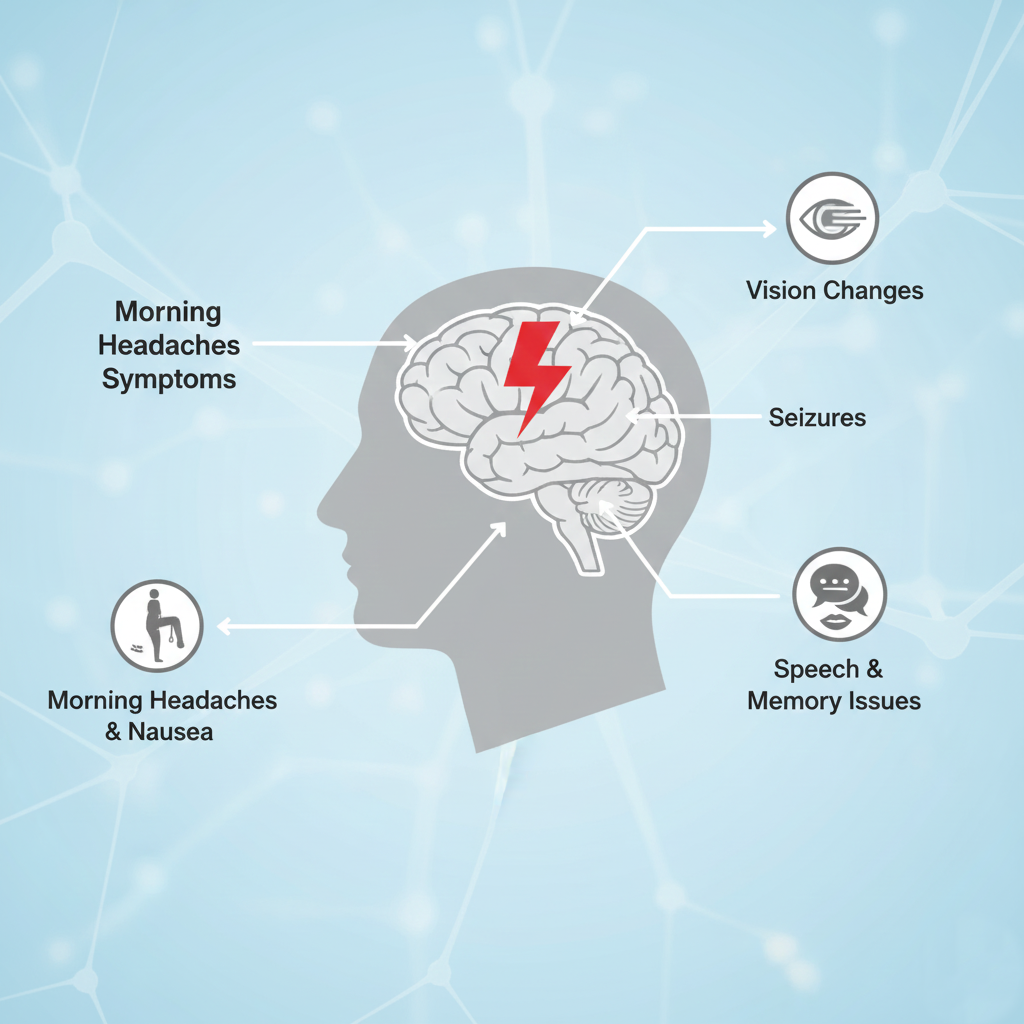
- Headaches: Specifically ones that are worse in the morning or wake you up at night.
- Seizures: Convulsions or sudden, uncontrolled movements.
- Neurological Changes: Weakness or paralysis on one side of the body.
- Cognitive Shifts: Sudden changes in vision, memory, or the ability to speak clearly.
5. Diagnosis: Seeing Inside the Skull
If symptoms are present, a doctor will use imaging to see what is happening.
- MRI & CT Scans: Create detailed images of the brain structure.
- PET Scan: Helps determine if the tissue is actively growing.
- Lumbar Puncture (Spinal Tap): Checks if cancer cells have spread to the cerebrospinal fluid.
6. The Biopsy and Grading System
Imaging can show a mass, but only a biopsy (removing a small piece of tissue) can confirm what it is. Pathologists examine the tissue under a microscope and assign a Grade (1 to 4).
- Grade 1: Slow-growing, least aggressive.
- Grade 4: Fast-growing, highly aggressive (Malignant).
7. Meningiomas (The “Common” Tumor)
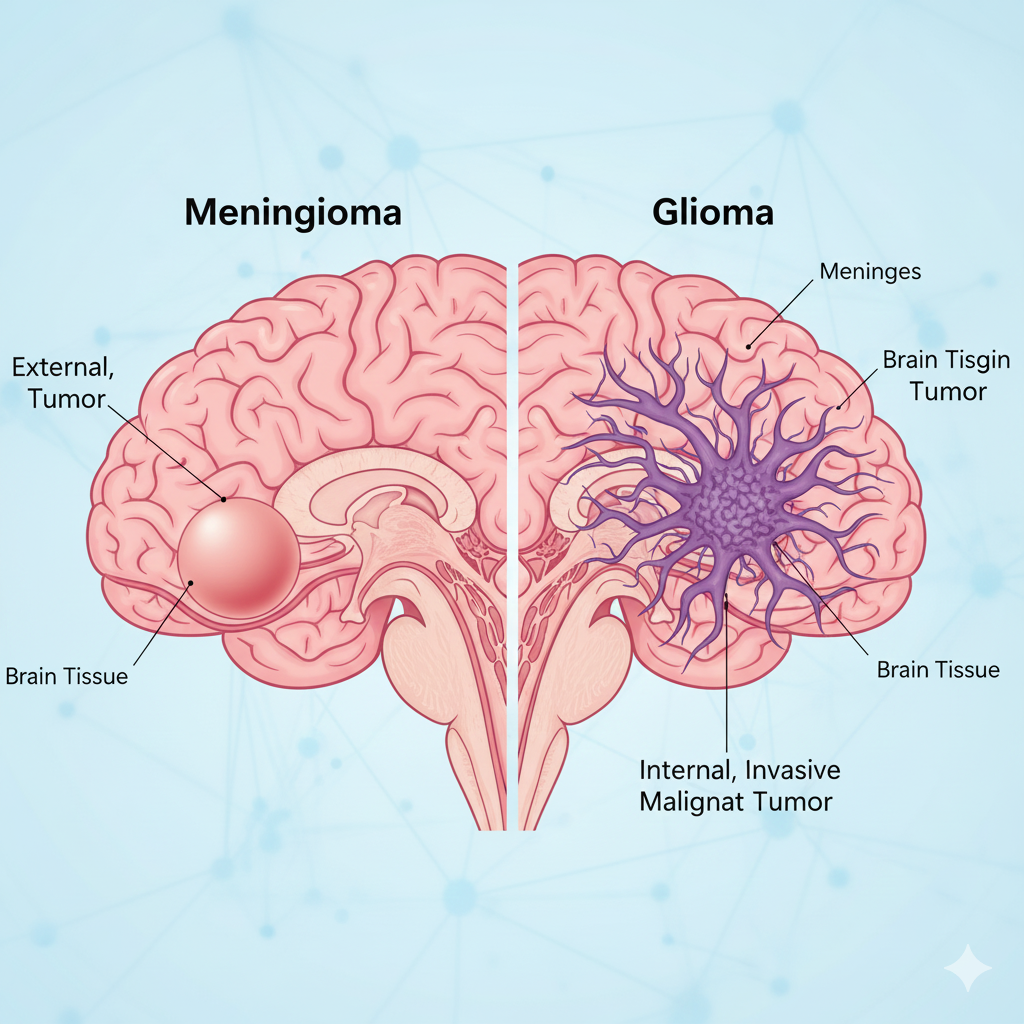
Meningiomas account for 30% of all brain tumors.
- Good News: They are usually benign (not cancer).
- Origin: They grow in the meninges, the protective layers covering the brain.
- Risk: Even though they aren’t cancer, they can grow and press on the brain, causing seizures or other symptoms. They are often removed surgically or monitored closely.
8. Gliomas (The “Brain Cell” Tumor)
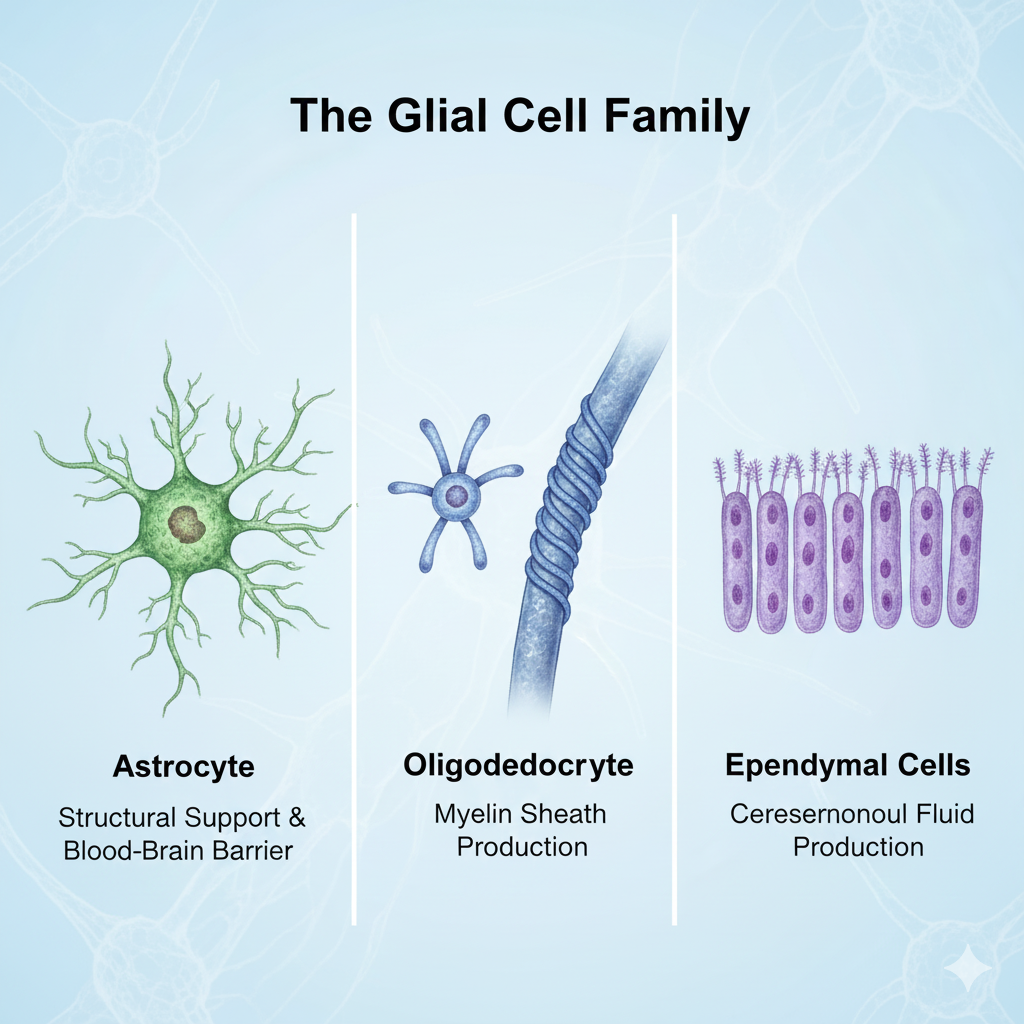
Gliomas account for 78% of malignant brain tumors. These start in the glial cells (the “glue” cells that support neurons). There are three main types based on the specific cell affected:
- Astrocytomas: Start in astrocytes.
- Oligodendrogliomas: Start in oligodendrocytes.
- Ependymomas: Start in ependymal cells.
9. Glioblastoma: The Aggressive Subtype
Within the family of Astrocytomas is a specific type called Glioblastoma. This is the most malignant and aggressive form of primary brain cancer. Tragically, it has a fatality rate of approximately 95% within five years. Conversely, other types like Oligodendrogliomas have a much higher 5-year survival rate (~75%).
10. Treatment Options
Treatment is highly personalized based on the tumor’s size, type, grade, and location, as well as the patient’s age.
- Watch and Wait: For low-grade, slow-growing tumors.
- Surgery: To remove as much of the tumor as possible.
- Radiation & Chemotherapy: To kill remaining cancer cells, especially for high-grade tumors.
- Clinical Trials: Access to new, experimental drugs and therapies.
11. Is Brain Cancer Genetic?
A common question is: “Did I inherit this?” Current research shows that most brain cancers are sporadic, meaning they happen by chance. Only about 5% of brain cancers are linked to hereditary genetic factors.











Leave a comment