



Nigeria has just sent a shockwave through the global aviation industry. In a move that redefines West Africa’s role in the global economy, the Federal Government has sealed a landmark partnership with US aerospace giant Boeing to establish one of Africa’s most advanced Maintenance, Repair, and Overhaul (MRO) facilities.
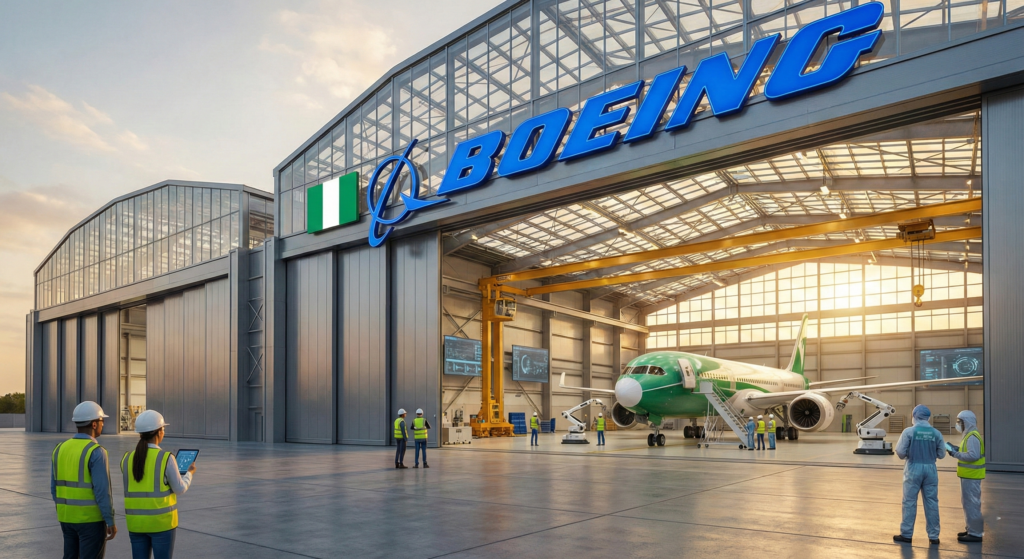
This isn’t just an infrastructure project; it is a declaration of independence from foreign maintenance hubs. Here is the full breakdown of why this deal is being called a “mind-blowing” strategic masterstroke.
1. The $200 Million Problem: Stopping the Bleeding
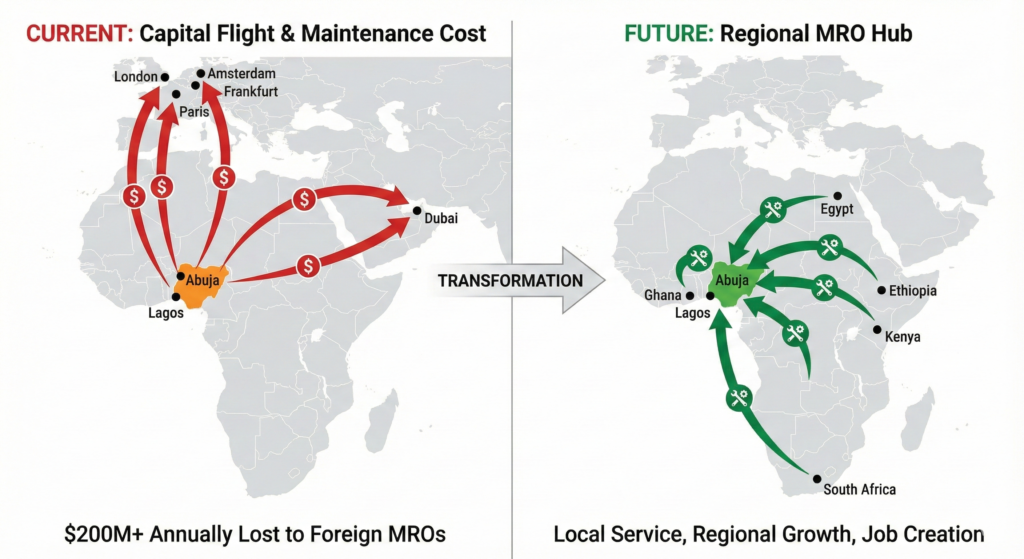
For decades, Nigerian aviation has suffered from a massive “Capital Flight” problem. Every year, Nigerian airlines are forced to spend a staggering $200 million flying their aircraft to Europe, the Middle East, or Asia for mandatory maintenance.
This dependence drains the local economy, weakens the Naira, and keeps local airlines at the mercy of foreign queues and pricing.
The Solution: By building world-class MRO facilities domestically—specifically in Lagos and Abuja—Nigeria stops this financial bleeding instantly. Airlines can repair planes at home, saving millions in ferry costs and downtime.
2. The Strategic Partners: Boeing & Cranfield University
The deal, confirmed by Secretary to the Government George Akume, involves a powerhouse consortium:
- Boeing: The global aircraft manufacturer.
- Cranfield University (UK): An elite academic institution for aerospace engineering.
- Local Operators: Aero Contractors and XCJet.
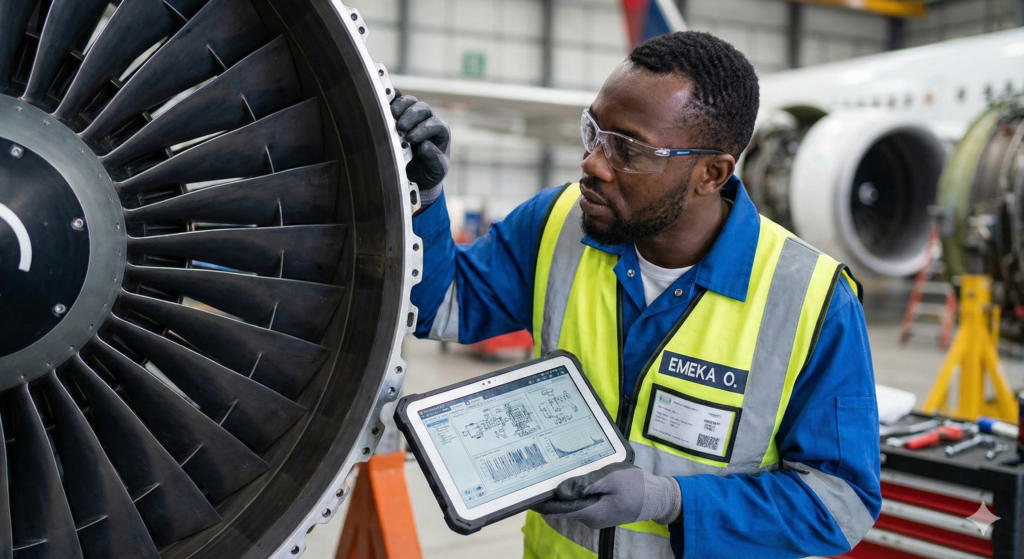
This collaboration ensures that the facility isn’t just a building, but a center for knowledge transfer. The inclusion of Cranfield University signals a focus on training highly skilled Nigerian engineers, creating a new generation of aviation experts.
3. Why Boeing Chose Nigeria
Why would Boeing, a US titan, invest so heavily in West Africa now? The answer lies in “Future-Proofing.”
- Market Dominance: Over 60 African airlines currently operate about 500 Boeing aircraft.
- Future Growth: Projections show Africa will require more than 1,100 new airplanes over the next 20 years.
By embedding itself in Nigeria—the continent’s most populous nation—Boeing secures long-term influence and a central hub to service this growing fleet. It is a strategic play to lock down the African market against competitors like Airbus.
4. A Renaissance for West African Aviation
This deal is timed perfectly with a predicted surge in passenger traffic, expected to grow from 15.9 million (2023) to 25.7 million by 2029.
With new bilateral routes opening (like the Air Peace Lagos-London service) and airports undergoing overhauls, Nigeria is positioning itself as the aviation power center for West and Central Africa.
“Nigeria has essentially declared that the era of dependence on foreign maintenance hubs is coming to an end.”
A Statement to the World
The silence regarding the exact cost of the project remains a mystery, likely due to ongoing negotiations. However, the intent is clear. This is more than an aviation project; it is a geopolitical statement that Africa is ready to build infrastructure that matches global standards.
What do you think? Will this facility finally make Nigerian airlines profitable? Let us know in the comments!
Watch the full report here















Leave a comment