



In a world obsessed with instant gratification and “hustle culture,” the traditional path to career success seems blurred for many young people. In a revealing discussion on The Diary Of A CEO with Steven Bartlett, renowned author and optimist Simon Sinek offers some challenging, yet essential, career advice specifically aimed at Generation Z and young millennials entering the workforce.
Sinek, known for his concepts of “Start With Why” and “The Infinite Game,” dives deep into the disconnect between the expectations of young professionals and the reality of building a meaningful career.
Here is a breakdown of the vital lessons from their conversation.
The Trap of the “Finite Game” Mindset
One of the central themes Sinek addresses is the mistake of treating a career like a sports match—a “finite game” with fixed rules, a clear beginning, and a definitive end where you either win or lose.
Many young people enter the workforce focused on short-term metrics: getting the promotion in six months, securing a specific title, or hitting a salary goal immediately. When these things don’t happen on their expedited timeline, they feel they are “losing” and often quit to find instant gratification elsewhere.
Sinek argues that a career is an “Infinite Game.” There is no “winning” business or life. The goal isn’t to beat the competition today, but to stay in the game for the long haul by constantly improving, learning, and adapting. Shifting from a finite to an infinite mindset is crucial for long-term fulfillment.

The “Human Skills” Gap
Sinek takes issue with the term “soft skills” (like effective communication, listening, empathy, and conflict resolution), arguing that they are actually “human skills”—and they are the hardest skills to master.
He observes that many in Gen Z are incredibly adept at technical tasks but struggle severely with interpersonal dynamics. When faced with an uncomfortable conversation with a boss or a conflict with a colleague, the tendency is often to avoid it entirely or simply quit the job (sometimes by “ghosting” the employer).
The advice is clear: You cannot build a successful career without mastering the ability to navigate difficult human relationships. These skills are not innate; they must be practiced, often painfully.
Patience and the Iceberg Illusion
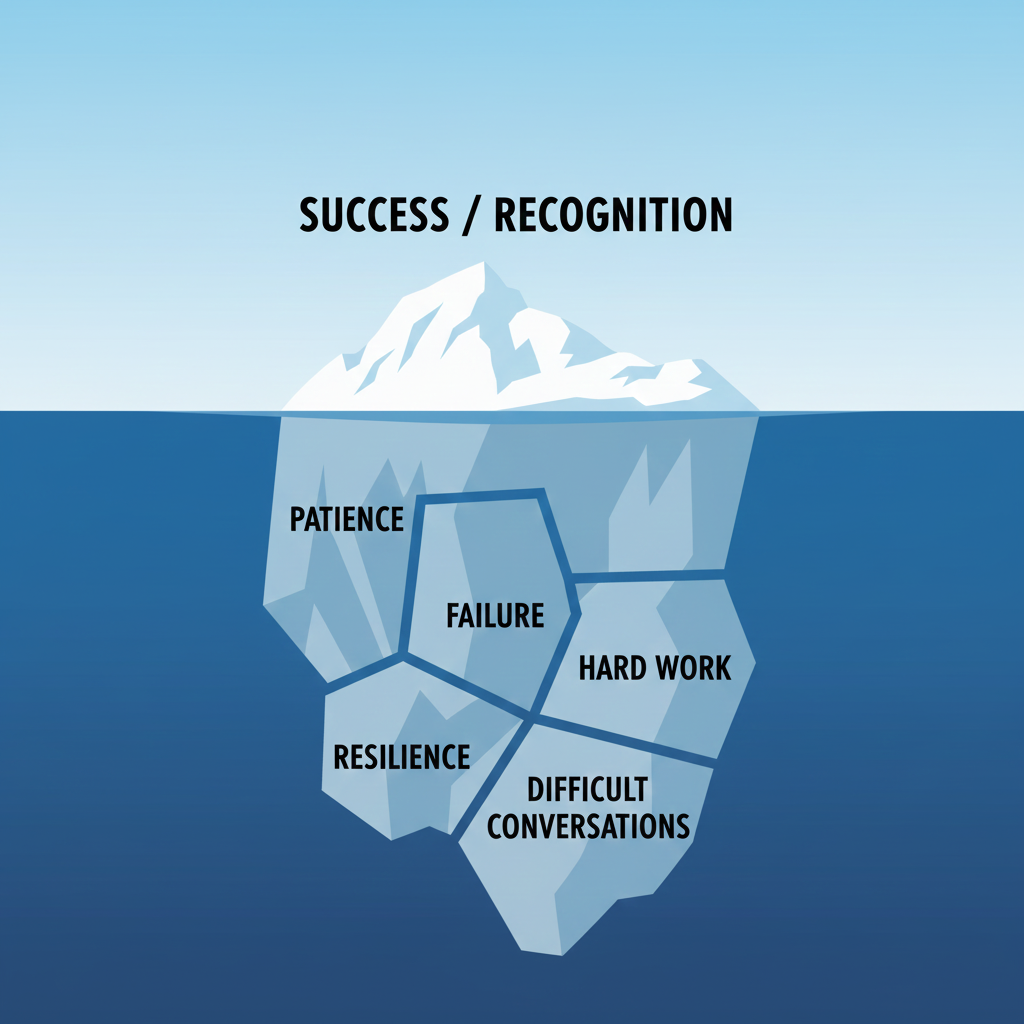
Perhaps the hardest pill to swallow for a generation raised on on-demand everything is the necessity of patience. Sinek uses the powerful metaphor of the iceberg to describe success.
When young people look at successful leaders, they only see the tip of the iceberg above the water—the money, the fame, the recognition. They don’t see the massive structure underneath the water that supports it: the years of failure, the late nights, the rejection, the grit, and the resilience.
Gen Z, Sinek argues, wants the tip of the iceberg without building the foundation underneath. True career success is slow, messy, and requires a tolerance for delayed gratification.
Embracing the Journey
Simon Sinek’s advice to Gen Z is not meant to be discouraging, but rather a reality check aimed at fostering genuine, lasting success. By shifting from finite goals to an infinite purpose, prioritizing difficult “human skills,” and accepting that the journey is long, young professionals can build careers that are not just successful on paper, but deeply fulfilling in reality.
It is a call to stop looking for the quickest route to the top and start building the foundation necessary to stay there.













Leave a comment