


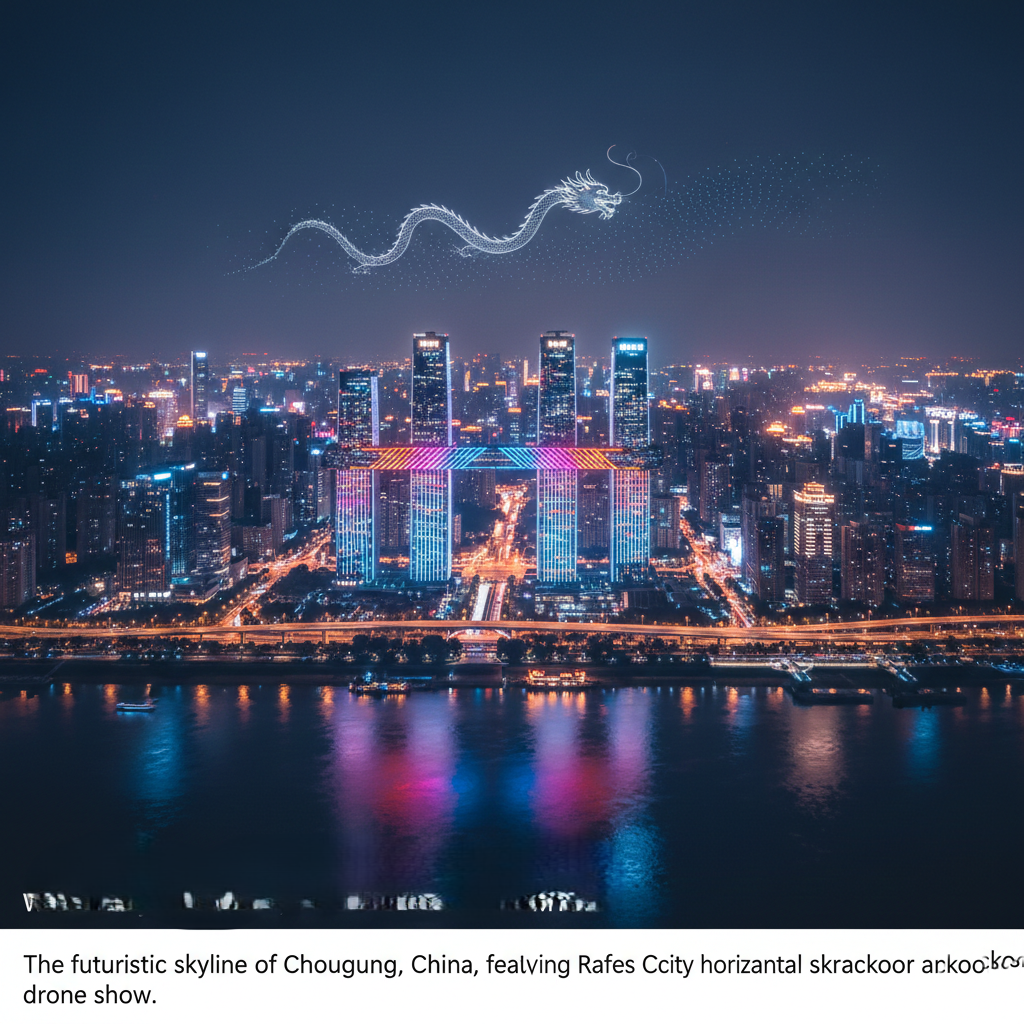
Chongqing: The Vertical Mega-City
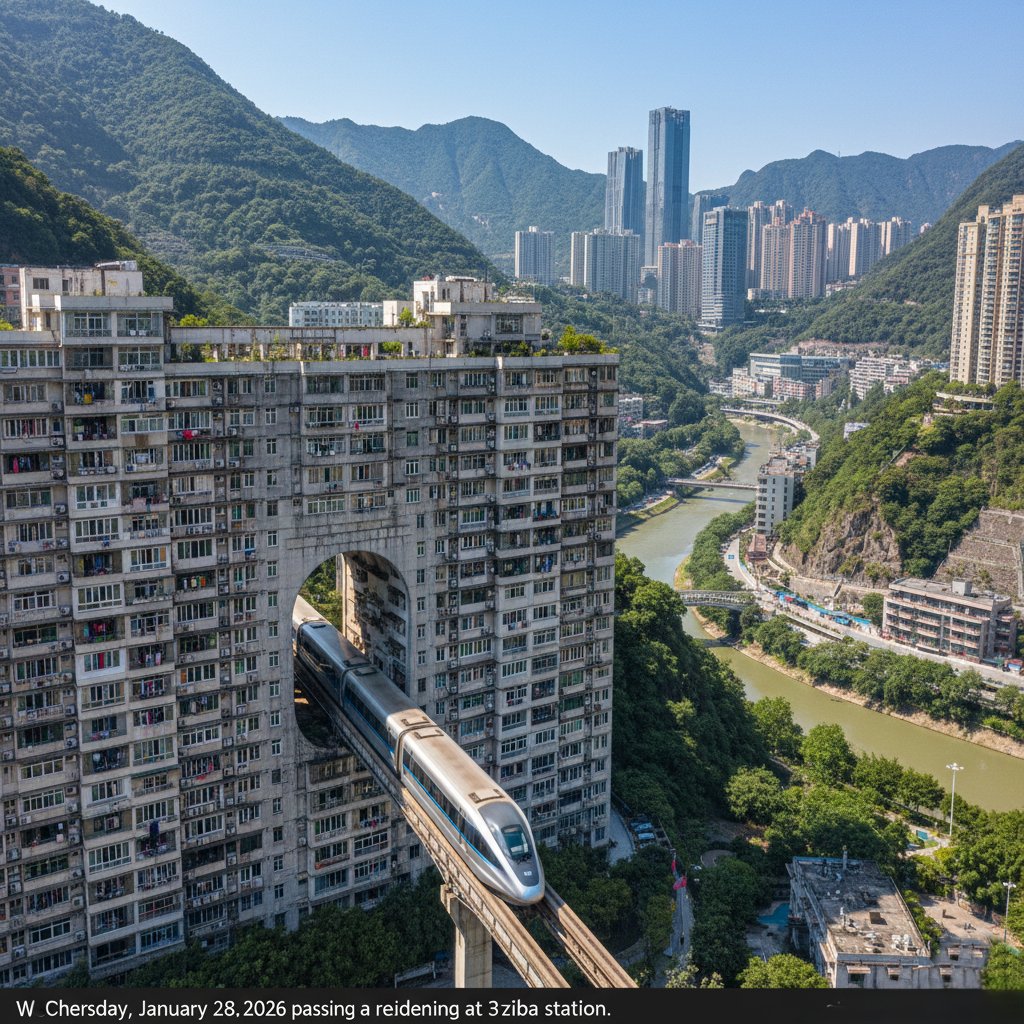
Chongqing is often described as a real-life “cyberpunk” city. Built on rugged, mountainous terrain, the city’s infrastructure weaves together multi-level tunnels, elevated highways, and bridges that seem to defy logic. One of the most famous examples of its ingenious urban planning is the Liziba Station, where the metro line runs directly through a 19-story residential building.
Beyond transportation, Chongqing has become a global hub for robotics. The city is home to advanced research centers producing bipedal humanoid robots. These machines, equipped with sophisticated sensors and AI, are being designed to integrate into daily life—from working in factories to providing empathetic care for the elderly.
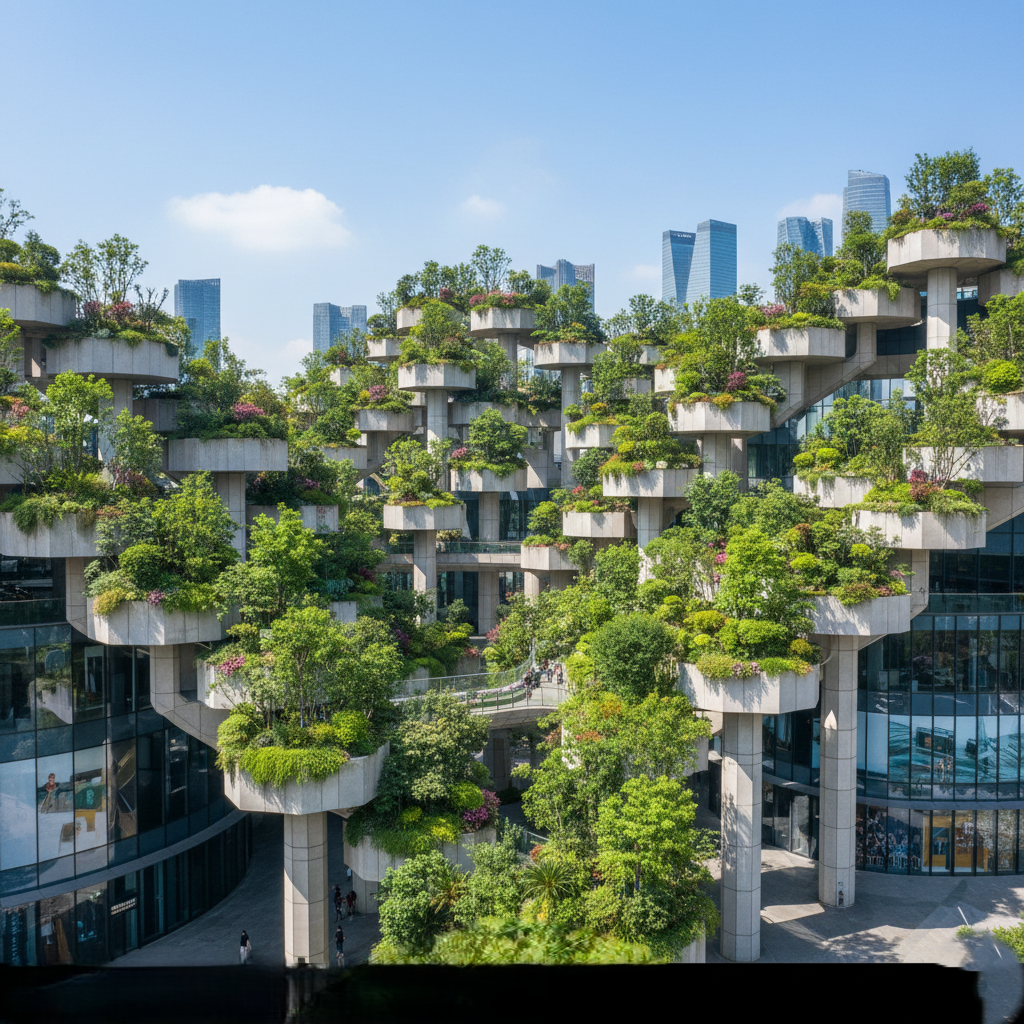
Sustainable Urbanism: The Hanging Gardens
In Shanghai, the “1,000 Trees” project, nicknamed the Hanging Gardens of Shanghai, represents a shift toward architecture that lives in harmony with nature. This “urban mountain” is covered in thousands of plants and hundreds of trees, carefully selected to bloom in different seasons. This design not only creates a stunning visual landscape but also helps regulate the building’s temperature and improves local air quality.
Similarly, the Chengdu SKP Park takes a radical approach to commercial design by moving nearly all its retail space underground. The surface is transformed into a sprawling public park, gifting the city green space while keeping the commerce hidden beneath futuristic “Towers of Vitality” and moving water jets.
Engineering the Impossible: The Gupitan Shiplift
One of the most remarkable feats of water engineering is the Gupitan Shiplift on the Wu River. Designed to navigate extreme elevation changes in mountainous areas, this massive lift allows cargo and passenger ships to cross a vertical gap by entering a water-filled chamber that rises or descends like a giant elevator. This project has effectively reconnected regions that were once isolated by the river’s steep terrain.
Connecting the Inaccessible: Bridges and Railways
China’s commitment to connectivity is best seen in its record-breaking bridges and railways.
- The Danyang-Kunshan Grand Bridge: The longest bridge on Earth, stretching 103 miles, allows high-speed trains to glide over rivers and fields at an unprecedented scale.
- The Duge Bridge: This bridge sits higher above the ground than the Eiffel Tower, spanning a massive canyon to slash travel times in the remote mountains.
- Qinghai-Tibet Railway: The highest railway in the world, reaching 16,400 feet. The train cars are pressurized and equipped with supplemental oxygen, allowing travelers to cross inhospitable landscapes that were previously only accessible by air or rugged roads.

The Digital Sky: Drone Shows and Supercomputing
Traditional fireworks are increasingly being replaced by massive, synchronized drone shows in cities like Shanghai and Shenzhen. Thousands of illuminated drones fly in complex formations, managed by a single central computer that transforms 3D animations into flight paths.
Powering these innovations are facilities like the Chengdu Supercomputing Center. Housed in a striking iridescent cube, the center performs a quadrillion calculations per second, serving as the backbone for China’s advancements in artificial intelligence and deep-space exploration through the FAST radio telescope—the largest and most sensitive in the world.















Leave a comment