


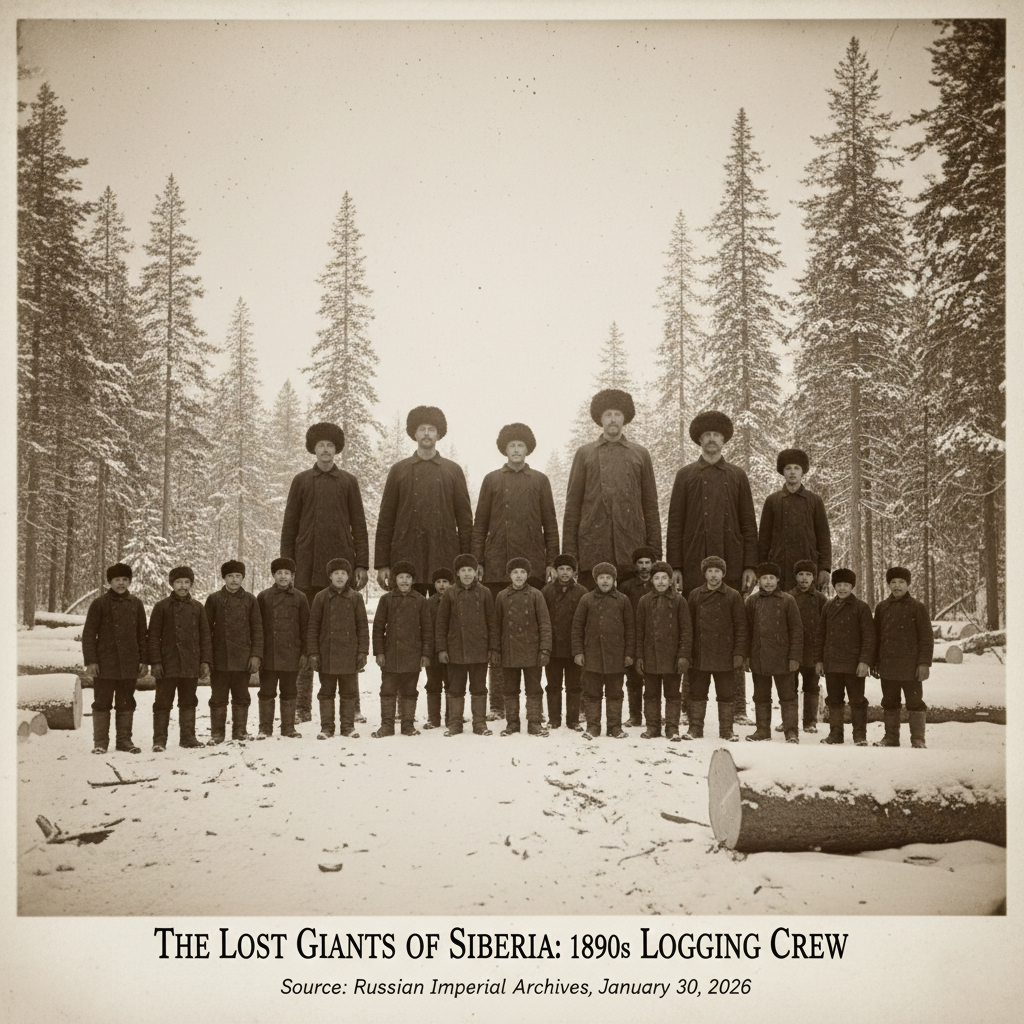
The Giants They Erased From History: The Lumberjacks of Siberia
History is often compiled into neat tables of production quotas and labor statistics, but occasionally, a discovery is made that refuses to fit into a standard spreadsheet. While researching pre-Soviet labor practices in Russia, an investigation into Siberian logging operations revealed something far more profound than industrial extraction: actual photographic evidence of giants.
These aren’t folklore illustrations or exaggerated tales from campfires. They are glass-plate negatives and gelatin silver prints from the 1880s through the early 1900s, showing work crews in the frozen Siberian landscape where certain individuals stand at impossible scales—reaching heights of 9, 10, and even 11 feet.
The Photographic Evidence
The deeper one digs into the Russian Imperial archives, the French National Library, and Swedish logging records, the more these images emerge. These are not isolated medical anomalies documented for scientific curiosity; they are workplace photographs. In many frames, you see three or four giants among a crew of 20 normal-sized men.
The most devastating aspect of these photographs is their mundane nature. They aren’t circus posters or pathological documentations. The giants are simply there—part of the crew, dressed in the same fur hats and heavy boots as their colleagues, and performing the same grueling labor. They appear so unremarkable to the photographers of the time that their presence often goes unmentioned in the captions.

Tools of Impossible Scale
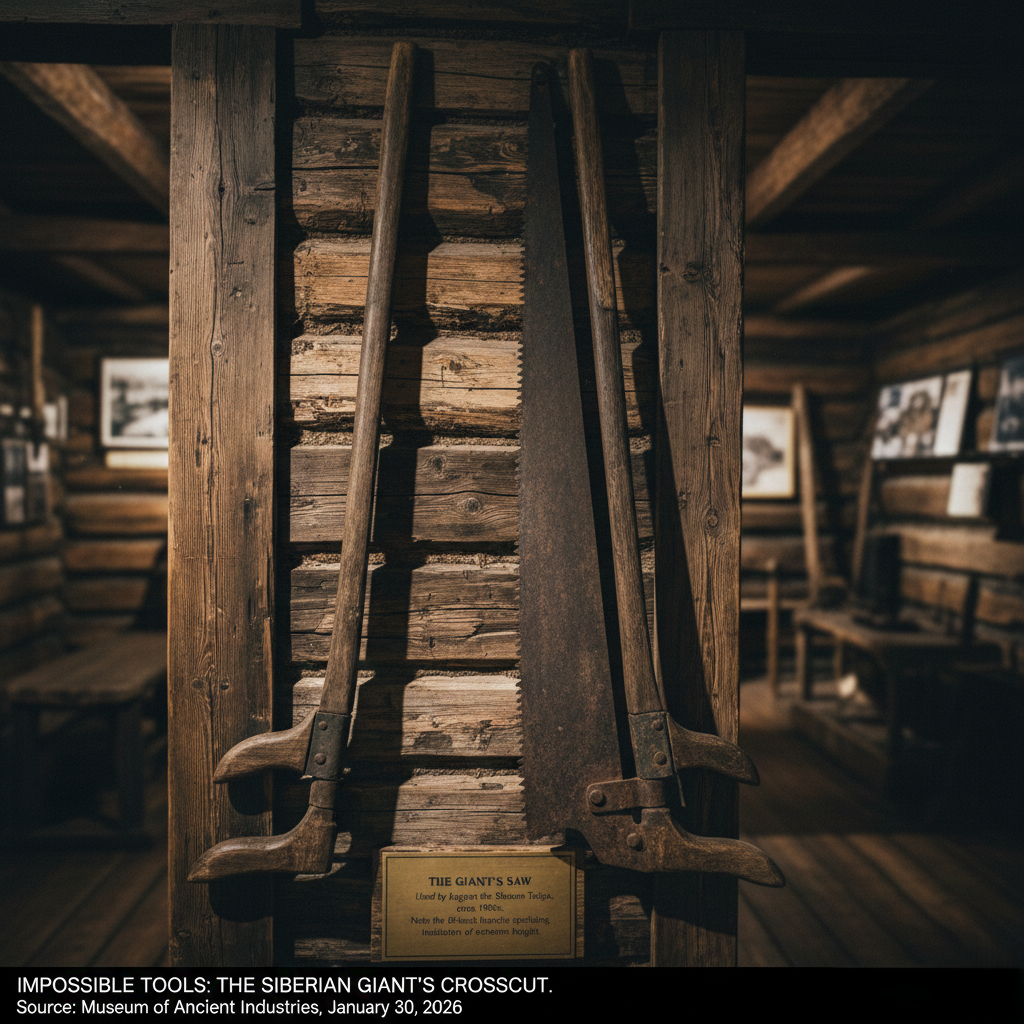
Beyond the visual evidence, the physical tools recovered from these regions tell a story of their own. Antique two-man crosscut saws found in rural Russian salvage yards often measure between 12 and 16 feet in length. While historians claim these were for “exceptionally large timber,” the ergonomics suggest otherwise.
The handle grips on these tools are spaced 40 to 50 inches apart. For a standard human, operating such a saw would require a full arm extension that eliminates all mechanical advantage. However, for a 9-foot-tall operator with proportional arm length, the tool becomes perfectly ergonomic. Similar anomalies appear in axes with 7-foot handles and splitting mauls weighing 80 pounds—tools that show clear wear patterns from functional use, yet remain unmanageable for a normal-sized man.
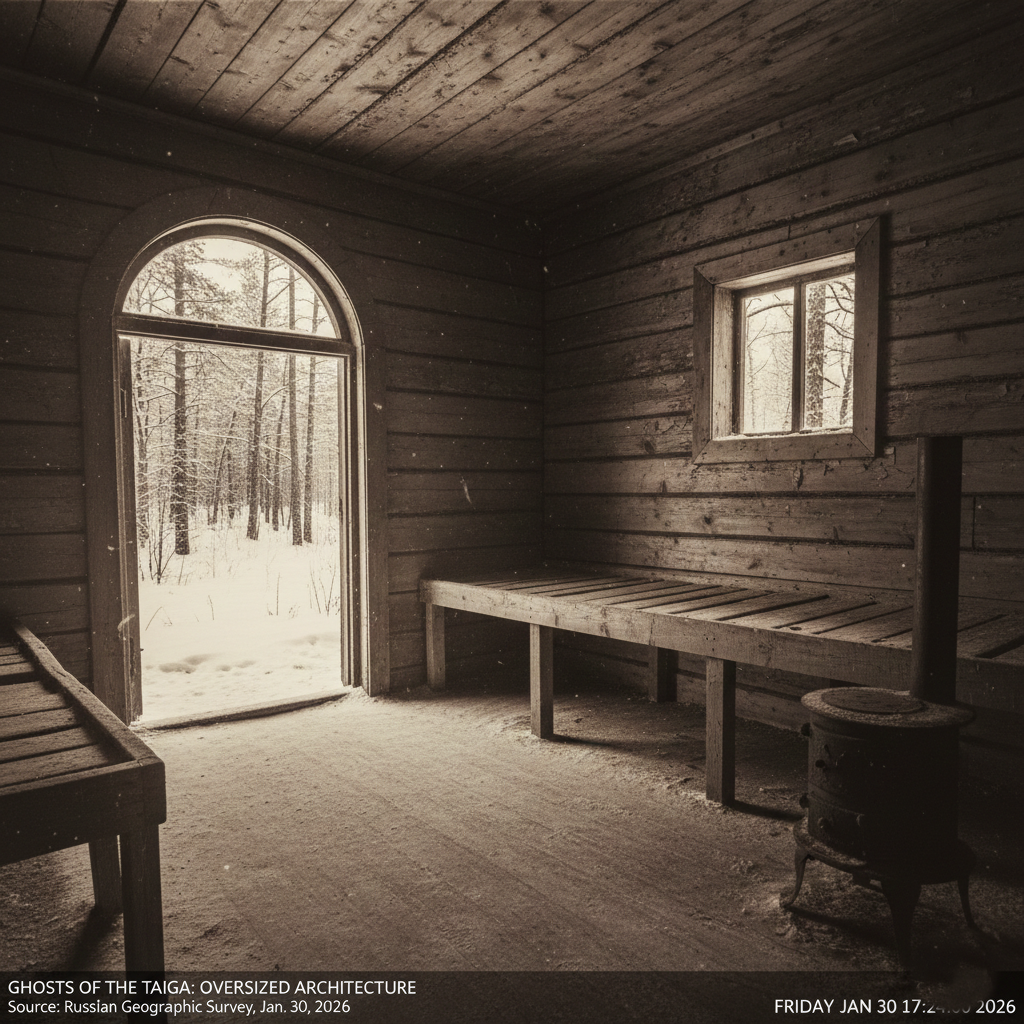
Architecture of the Taiga
The architecture of abandoned logging camps throughout the Siberian Taiga further mirrors these patterns. Bunkhouse doorways frequently stand 10 to 12 feet high, and sleeping platforms are built at heights that would leave a normal man’s feet dangling.
Why would crews building temporary shelters in brutal conditions waste precious lumber and labor to construct everything larger than necessary? The logical conclusion is that it wasn’t larger than necessary for the people actually using the space.
The Official Record and the Abrupt Silence
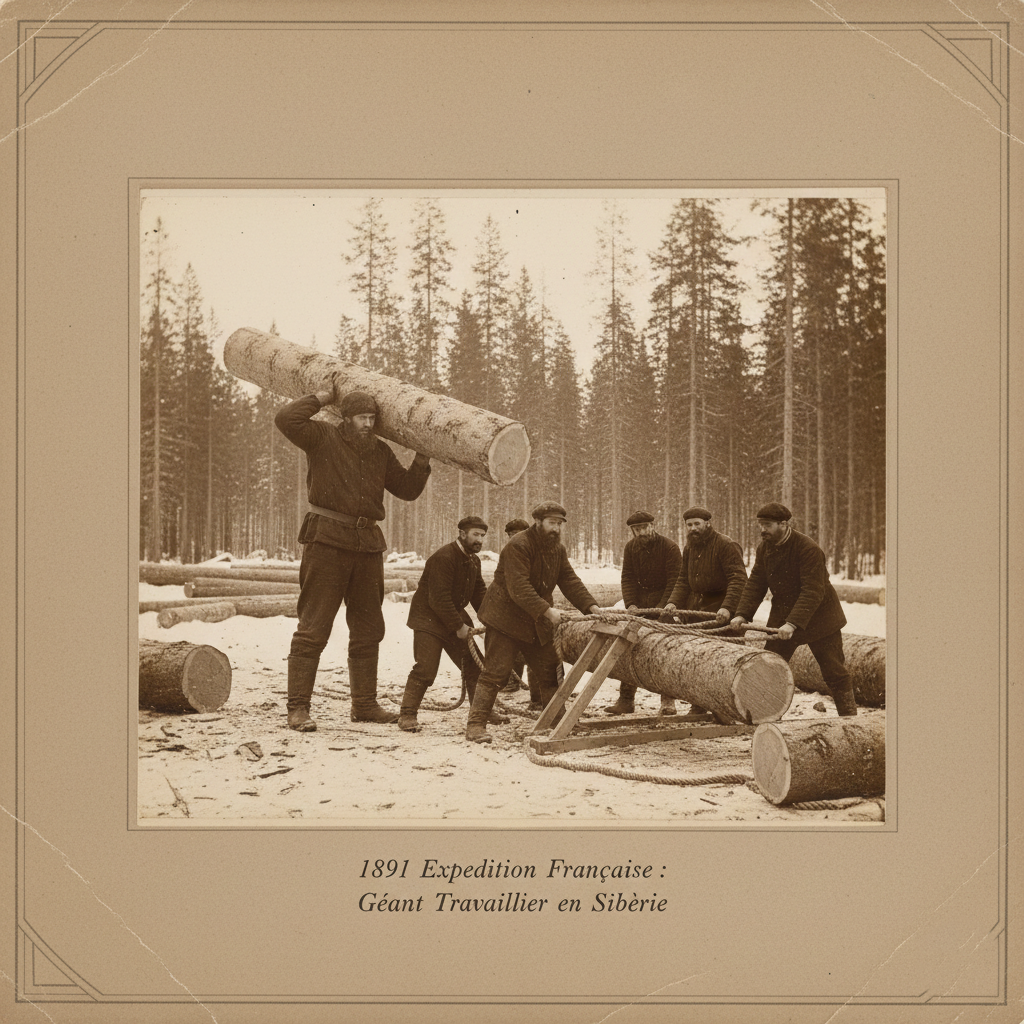
Documentation was not limited to photographs. An 1891 French expedition report near the Yenisei River clinically describes “indigenous workers of extraordinary physical development,” estimating their height between 2.7 and 3.2 meters (nearly 10 feet). The report treats their existence as a known fact, noting they were commonly employed for tasks requiring significant strength.
However, around 1912, this documentation stops abruptly. The photographs disappear from company records, the expedition reports cease, and the giants seem to vanish from the official record. While the Russian Revolution provides a convenient excuse for lost archives, the pattern of silence begins even earlier in German and Swedish industrial surveys.
The Erasure of Human Potential
Today, when presented with this evidence, the academic establishment often defaults to “perspective distortion” or “unclear industrial use” rather than addressing the obvious implications. This isn’t necessarily an active denial, but a passive avoidance of questions that would require rewriting the history of the recent past.
The massive tools remain in salvage yards, the oversized structures still stand in remote locations, and the photographs persist in archives. They wait for us to ask the one question history books ignore: who were these people, and why did we decide it was better to forget they ever existed? The Siberian forests remember, even if our records do not.














Leave a comment