


The Interstellar Secrets of the Ancient Maya
The Mayan civilization, which thrived between 250 and 900 AD, was light-years ahead of its time. While Europe was struggling through the Dark Ages, the Maya were using complex mathematics, building massive celestial observatories, and charting the movements of planets with uncanny precision. But how did a “Stone Age” culture develop such hyper-advanced knowledge? According to the Maya themselves, it was a gift from the gods.
The Descent of Kukulkan
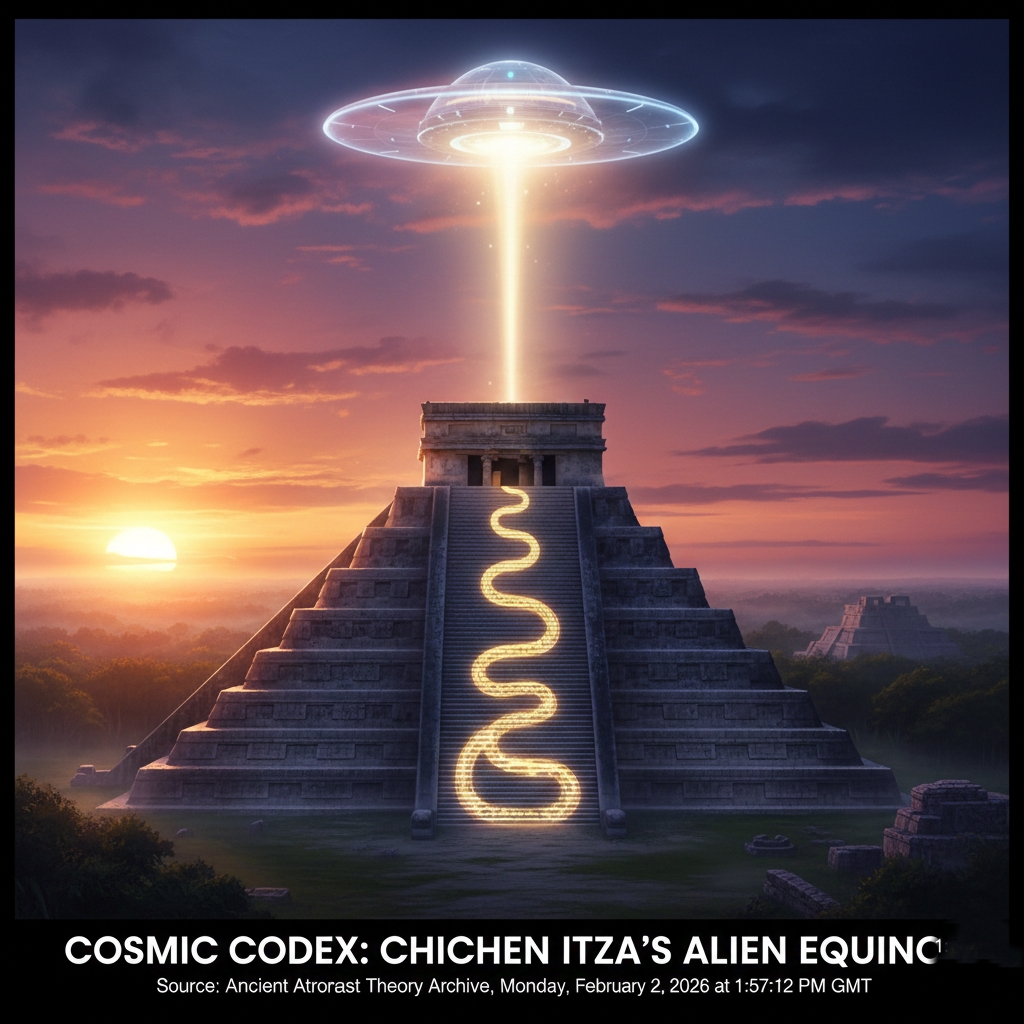
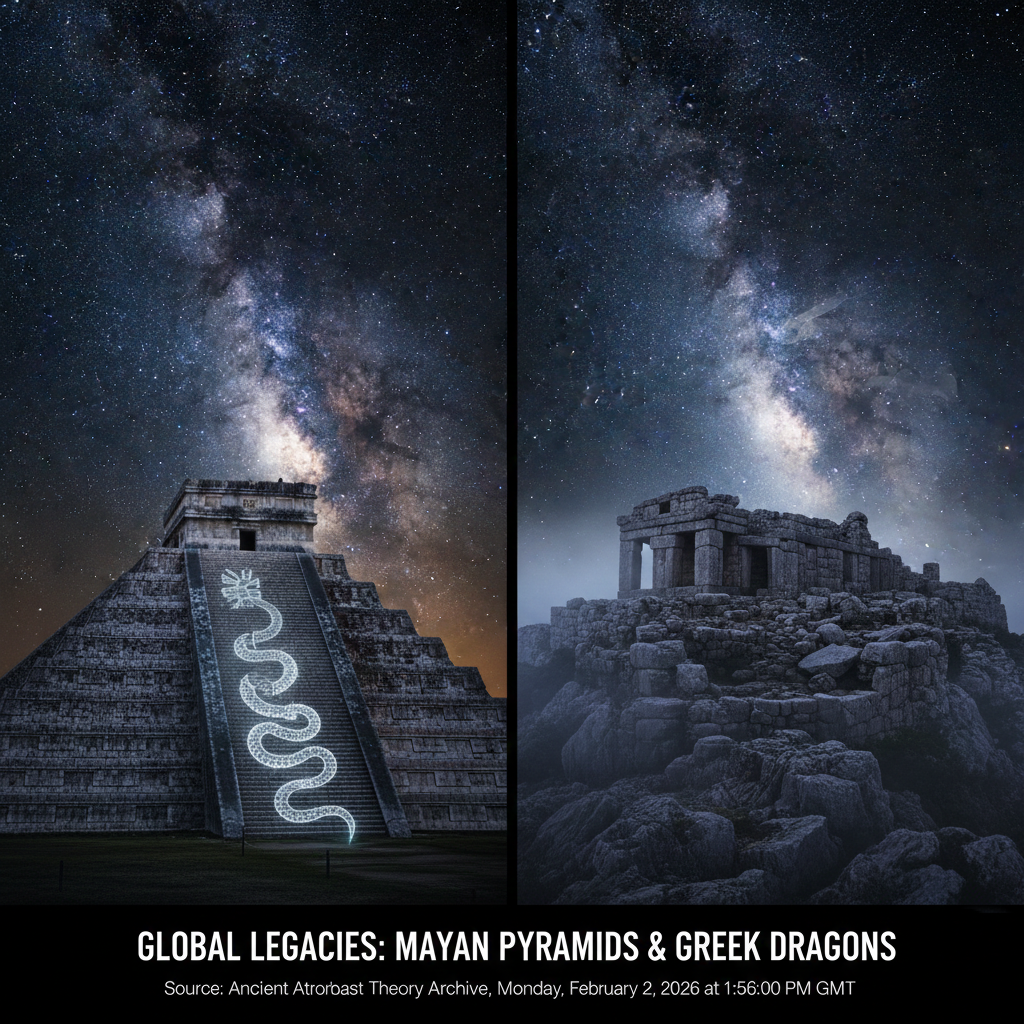
At the heart of Chichen Itza stands the majestic pyramid of El Castillo. Every year, during the spring and autumn equinoxes, a remarkable phenomenon occurs: the sun creates a shadow that looks like a giant serpent slithering down the staircase. To the Maya, this was Kukulkan, the “Feathered Serpent,” descending from the sky.
Ancient astronaut theorists argue that the “flying serpent” was the best way primitive eyes could describe a technological craft. The pyramid wasn’t just a temple; it was a permanent record of a promise—a promise that these celestial visitors would one day return.
The Lord of the Rocket Ship
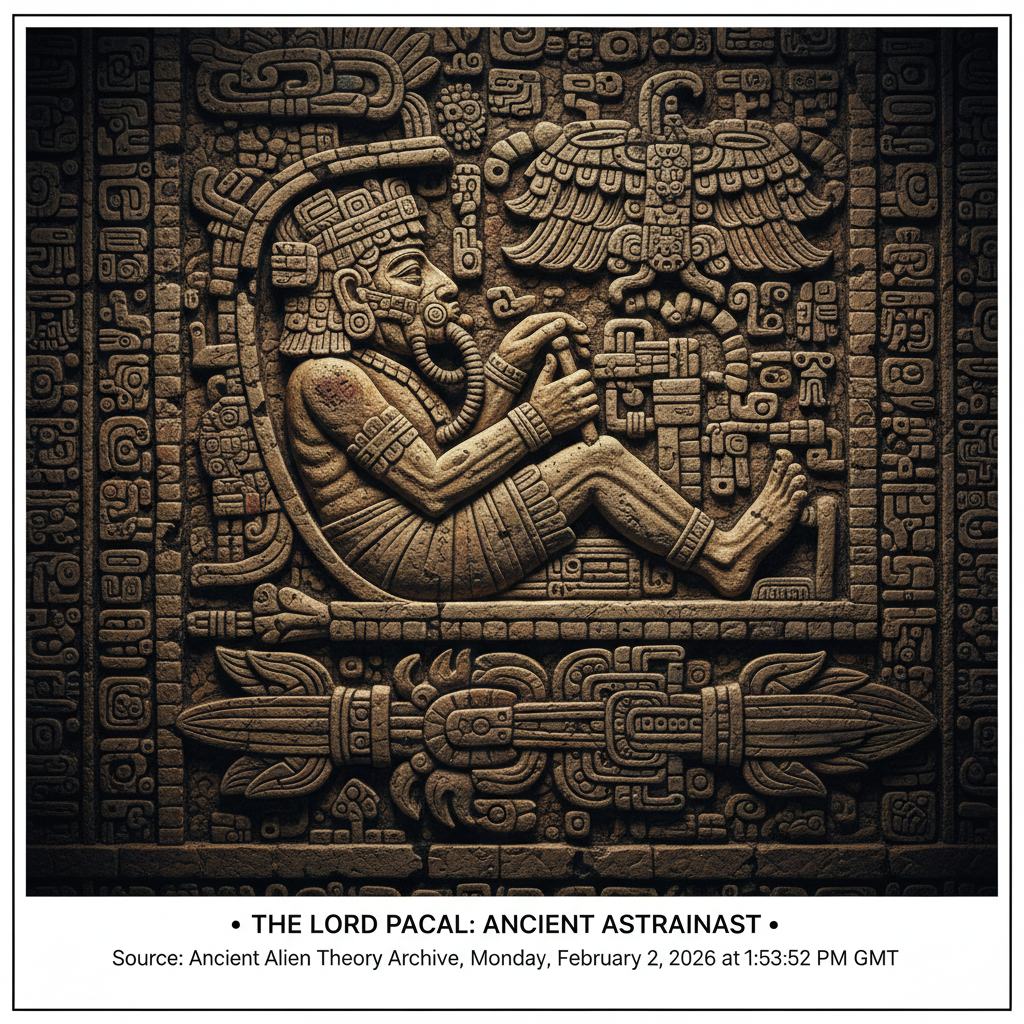
Perhaps the most famous piece of evidence in the “ancient alien” hypothesis lies in the city of Palenque. In the 1950s, archaeologists discovered the tomb of Lord Pacal. On his sarcophagus lid is an intricate carving that has baffled researchers for decades.
While mainstream scholars see a king descending into the underworld, others see a pilot. When viewed horizontally, Pacal appears to be reclining in a capsule, his hands manipulating controls, his feet on pedals, and a device resembling an oxygen mask over his nose. Could this be the first depiction of an ancient astronaut?
The Hieroglyphic Stairway of Copan
In Honduras, the city of Copan features a 72-step stairway carved with over 1,200 hieroglyphs. It is one of the most sophisticated writing systems in the ancient world. These glyphs don’t just record history; they record lineage. The Mayan kings went to great lengths to prove they were descendants of the gods. If these “gods” were extraterrestrials, then the Mayan elites were claiming a literal interstellar ancestry, establishing their “right to rule” through a connection to the stars.
The Yucatan Impact and the Dinosaur Mystery
It is no coincidence that the heart of the Mayan world is the Yucatan Peninsula—the exact spot where a massive asteroid struck the Earth 65 million years ago, ending the reign of the dinosaurs. The Maya believed this was a sacred place where the sky made contact with the Earth.
Even more puzzling are Mayan artifacts and paintings that seem to depict interactions between humans and dinosaur-like creatures. If dinosaurs had been extinct for millions of years, how could the Maya have known what they looked like? Some suggest that their “star teachers” might have provided this information, or perhaps some species survived far longer in the deep jungles than science currently admits.
Teotihuacan: The City of the Gods
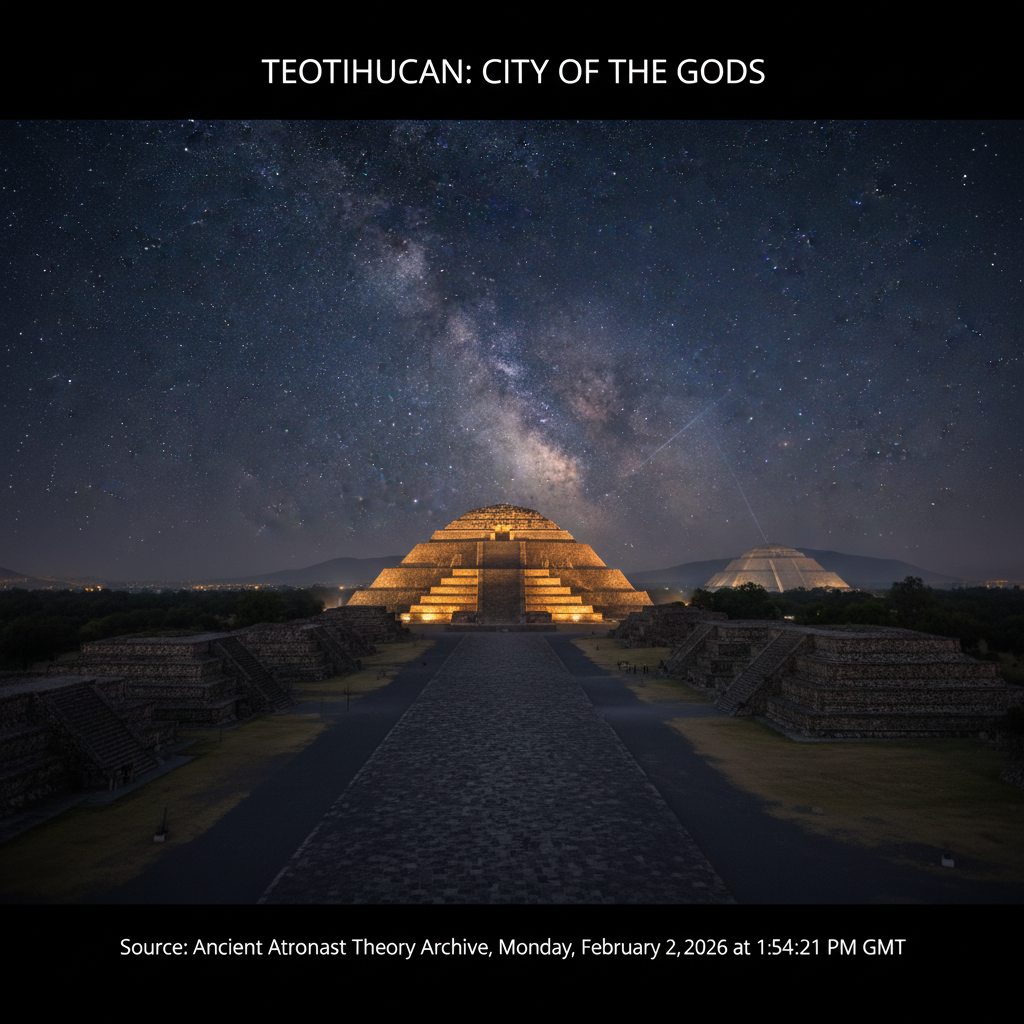
Just north of Mexico City lies Teotihuacan, a massive metropolis built on a precise grid system. Curiously, the city has no hieroglyphs and no clear record of its rulers. It simply appeared, fully formed, with advanced engineering that surpasses anything else in the region.
The Hidden Tunnels and Metallic Orbs
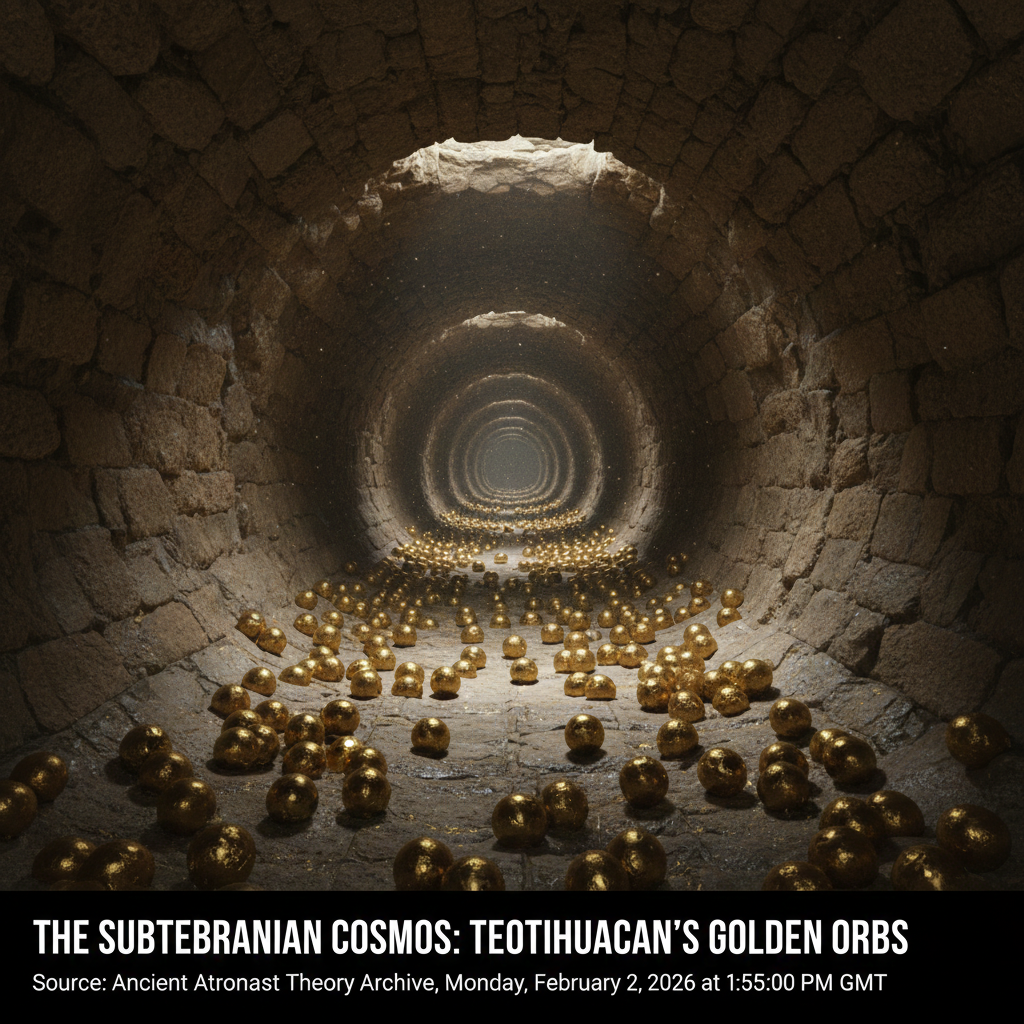
In 2003, a hidden tunnel was discovered 45 feet beneath the Temple of the Feathered Serpent at Teotihuacan. Inside, archaeologists found hundreds of mysterious “golden orbs.” These clay spheres were coated in pyrite (fool’s gold), designed to shimmer like stars when illuminated. The walls of the chamber were also covered in metallic dust, creating a subterranean cosmos. Theories suggest these orbs may have represented planets, used by ancient priests to track the movements of the celestial bodies they were in contact with.
Celestial Wisdom: The Mars Connection
The Maya were obsessed with the planet Mars. The Dresden Codex, one of the few surviving Mayan books, contains a precise almanac for the Red Planet, tracking its 780-day orbital period. They even depicted Mars as a dragon-like creature hanging from a “sky band.” This level of astronomical detail, achieved without telescopes, suggests a source of knowledge that was far more than “primitive.”
A Global Connection?
The mystery of the “flying dragon” gods isn’t unique to Mexico. In Greece, on the island of Evia, stand the “Dragon Houses”—megalithic structures built with stones weighing up to 10 tons at altitudes of 5,000 feet. Local legends say they were built by dragons or by Zeus himself, who “descended” on that mountain. The parallels between these global “landing spots” suggest a unified history of visitation.
A Legacy from Above
As modern technology like LiDAR begins to peel back the jungle canopy, we are discovering that the Mayan world was even larger and more complex than we imagined. We are finally finding the pieces of a puzzle that may confirm we have never been alone. Whether through the “serpent” of the equinox or the “rocket” of Lord Pacal, the message of the Maya remains clear: their history began in the stars, and that is where they expect us to look for our future.










Leave a comment