


What Did Early Humans ACTUALLY Do All Day? The Surprising Truth
For decades, popular culture has painted a grim picture of our prehistoric ancestors. We imagine “cavemen” as brutish, hairy figures living in a state of constant terror, desperately scrambling for every calorie while dodging saber-toothed tigers. This narrative suggests that life before civilization was “nasty, brutish, and short.”
However, modern archaeology and anthropology tell a radically different story. Our ancestors were anatomically identical to us, with the same capacity for language, humor, and complex thought. Far from just surviving, they were living rich, meaningful lives.
The Myth of the Constant Struggle
One of the most surprising findings in the study of hunter-gatherer societies is the amount of leisure time they actually enjoyed. While we imagine them working every waking hour, evidence suggests that early humans likely worked less than the average modern employee.
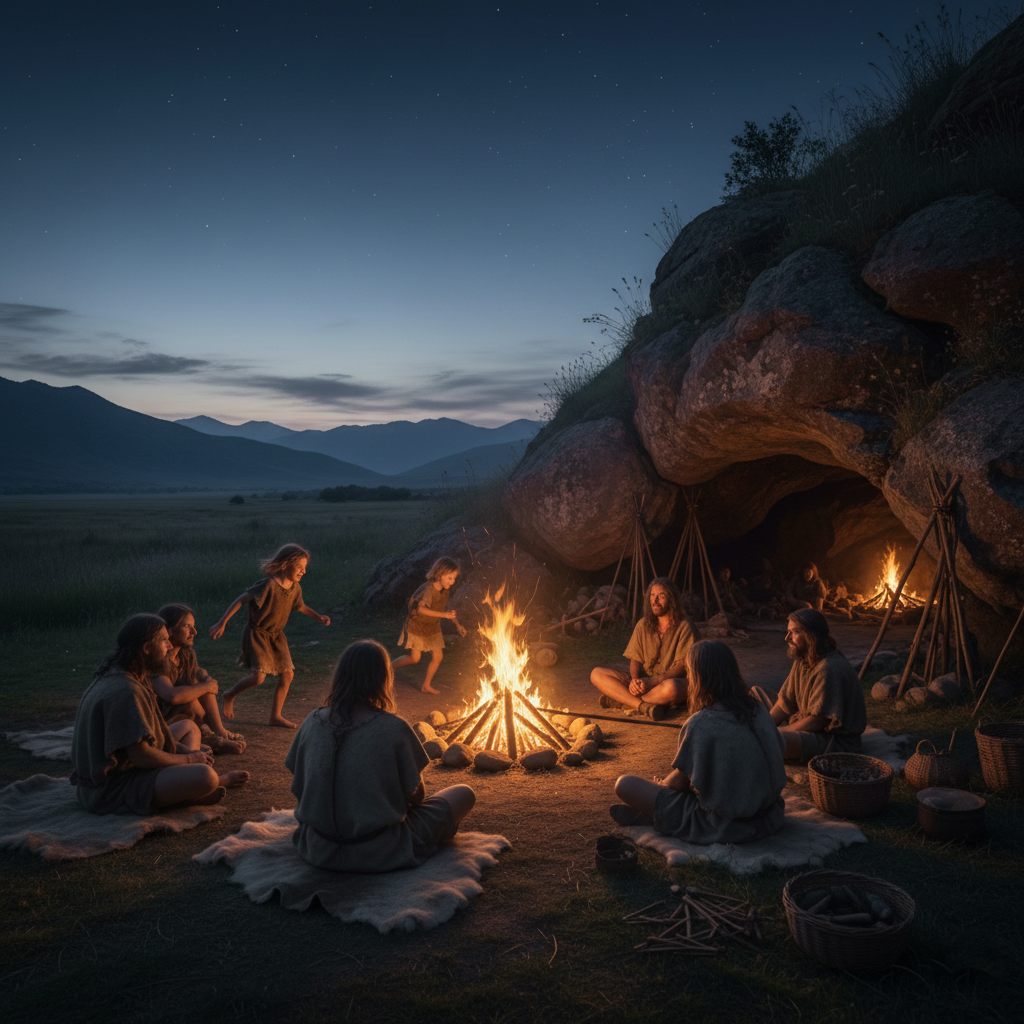
Studies of modern foraging groups—our best window into the past—show that people typically spent only four to six hours a day on subsistence activities like hunting, gathering, and maintaining shelter. The rest of their time was devoted to socializing, play, art, and storytelling. In many ways, the “affluent society” may have existed 40,000 years ago.
A Natural Morning
Mornings in the Paleolithic were governed by light, not alarms. Consciousness returned slowly as dawn filtered into a rock shelter. The first priority was tending the fire—the heart of the community. Fire management was a vital skill; keeping the embers alive through the night saved the exhausting effort of restarting it from scratch.
Decisions for the day emerged through consensus. There were no bosses or rigid schedules. Someone might mention a grove of ripening hazelnuts, while another noted deer tracks near the river. Groups formed organically based on these observations, driven by expertise and communal need.
The Original “Plant-Based” Diet
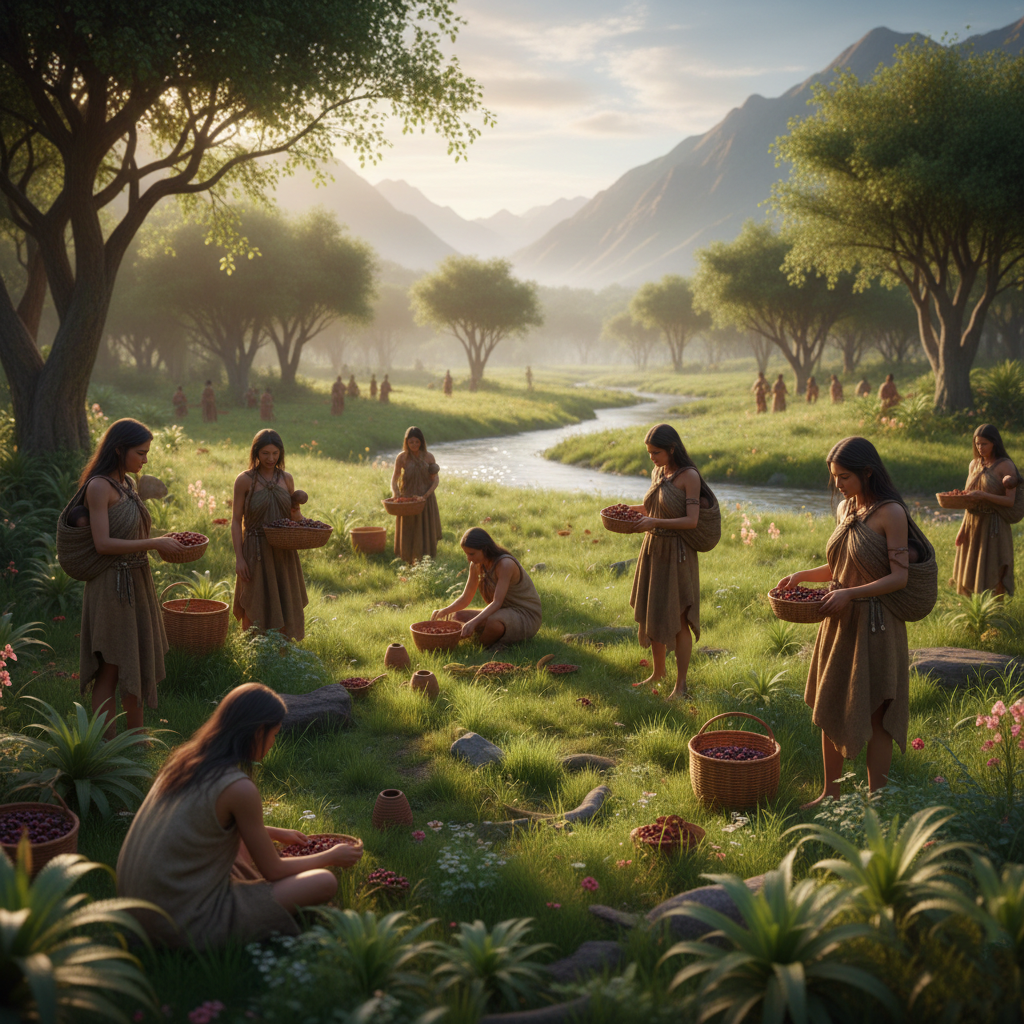
While hunting mammoths gets all the glory in documentaries, the real work of survival was often done by the gatherers. Somewhere between 60% and 80% of prehistoric calories came from plants: roots, tubers, nuts, seeds, and berries.
Gathering was a high-level specialized skill. Our ancestors possessed an encyclopedic knowledge of their environment, identifying hundreds of plant species. They knew which were nutritious, which were medicinal, and which were deadly. This knowledge was preserved through stories, passed down over thousands of generations.
Hunting: The Persistence of Strategy
Hunting was an occasional, high-stakes event. Humans aren’t the fastest sprinters, but we are the world’s greatest endurance runners. Through persistence hunting, our ancestors used our unique ability to sweat and cool down to literally outrun animals in the heat of the day.
A successful hunt was a major social event, providing concentrated protein and fat. However, it was also a ritualized activity. Evidence suggests that early humans treated the animals they killed with respect, often performing ceremonies to acknowledge the life taken to sustain the group.
Craftsmanship as Art
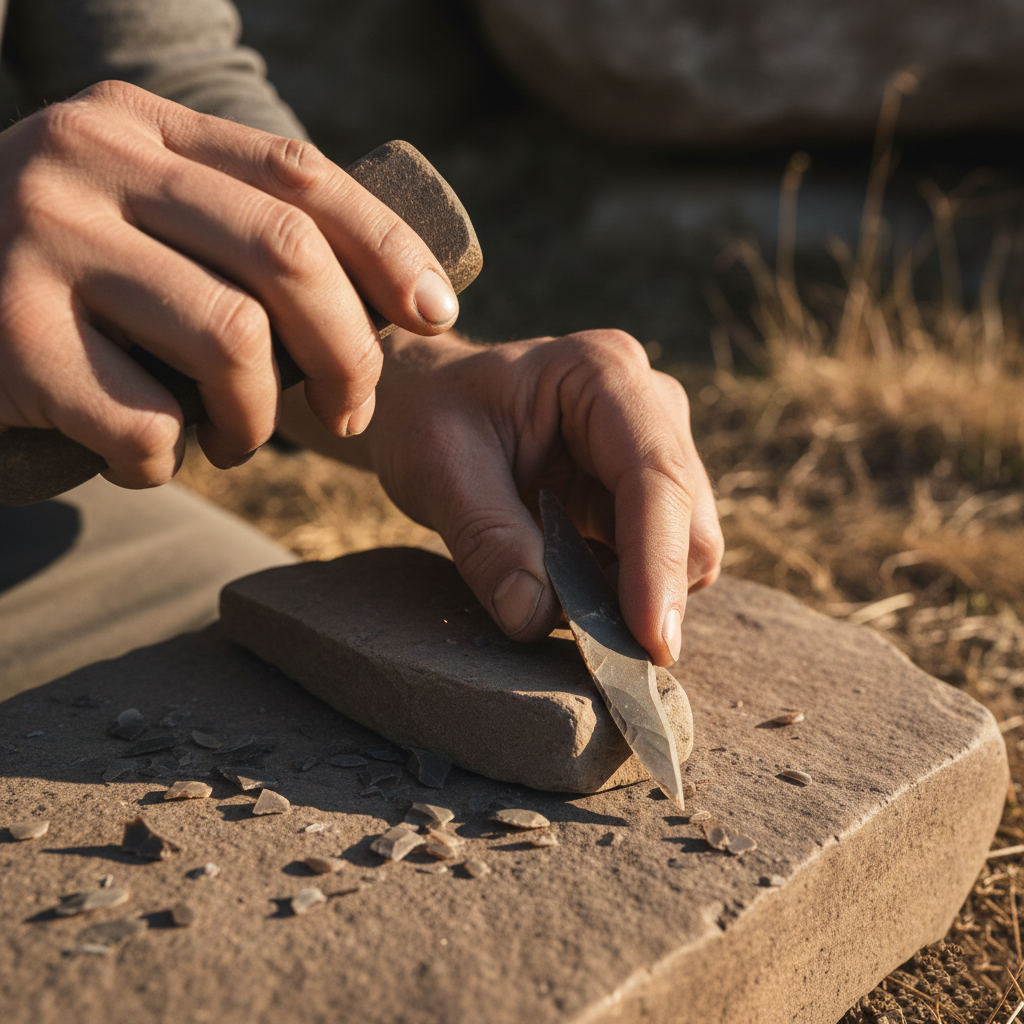
Daily life also involved the meticulous work of tool-making. Stone napping was a sophisticated craft that took years to master. But our ancestors didn’t just make functional tools; they made beautiful ones. We find spearheads with perfect symmetry and bone needles decorated with tiny carvings.
This aesthetic drive extended to clothing and jewelry. Using bone needles, they tailored hides into durable, warm garments. They drilled holes into shells and animal teeth to create necklaces, signaling identity, status, and connections to distant trading partners.
The World of Symbols and Spirits
As night fell, the world of the Paleolithic turned inward. Deep within caves, far beyond the living areas, artists created breathtaking murals of animals. These weren’t for decoration; they were likely part of spiritual rituals or educational sessions for the youth.
They carved “Venus” figurines representing fertility and tracked the movements of the moon on notched bones. Their world was alive with meaning—every rock, river, and constellation carried a story. Music, too, was part of the night; archaeologists have discovered bone flutes dating back 40,000 years, proving that our ancestors were playing recognizable musical scales in the flickering firelight.

A Shared Human Template
Understanding the daily life of early humans helps us understand ourselves. Their nervous systems were calibrated for small, intimate groups, shared tasks, and long stretches of unstructured time. While we have gained much through technology, we have often lost that Paleolithic balance of effort and ease.
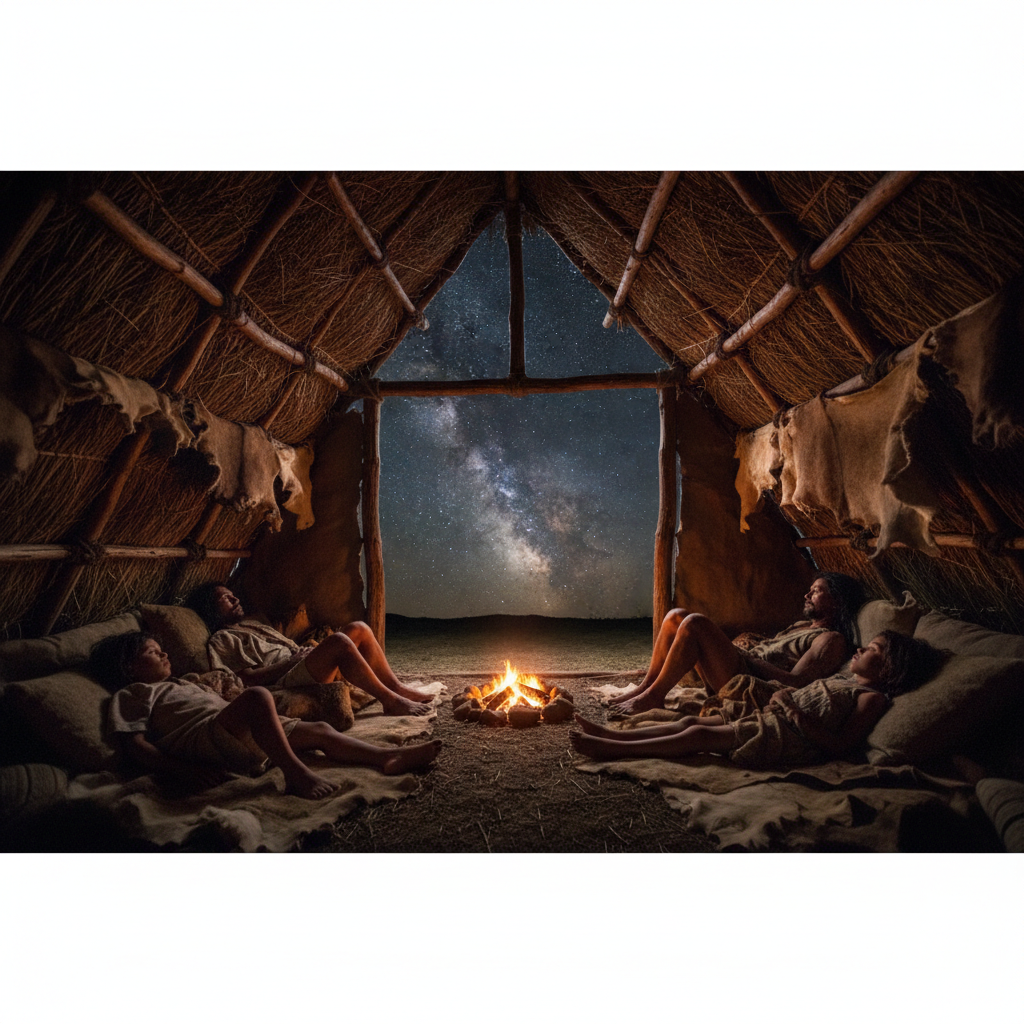
The next time you find yourself watching the clouds or sitting by a fire, remember: you aren’t just wasting time. You are engaging in the most ancient of human traditions, remembering a rhythm of life that sustained our species for hundreds of thousands of years.













Leave a comment