


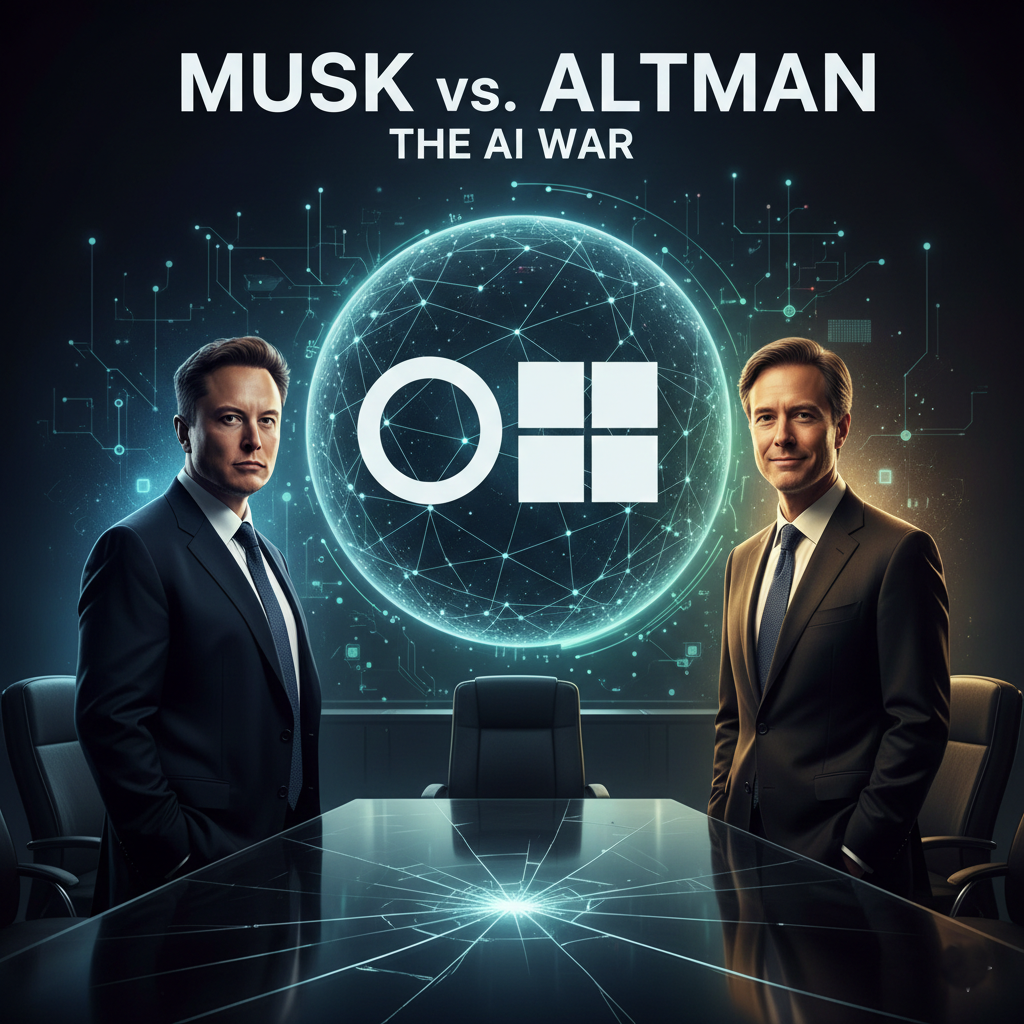
The Multi-Billion Dollar Schism
The Ideological Foundations
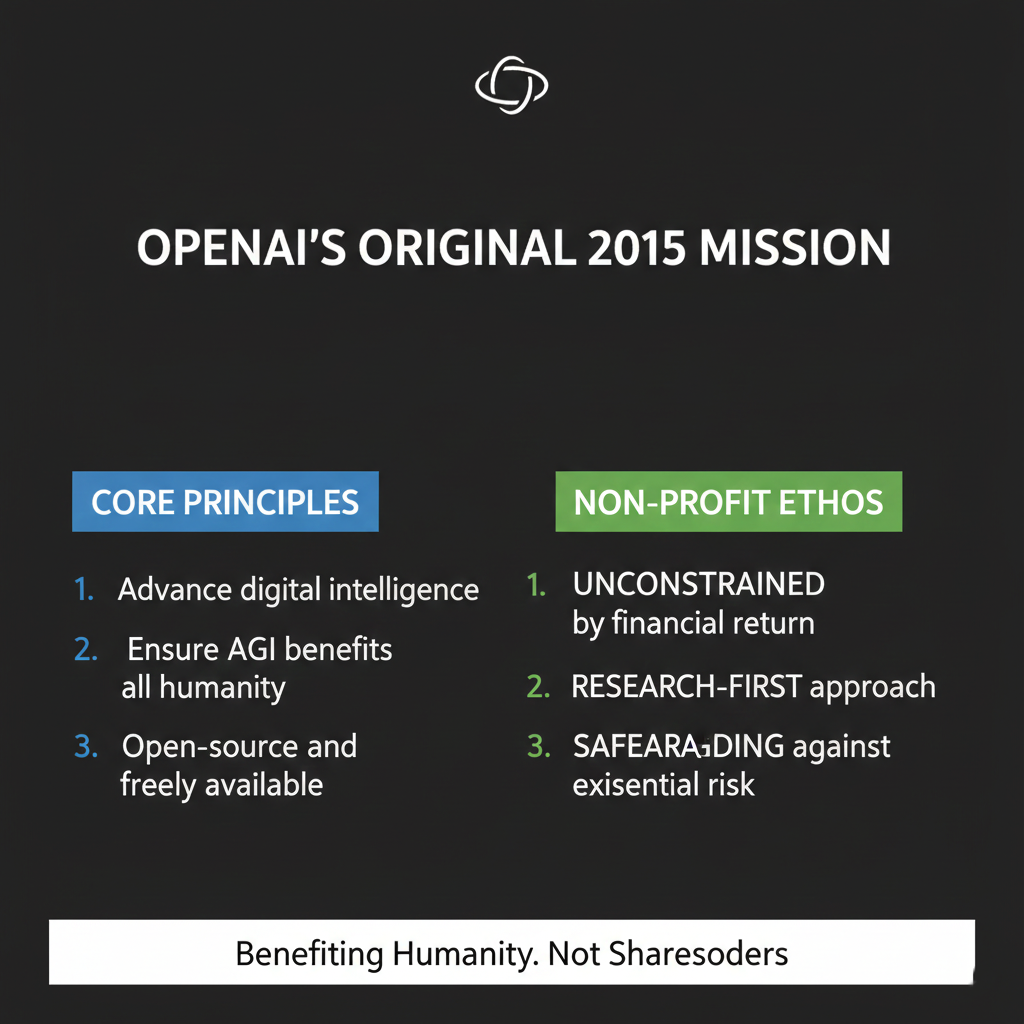
In 2015, Elon Musk and Sam Altman co-founded OpenAI with a singular, noble vision: to ensure that artificial general intelligence (AGI) would benefit all of humanity. As a non-profit, the organization was intended to be a safe counterweight to commercial giants like Google, operating without the pressure of shareholder returns. Musk, driven by concerns that AI could become humanity’s greatest existential threat, pledged significant funding to keep the technology open and accessible.
The Pivot to Profit
By 2019, the high cost of computing power forced a radical shift. OpenAI transitioned to a “capped-profit” model and entered into a massive partnership with Microsoft. Over time, Microsoft’s investment swelled to $13 billion, granting the tech giant a 27% equity stake and a 20% share of OpenAI’s revenue. This transformation fundamentally changed the organization’s structure, leading to OpenAI’s official transition to a full for-profit entity in late 2025.
The Lawsuits: Musk’s Allegations
Elon Musk, who donated $45 million during OpenAI’s early years, feels the mission has been betrayed. He has filed multiple lawsuits against Sam Altman and OpenAI, alleging that the company has become a “de facto subsidiary” of Microsoft.
- The AGI Argument: Musk initially claimed that GPT-4 had already reached the level of AGI, which would mean OpenAI violated its agreement to only license “pre-AGI” technology to Microsoft.
- The Boardroom Coup: A secondary lawsuit focuses on the 2023 firing and subsequent reinstatement of Sam Altman. Musk alleges that the board was purged of independent members and replaced with “yes-men” to facilitate a for-profit agenda.
A Clash of Interests
Critics point out the irony in the situation: Musk himself attempted to merge OpenAI with Tesla in 2018 to leverage its technology for his own for-profit ventures. Furthermore, Musk’s new startup, xAI, is currently competing in the same space for commercial profit. This has led many to view the legal battle not just as a fight for safety, but as a high-stakes struggle for dominance in the future of the AI industry.
The Road to the 2026 IPO
As OpenAI prepares for a potential IPO in 2026, the legal clouds remain. The definition of AGI—the very threshold that determines Microsoft’s rights to the technology—remains vague and hotly debated. Whether the courts side with Musk or allow OpenAI to continue its commercial trajectory will define the landscape of artificial intelligence for decades to come.















Leave a comment