


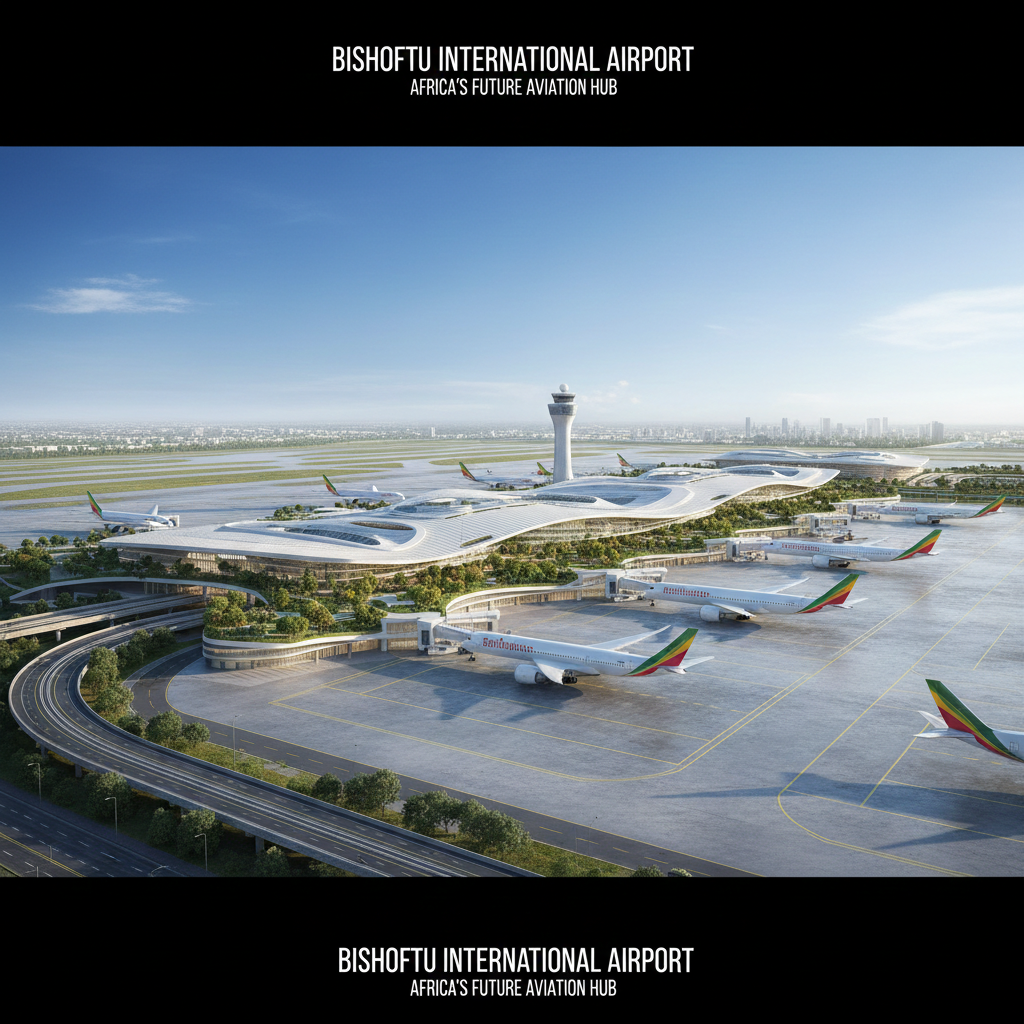
A Hub of Ambition

The new Bishoftu International Airport is designed to be a game-changer. Once fully completed, it will have the capacity to handle over 100 million passengers annually, dwarfing current facilities and surpassing the Addis Ababa Bole International Airport. This isn’t merely about more runways; it’s a statement of power. Like Dubai and Singapore before it, Ethiopia is investing early in connectivity to control trade flows, tourism, and logistics for the next 50 years.
The project is backed by a robust financial strategy. Foreign investors have already pledged approximately $6 billion, while the state-owned Ethiopian Airlines—Africa’s most profitable and successful carrier—is investing $610 million in the initial construction phase.
Sustainability and Hospitality
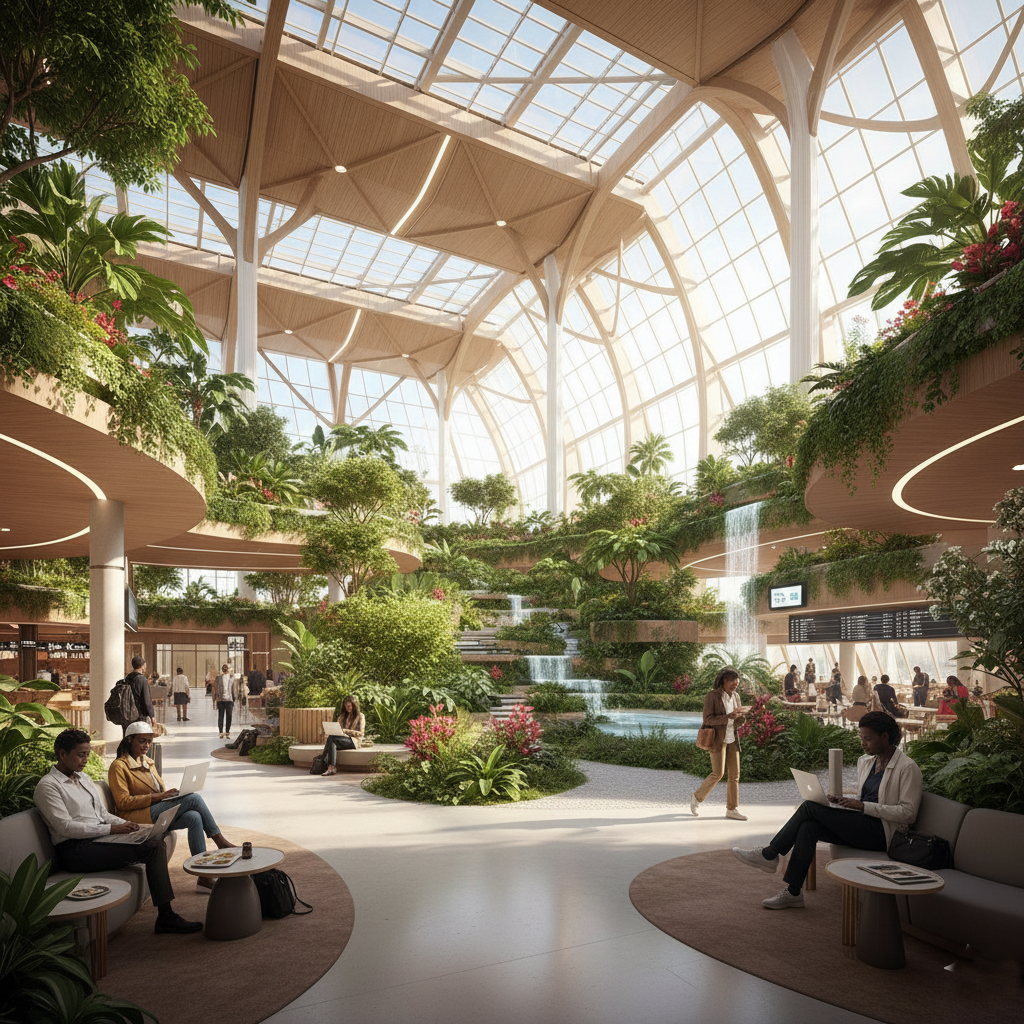
The vision for the airport extends beyond concrete and steel. Designed to be a “microcosm of Ethiopia,” the terminal will draw on the colors, textures, and materials of different regions of the country.
- Eco-Friendly Design: The facility is set to be one of the most climatically optimized terminals in the world, featuring naturally ventilated spaces to minimize energy consumption.
- Passenger Experience: Travelers will find a “city within a building,” complete with shopping, dining, and airside hotels. The centerpiece is the Cloud9 lounge, offering wellness areas, a spa, and a gym for a premium travel experience.
- The Green Aspect: Lush open-air gardens landscaped with local vegetation will provide a “touch of Africa” and a respite for weary travelers.
The Economic Engine
This airport project follows the successful completion of the Grand Ethiopian Renaissance Dam, signaling a period of intense, state-led infrastructure growth. By linking production to markets, the airport supports Ethiopia’s industrial parks and manufacturing zones.
Aviation hubs act as economic weapons in the 21st century. By centralizing logistics and air cargo, Ethiopia is ensuring that it remains the gateway for trade between Africa, Asia, Europe, and the Middle East. While the nation faces challenges in debt and recovery, this project represents a bold choice to build for the future rather than stagnating in the present.
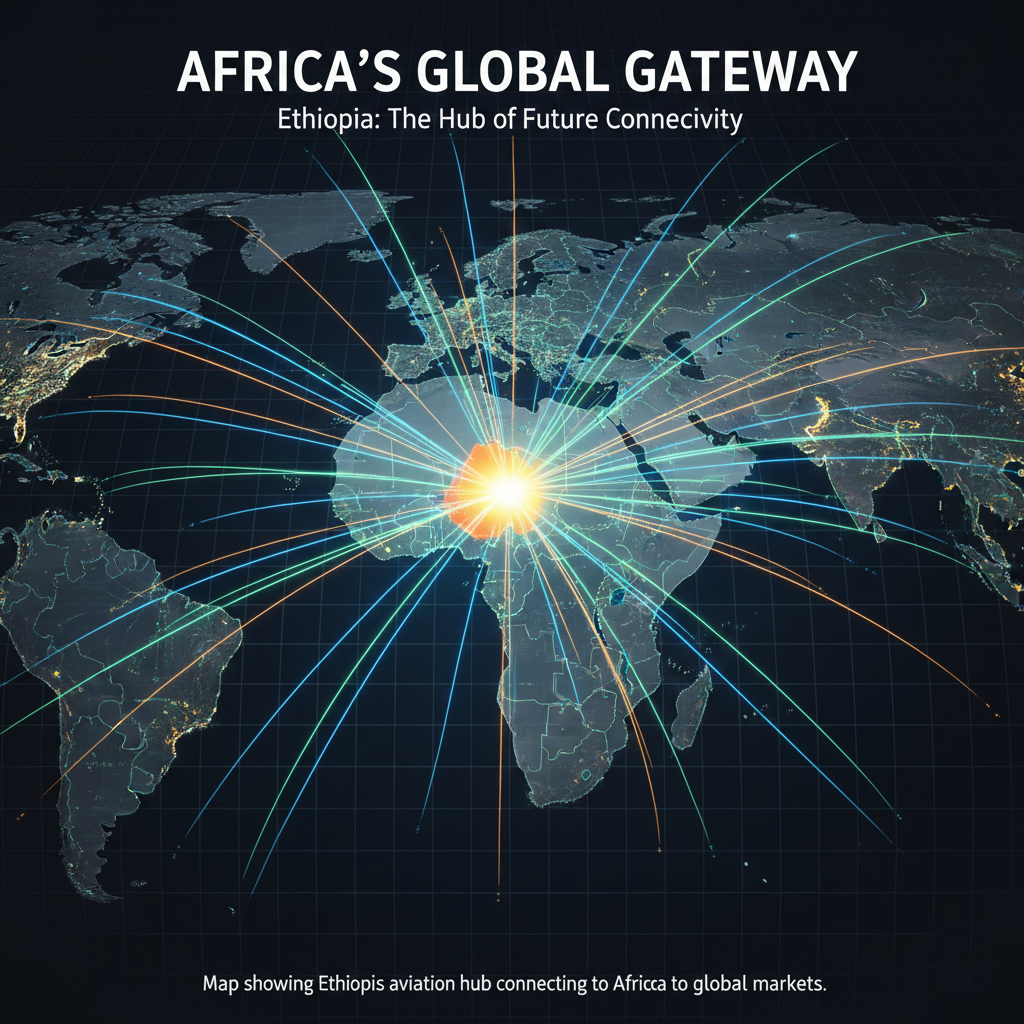
Ethiopia’s $12.5 billion investment is a challenge to the rest of the continent. It asks why infrastructure is often treated as a cost rather than a long-term investment. As the runways take shape at Bishoftu, Ethiopia is proving that with vision and strategic planning, Africa can be more than a fragmented collection of markets—it can be a globally competitive powerhouse.















Leave a comment