



Understanding Pattern Hair Loss
Pattern hair loss, or androgenetic alopecia, is caused by a genetic sensitivity of the hair follicles to androgens (male hormones). This sensitivity leads to “miniaturization,” where thick terminal hairs eventually turn into fine vellus hairs. Before starting any regimen, it is crucial to see a board-certified dermatologist for an accurate diagnosis, as different types of hair loss require vastly different approaches.
The Power of Minoxidil
Minoxidil is one of the most well-known FDA-approved treatments for both men and women.
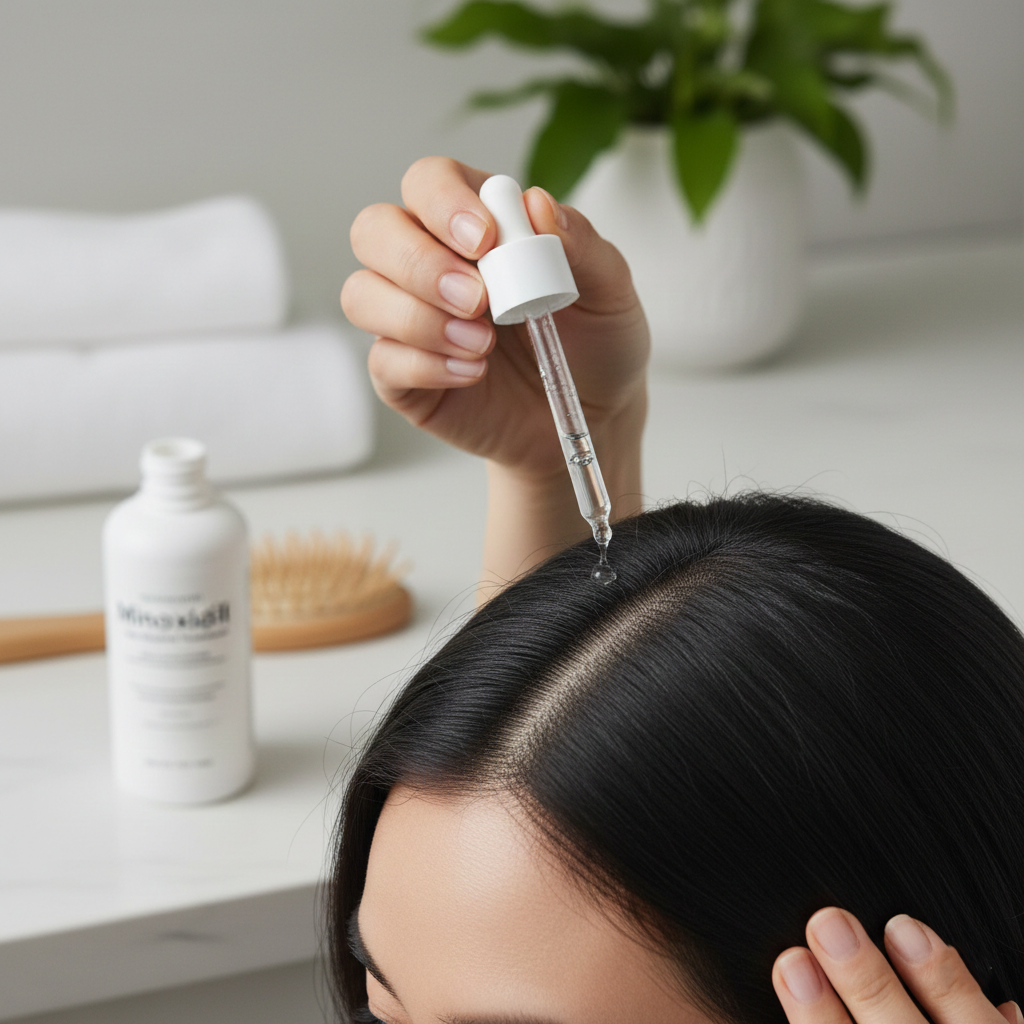
- Topical Minoxidil: Available over the counter, it increases blood flow and growth factors to the follicles. Expect a temporary “shedding phase” in the first few weeks; this is a sign the treatment is working by shifting follicles into the growth phase.
- Oral Minoxidil: In low doses, this blood pressure medication can effectively increase hair thickness and density. However, it requires a prescription and monitoring for potential side effects like low blood pressure or swelling.
Oral Medications and Hormonal Blockers
For many, addressing the hormonal root cause is necessary.
- Finasteride & Dutasteride: Primarily for men, these medications inhibit the enzyme that converts testosterone into DHT, the hormone responsible for follicle miniaturization.
- Spironolactone: Often prescribed for women, this diuretic interferes with androgen signaling. It is particularly effective for those also struggling with hormonal acne but must not be used during pregnancy.

Surprising Scalp Solutions: Ketoconazole
While primarily known as an anti-dandruff ingredient, Ketoconazole 2% shampoo has shown promise in treating male pattern hair loss. By inhibiting the same enzyme targeted by finasteride and reducing yeast-related inflammation, it serves as a powerful adjunctive treatment when used every few days.
Professional Procedures: PRP and Transplants
For those seeking more intensive interventions, medical procedures offer high-level results:
- Platelet-Rich Plasma (PRP): This involves injecting concentrated growth factors from your own blood into the scalp. While protocols vary, many patients see improved hair health and density.
- Hair Transplant Surgery: A permanent solution where healthy follicles are moved to thinning areas. Success depends heavily on the skill of the surgeon and the patient’s overall health.
Low-Level Laser Therapy (LLLT)
Low-level laser therapy uses “photobiomodulation” to deliver light energy directly to the follicles, nourishing them and encouraging regrowth. Devices like the iRestore Professional System are FDA-cleared and can be used conveniently at home. LLLT is an excellent option for those who may not respond to minoxidil alone, as the two treatments can be used safely in tandem.

A Note on Patience
Regardless of the treatment chosen, patience is mandatory. Most evidence-based solutions take six to nine months to show visible results. Because these treatments manage a genetic condition rather than curing it, they must be continued indefinitely to maintain the newly grown hair.










Leave a comment