


The Man Behind the Shades
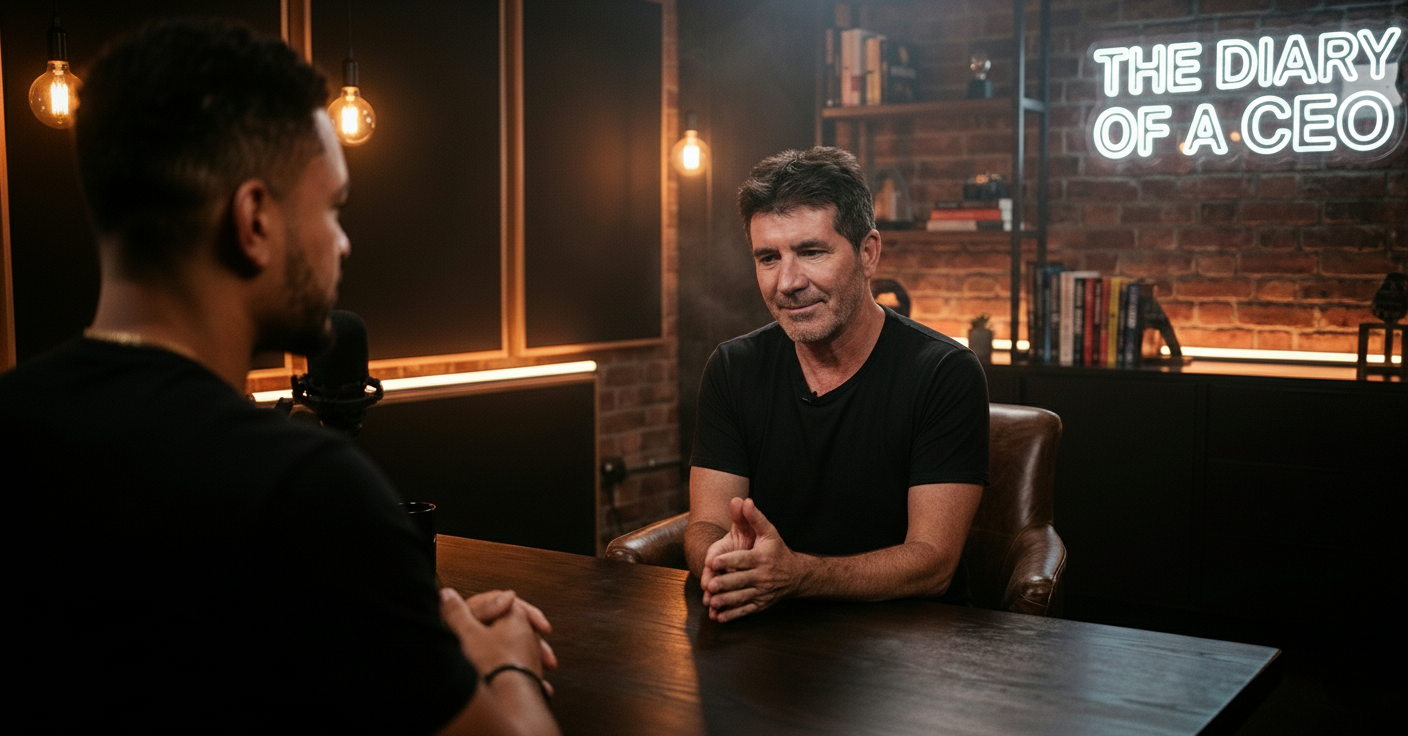
We often think we know Simon Cowell—the sharp-tongued judge, the media mogul, the man who created The X Factor and Got Talent. But in his recent appearance on The Diary Of A CEO with Steven Bartlett, Simon peeled back the layers to reveal a man shaped by failure, profound grief, and a late-in-life transformation that saved him from a “downward spiral.”
From going broke at 30 to his biggest business regret regarding One Direction, here are the essential takeaways from this deeply personal interview.
1. The Early Grind: Failure Before Fame
Before the global fame, Simon was just a bored school kid who wanted to have fun and make money. His career didn’t start in a boardroom but in the post room at EMI Music Publishing.
However, his journey wasn’t a straight line to success. At age 30, Simon faced financial ruin. After his first record label, Fanfare Records, collapsed, he was left owing the bank nearly £500,000. He lost his house, his Porsche, and had to move back in with his parents.
“I was on paper bankrupt… I had about £5 cash and I remember thinking it’s literally all the money I’ve got left in the world.”
This humbling experience taught him resilience, a trait instilled by his supportive parents who never criticized his failure, only his ability to bounce back.
2. Trusting the Gut: Wrestlers and Soap Stars
Simon’s climb back to the top wasn’t built on following the rules. It was built on trusting his gut and understanding the audience—even when industry elites mocked him.
He found massive success in unconventional places, such as:
- The WWF Wrestling Album: He ignored his bosses’ pleas to stop and sold millions of copies by tapping into a passionate fanbase.
- Robson & Jerome: He relentlessly pursued two actors from Soldier Soldier, eventually persuading them to record a song that became the best-selling record of the year, outselling Oasis.
His philosophy? “I would rather be mocked for being different than being safe.”
3. Grief and the Downward Spiral
The most heartbreaking segment of the interview focused on the loss of his parents. Simon described the death of his father as a “bittersweet” moment that occurred exactly when his band Westlife hit number one. The joy of success was instantly erased by the phone call that changed his life.
Years later, the loss of his mother sent him into a dark period. He described himself as a “vampire,” working until 8:00 AM, eating poorly, and becoming a “ridiculous workaholic” to numb the pain.
“I really had reached the point where nothing mattered… thinking what have I got to live for?”
4. The Transformation: Eric, Therapy, and No Phone
Simon credits the birth of his son, Eric, with saving his life. Fatherhood brought the color back into his world and forced him to re-evaluate his lifestyle.
- Ditching the Phone: Simon hasn’t had a mobile phone for years. He found it to be a source of anxiety and boredom, comparing it to carrying around a toaster. “It’s just as boring… I realized by not being on it, I was happier.”
- Therapy: After breaking his back in a bike accident in 2020, Simon finally sought therapy. He describes it as “going to the gym for your mind” and wishes he had done it sooner.
5. The One Direction Regret
Simon spoke fondly of One Direction, calling them the “perfect group.” However, he revealed one major business regret: He does not own the name “One Direction.”
The members own the name, which means Simon cannot organize a tour or a reunion unless all members agree.
“That’s my only regret. If you’re listening, I’ll buy it back from you… If it was me who owned the name, it wouldn’t be a problem. You could do a tour with three of them.”
This revelation hints at why a reunion has been so difficult to orchestrate.
A Legacy of Kindness
Despite his reputation as “Mr. Nasty,” Simon’s advice for the future is rooted in kindness. Drawing from his father’s lesson that “Everyone has a sign on their head that says ‘Make me feel important,'”, Simon hopes his legacy will be that he achieved success without a head start and treated people well along the way.
Watch the full interview here:















Leave a comment