


The Black Budget: The Entire History of the CIA
The Central Intelligence Agency (CIA) is perhaps the most secretive organization in the world. Operating on a “black budget” and laundering power through offshore accounts and shell companies, it has served as America’s ultimate lever of power for nearly eight decades. From the high-stakes shadow wars of the 20th century to the algorithmic precision of modern counterterrorism, the history of the CIA is a story of unmatched influence, staggering technological achievement, and profound controversy.
Founding a Permanent Spy Agency
In 1945, as World War II ended in fire and rubble, the United States found itself at a disadvantage. While the Soviet Union’s intelligence network was already deeply entrenched across Europe, the U.S. relied on the Office of Strategic Services (OSS)—a group of courageous but amateur agents.
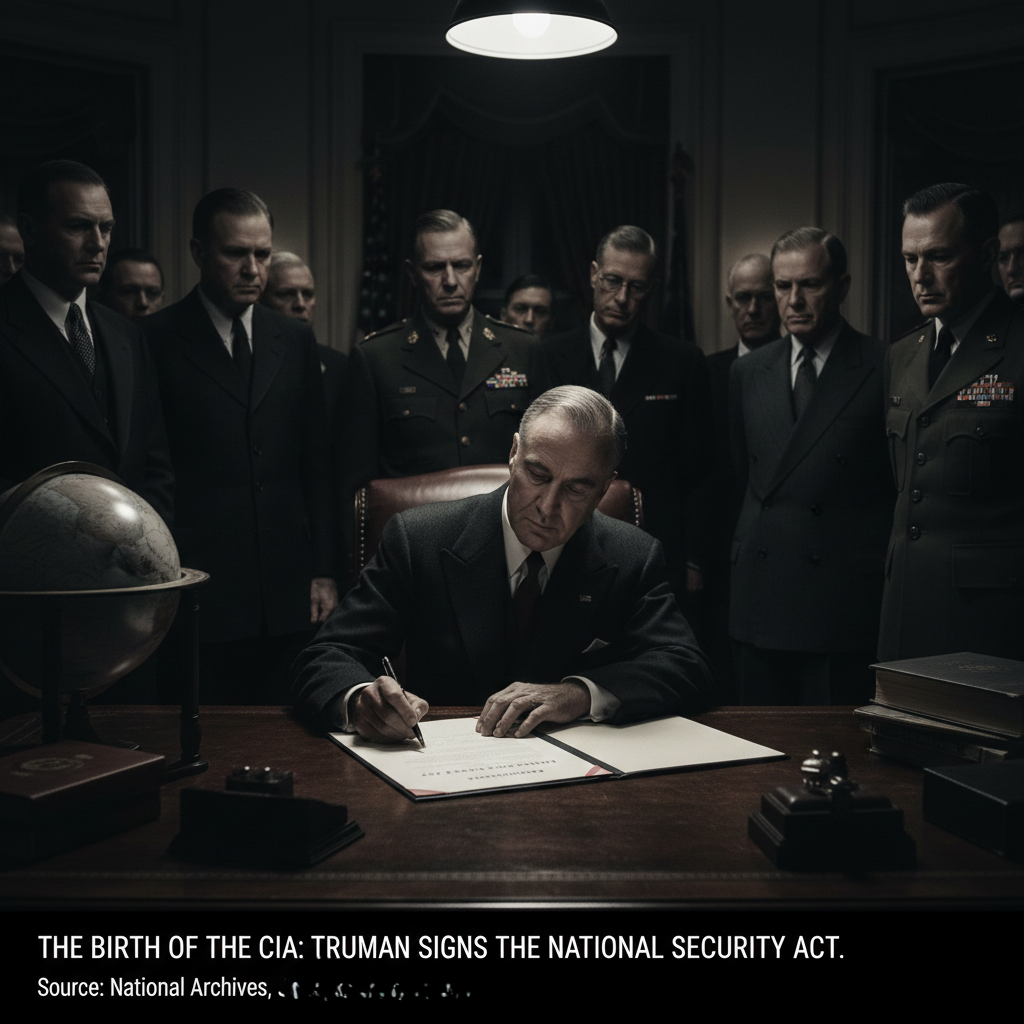
President Harry Truman realized that to compete with Moscow, America needed a permanent, peacetime intelligence service. In 1947, the National Security Act created the CIA. Given a broad and vague mandate, the agency was authorized to gather intelligence and conduct covert operations to protect U.S. interests. Crucially, it answered directly to the President, operating outside the usual oversight of Congress or the public.
The First Shadow Victory: Operation Ajax
The CIA’s first major success—and its first controversial precedent—occurred in 1953. Iran’s Prime Minister, Muhammad Mossadegh, had nationalized the country’s oil fields, threatening British and American interests. Under the leadership of Kermit Roosevelt Jr., the CIA launched “Operation Ajax.”
Using a million dollars in clandestine funds, the agency bribed parliamentarians, paid editors to print anti-Mossadegh propaganda, and orchestrated street riots. The coup was swift and decisive, returning the Shah to power and securing Western oil interests. While hailed as a masterpiece of covert action at the time, it planted seeds of instability that would haunt the region for decades.
Technological Triumphs: The U2 Spy Plane
By the mid-1950s, the CIA realized it couldn’t always win the “human intelligence” game against the KGB. Instead, it leaned into America’s greatest strength: technology. Partnering with Lockheed’s “Skunk Works,” the CIA developed the U2 spy plane.
Capable of flying at 70,000 feet—well above the reach of Soviet missiles and fighters—the U2 provided the first clear pictures of Soviet nuclear sites and military strength. This “satellite with a pilot” fundamentally changed the Cold War, replacing guesswork with high-resolution photographic evidence.

Failures and Infamy: The Bay of Pigs
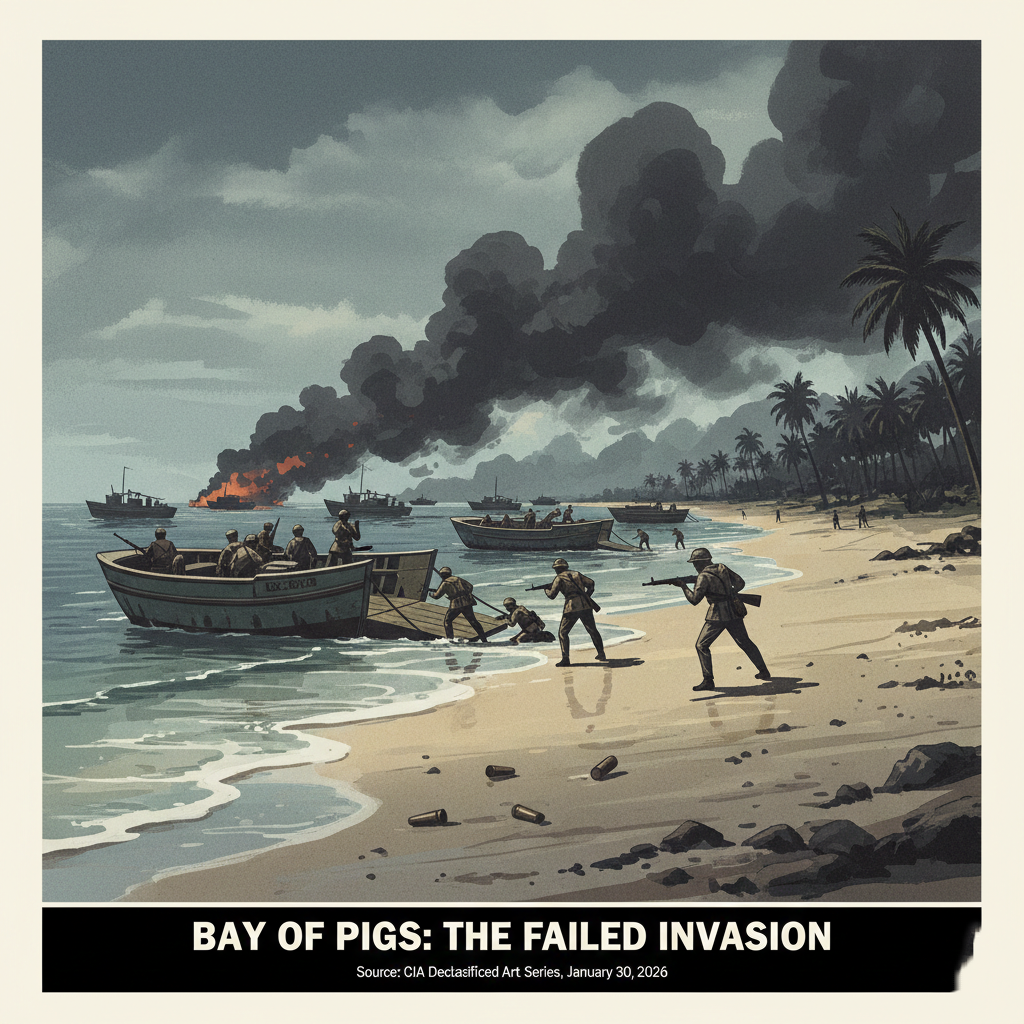
Not every operation was a success. In 1961, the CIA orchestrated the Bay of Pigs invasion, training Cuban exiles to overthrow Fidel Castro. The mission was a humiliating disaster; the resistance never materialized, air cover was denied, and the invasion force was swiftly crushed. President Kennedy was furious, famously remarking that he wanted to “splinter the CIA into a thousand pieces.”
The following decades saw the agency involved in even darker chapters, including the 1973 coup in Chile and the infamous Project MK Ultra, where the agency experimented with LSD and hypnosis in a futile search for mind-control techniques.
Scandals and the Global Money Trail
The 1980s brought new challenges and scandals. The Iran-Contra affair revealed a complex scheme where the CIA sold arms to Iran to fund the Contras in Nicaragua, bypassing Congressional bans. Simultaneously, the agency was linked to the collapse of BCCI, a global “bank for dictators” that laundered billions for drug traffickers and arms dealers. These events stripped away much of the agency’s mystique, leading to increased public scrutiny and legislative oversight.
9/11 and the War on Terror
The collapse of the Soviet Union in 1991 left the CIA without its primary enemy. For a decade, the agency struggled to find its footing in a “New World Order.” That changed on the morning of September 11, 2001.
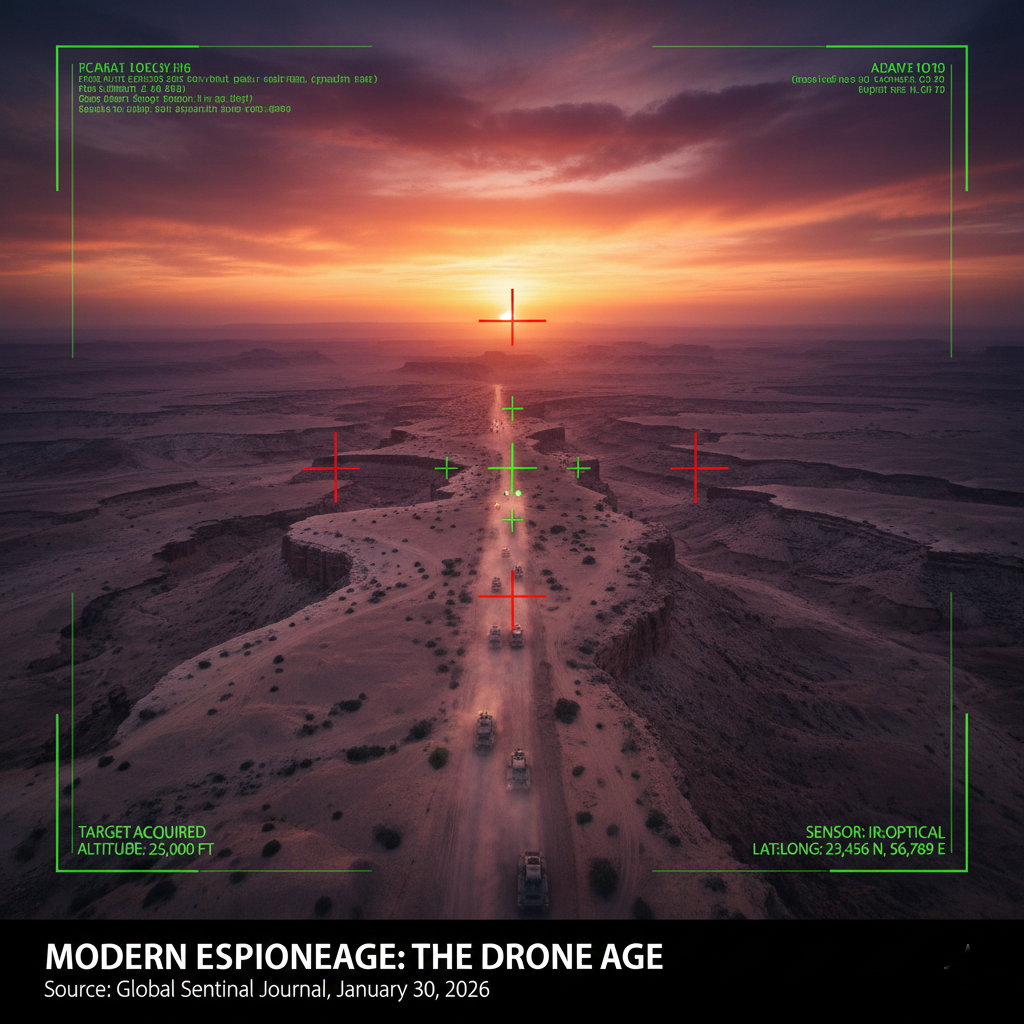
The War on Terror brought the CIA back to the center of national security. The mission shifted toward finding Osama bin Laden and dismantling al-Qaeda. This era saw the rise of the drone program, where the CIA used Predator and Reaper drones to conduct precision strikes from thousands of miles away. The decade-long hunt for bin Laden eventually culminated in the 2011 raid in Abbottabad, a moment of vindication for the agency’s patient surveillance and analysis.
Modern Espionage and the Silicon Valley Alliance
Today, the battlefield is defined as much by information as by geography. The CIA has forged deep partnerships with Silicon Valley, investing in startups like Palantir to harness the power of “big data.” These tools allow analysts to weave together millions of data points—from phone calls to bank wires—into a living map of global threats.
As the agency looks toward the future, it faces new near-peer competitors like China, whose mastery of AI and quantum communication presents a fresh challenge. In an era of maximum complexity, the CIA continues to operate in the shadows, navigating a world where a single blind spot can set off a global chain of events.















Leave a comment