


The 10th Generation Milestone
It feels like the first Google Pixel arrived only recently, but the series has officially hit its double-digit milestone. With each generation, Google has doubled down on AI-driven experiences. But how much has the hardware actually changed? We’ve pitted the Pixel 10 Pro XL against the 9 Pro XL, 8 Pro, and 7 Pro to find out.
Design and Durability: The Evolution of the Camera Bar
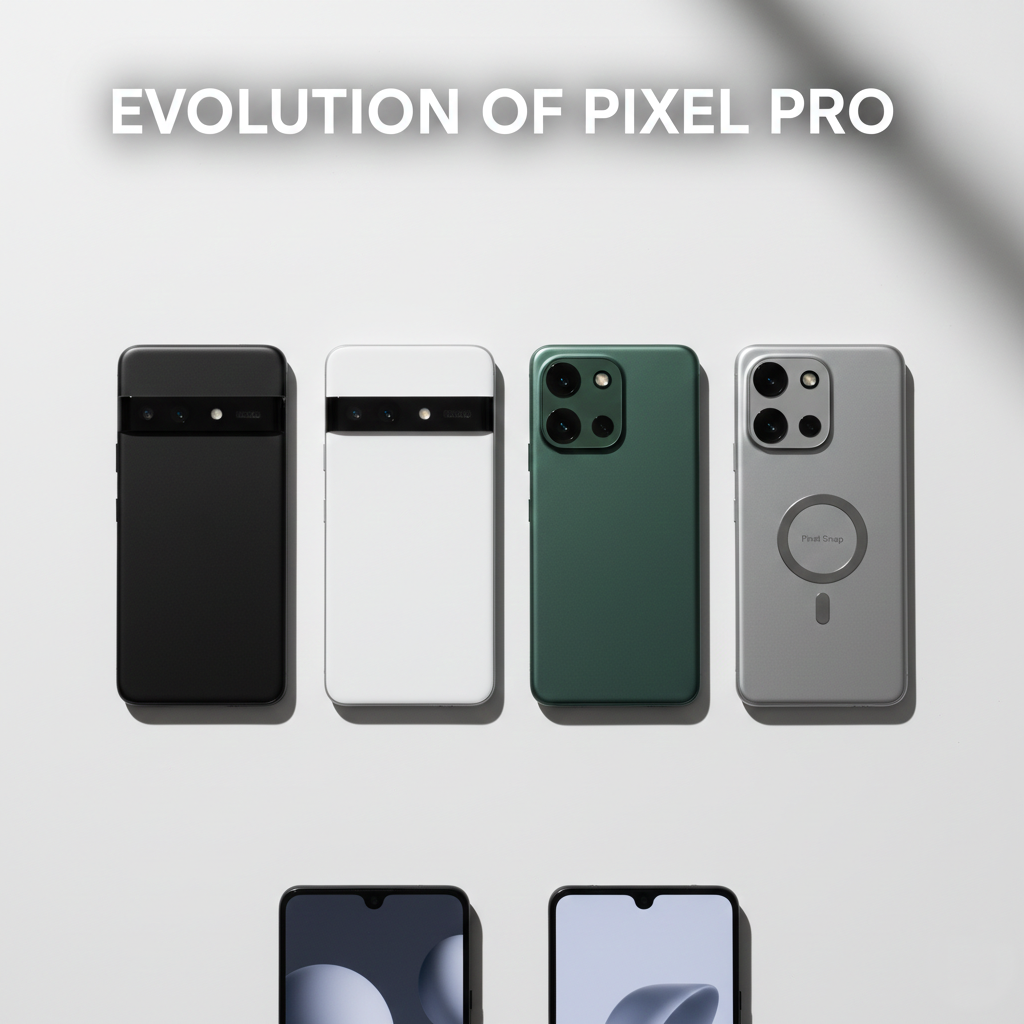
All four models feature the iconic camera bar, but the execution has evolved. While the Pixel 7 and 8 Pro share a more rounded aesthetic, the Pixel 9 and 10 Pro XL have transitioned to a completely flat back and sides. A major addition for the 10th generation is “Pixel Snap,” a magnetic system compatible with Qi2 and MagSafe accessories—a first for the lineup.
Durability remains consistent with an IP68 rating across the board, meaning all four can survive a dunk in 1.5 meters of water. However, the Pixel 10 is the heaviest of the bunch at 231g, giving it a more substantial, premium feel compared to the 211g Pixel 7 Pro.

Display: Pushing the Limits of Brightness
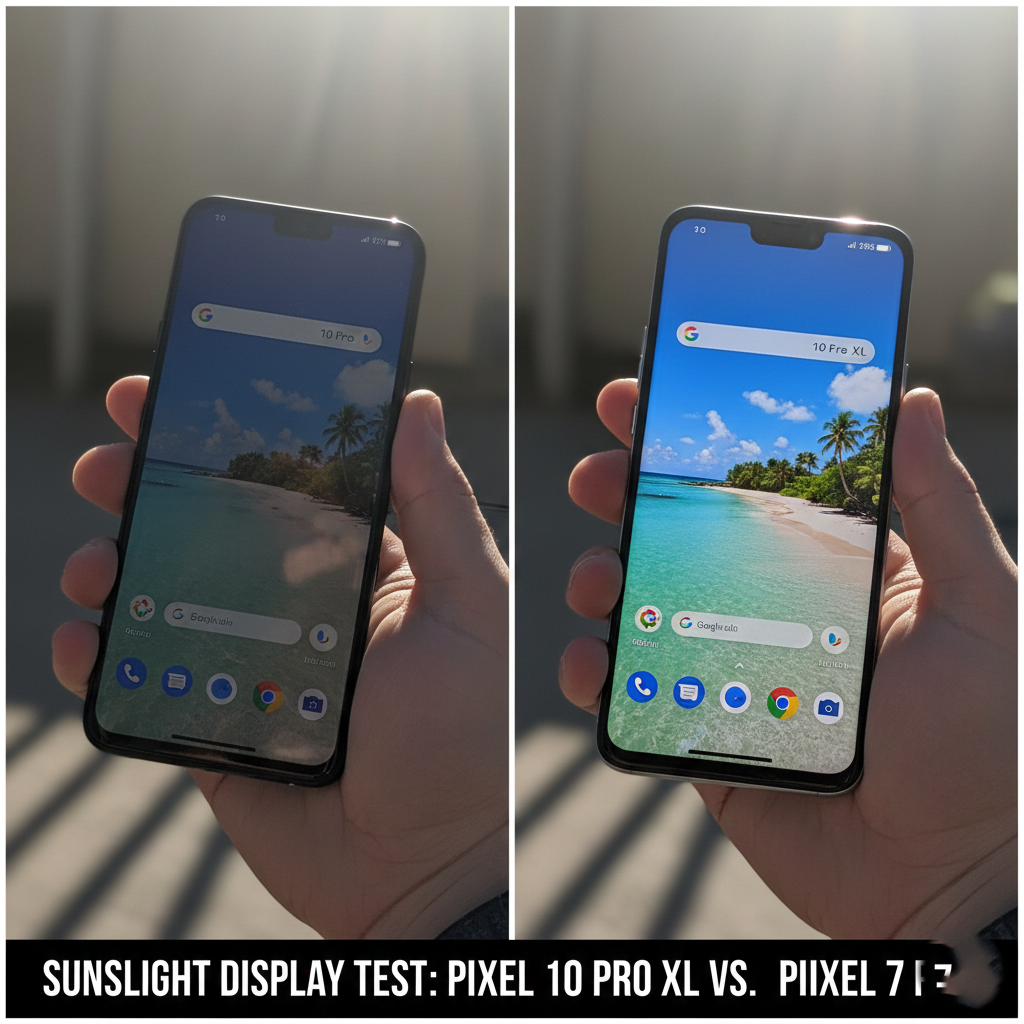
Google has made massive strides in screen technology. The Pixel 10 Pro XL and 9 Pro XL move to a flat 6.8-inch display, whereas the 8 and 7 Pro utilized curved 6.7-inch screens. The most noticeable improvement is brightness. While the Pixel 7 Pro was already bright, the Pixel 10 Pro XL hits an incredible 2,444 nits of typical brightness and a tested peak of 3,117 nits. This makes it one of the easiest screens to view in direct desert sunlight.
Camera Comparison: Incremental Gains?
On paper, the main 50MP sensors haven’t changed drastically over the last few years. In well-lit scenarios, all four phones produce nearly identical photos with perfect HDR and color accuracy. However, white balance has progressively shifted toward a warmer, more natural tone with each new model.
The real changes are in the details:
- Ultrawide: The 9 and 10 Pro XL feature 48MP sensors that offer better low-light performance than the 12MP sensor on the 7 Pro.
- Portrait Mode: The Pixel 10 finally allows for 1x zoom portraits, whereas older models were capped at 1.5x.
- Zoom: The Pixel 10 Pro XL introduces “ProRes Zoom,” using AI to fill in details at up to 100x zoom, outclassing the 30x limit of the older models.
Performance and Gaming: The Tensor G5 Test
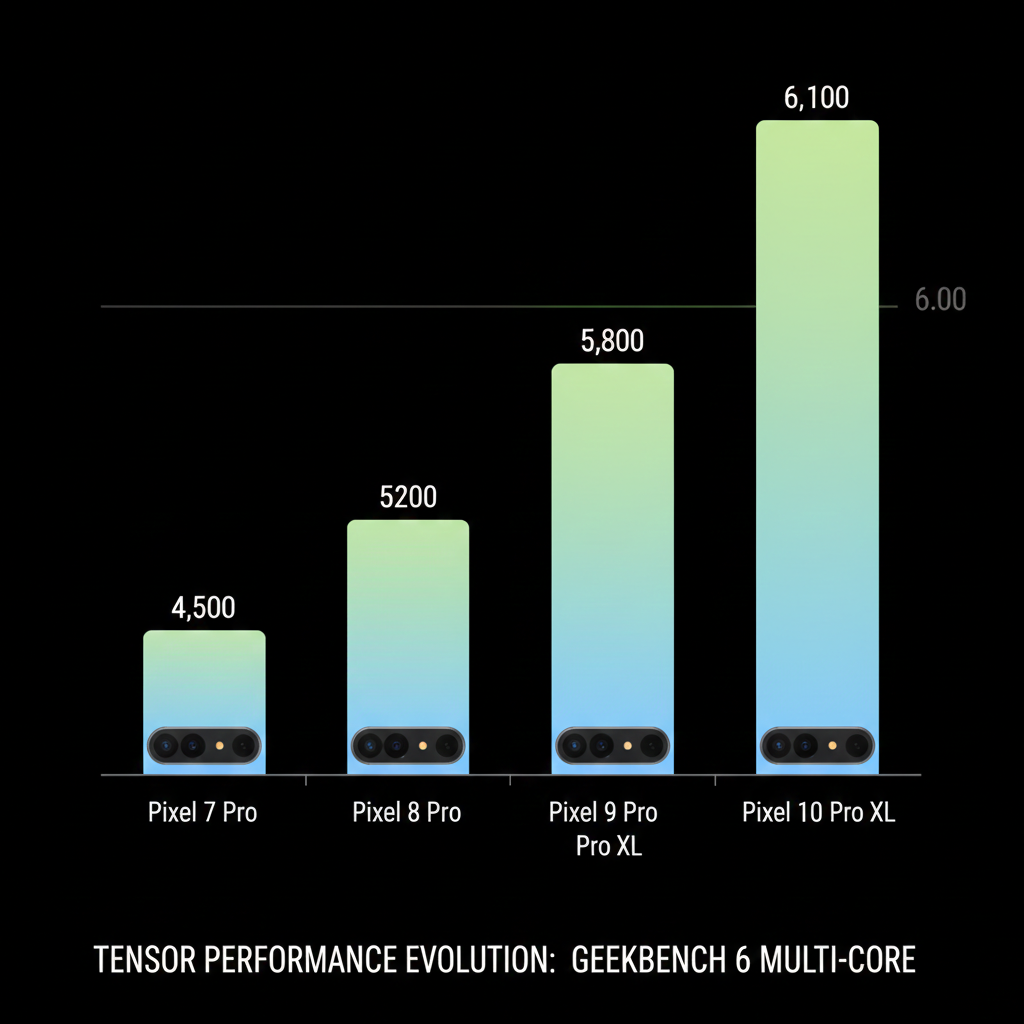
The Pixel 10 Pro XL debuts the Tensor G5, built on a 3nm process from TSMC. While it marks a multi-core score milestone by breaking the 6,000-point barrier in Geekbench 6, real-world testing tells a more complex story. In several benchmarks, the Pixel 9 Pro XL actually outperformed the 10, likely due to early GPU driver issues on the newer chip.
One thing remains clear: Pixel phones are built for AI and efficiency, not hardcore gaming. If you’re looking to play demanding titles at max settings, other flagships may still lead the pack, but for on-device AI tasks, the Tensor series remains highly optimized.
Software: The AI-First Experience
All these devices now run Android 16 with the “Material 3” expressive interface. The Pixel 10, however, gets exclusive party tricks:
- Pixel Journal: An AI-powered journaling assistant.
- Camera Coach: Uses AI to guide your photography in real-time.
- Voice Translate: Real-time speech translation during calls.
Google offers 7 years of OS and security updates for the 10, 9, and 8 series, while the 7 Pro is supported until October 2027.
Battery and Charging: Zippy Upgrades
The Pixel 10 Pro XL packs the largest battery yet at 5,200 mAh and sees a boost to 45W wired charging. In our tests, it charged from 0 to 100% in 1 hour and 26 minutes—a significant lead over the 1 hour and 37 minutes required by the Pixel 7 Pro. Notably, the Pixel 10 sacrifices reverse wireless charging to accommodate its new magnetic “Pixel Snap” ring.

Which Pixel Should You Buy?
The Pixel 10 Pro XL is a refined, slight upgrade over the 9 Pro XL. It’s the right choice if you are heavily invested in magnetic accessories or if you are upgrading from a 7 Pro or older. However, for most users, the Pixel 9 Pro XL currently represents the smartest buy, offering nearly identical design, excellent performance, and a lower price point on the secondary market.















Leave a comment