


The Spectrum of Survival: How Human Skin Color Evolved
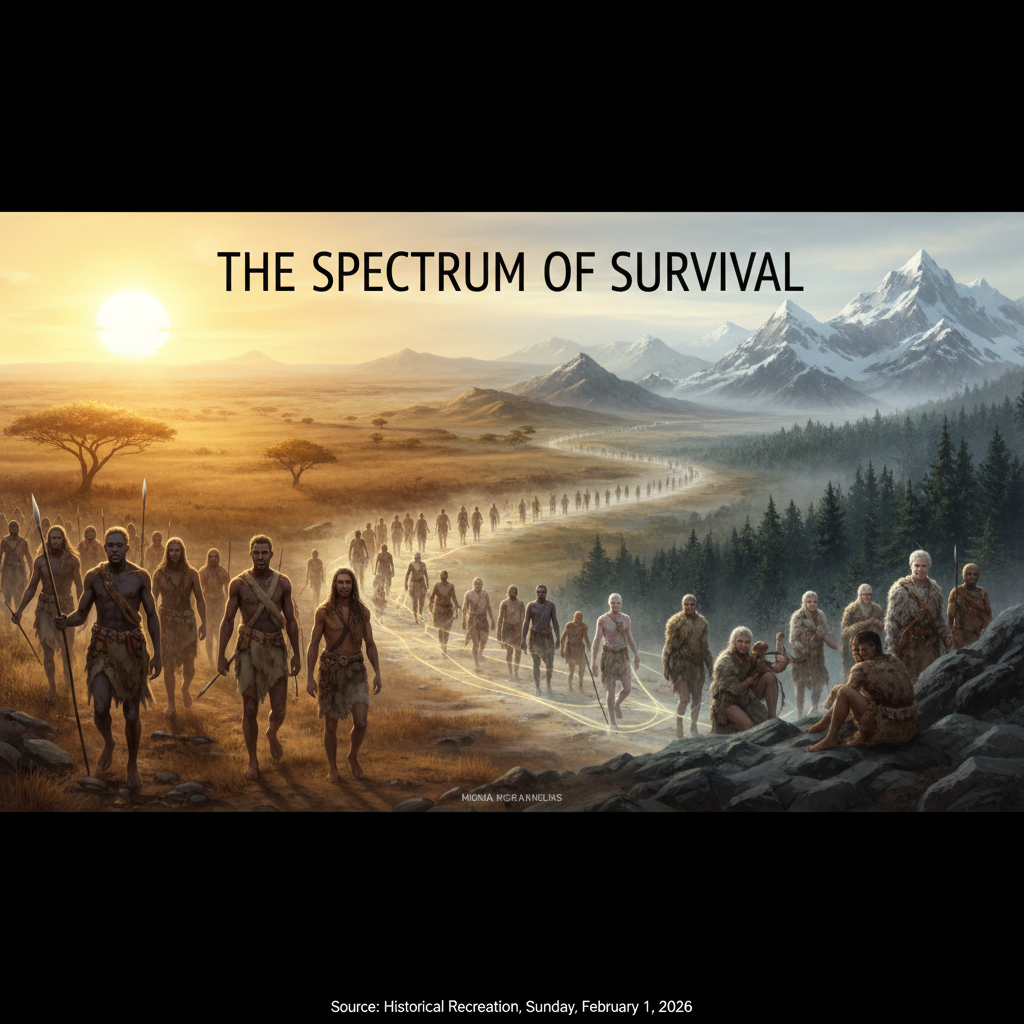
Every human alive today, all 8 billion of us, shares a common heritage. Approximately 200,000 to 300,000 years ago, our ancestors emerged in Africa with a single, highly effective adaptation: dark brown, melanin-rich skin. This was the original human baseline, perfectly designed for the intense, equatorial sunshine of the African savanna.
Yet, as we look around today, we see an extraordinary range of skin tones. The story of how some humans became pale while others remained dark is not about different “races” evolving separately for millions of years. Instead, it is a story of desperate survival, environmental pressure, and the body’s incredible ability to adapt in just a few thousand years.
The Original Human Baseline: Dark Skin
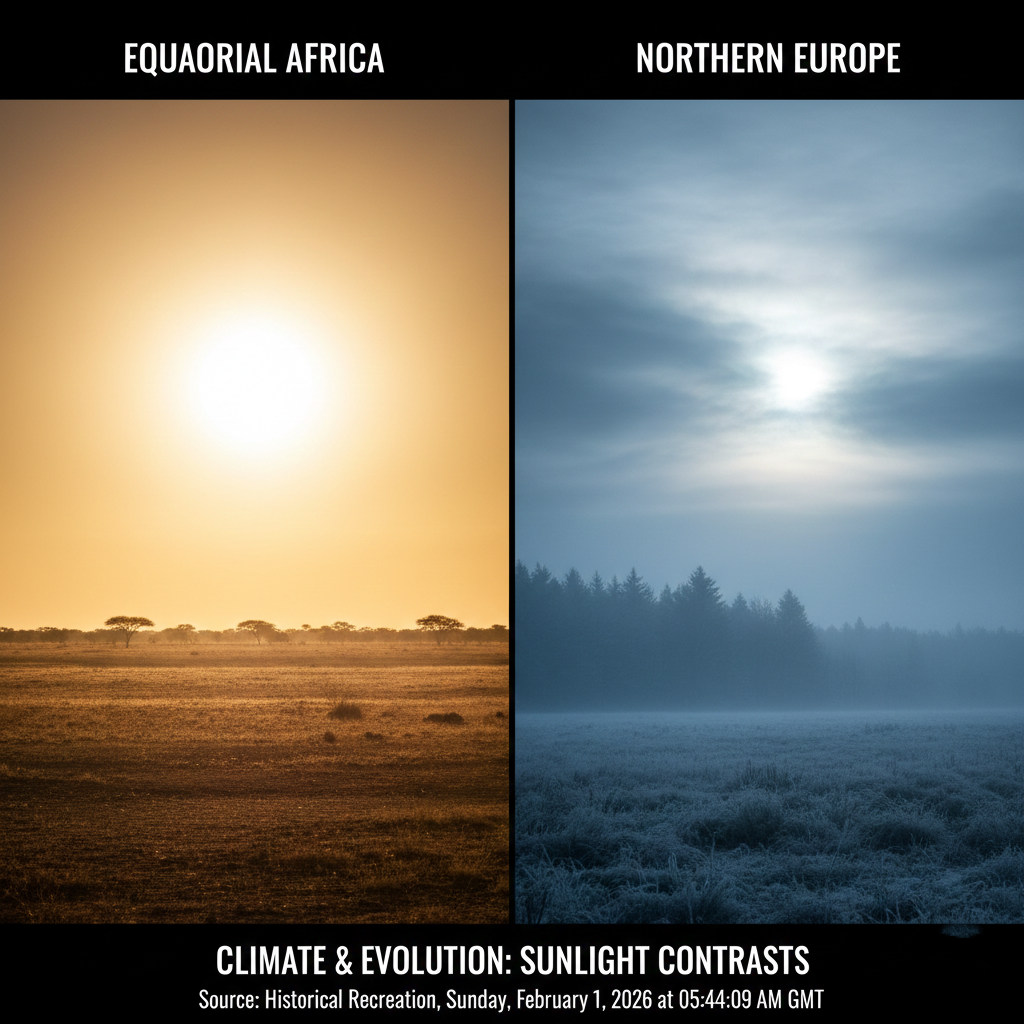
In equatorial Africa, the sun is a constant, powerful force. Early humans, having lost most of their body hair to stay cool through sweating, faced a major crisis: ultraviolet (UV) radiation. Intense UV rays destroy folate (vitamin B9) in the bloodstream. Folate is essential for healthy pregnancies and DNA protection; its depletion can lead to severe birth defects and reproductive failure.
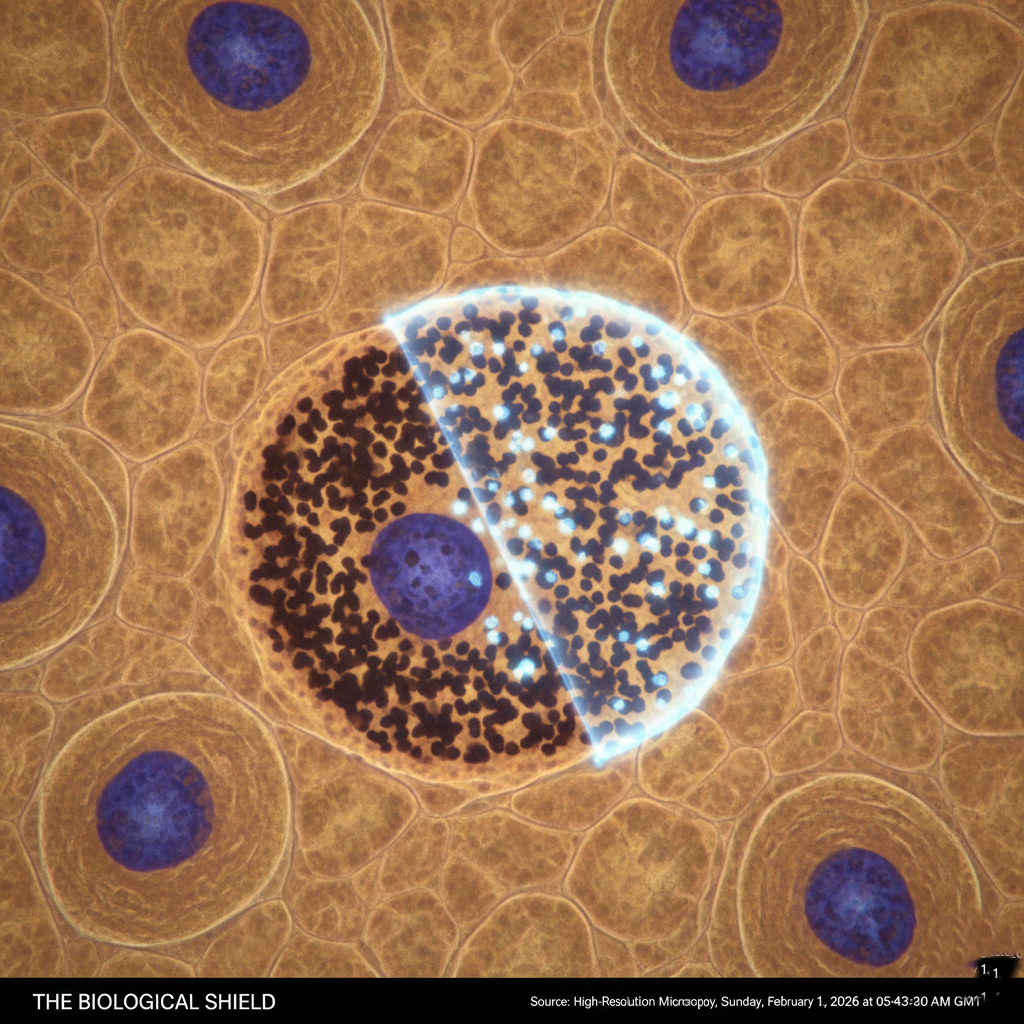
Nature’s solution was melanin. Specifically, eumelanin acts as a biological sunscreen, absorbing and neutralizing UV radiation before it can damage deeper tissues. For over 200,000 years, dark skin was the mandatory standard for human survival. In this environment, any mutation for lighter skin was quickly eliminated because it reduced an individual’s ability to reproduce successfully.
The Great Migration and the Vitamin D Crisis
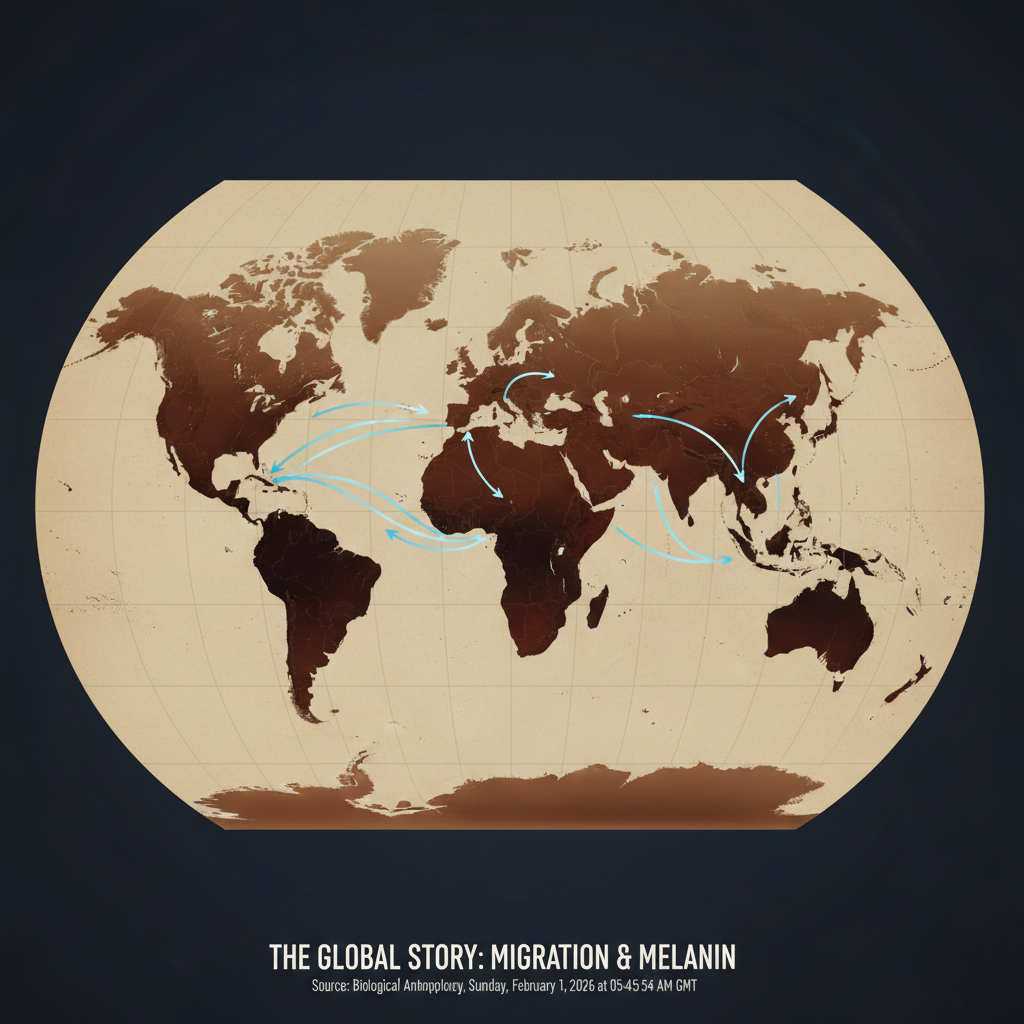
Around 60,000 to 100,000 years ago, small groups of humans began to leave Africa. As they moved north into Europe and Asia, they encountered a new problem: too little sun. While UV radiation is dangerous, it is also necessary. It triggers the production of vitamin D, a hormone vital for bone health, immune function, and successful childbirth.
In northern latitudes, the sun is weaker and often hidden by clouds. Melanin, which was a life-saver in Africa, became a barrier in the north. It blocked what little UV light was available, preventing the body from making enough vitamin D. This led to a health crisis, including rickets and pelvic deformities that made childbirth fatal.
The Rapid Shift to Pale Skin
To survive, the human body had to change. Random genetic mutations that reduced melanin production—once a disadvantage—suddenly became a survival “edge.” People with slightly lighter skin could synthesize vitamin D more efficiently, meaning they had stronger bones and were more likely to survive and raise healthy children.
The most famous of these changes is a mutation in the SLC24A5 gene. This single “typo” in the genetic code reduced melanin production by about 30–40%. Interestingly, pale skin evolved multiple times independently. While Europeans developed light skin through certain genetic pathways, East Asian populations developed it through different mutations in genes like EDAR and OCA2. This is a classic example of convergent evolution: different groups finding the same solution to the same environmental problem.
The Agricultural Revolution and Skin Color
While migration started the process, agriculture accelerated it. Early hunter-gatherers in the north, like “Cheddar Man” in Britain, often maintained darker skin longer than we might expect. This was likely because their diet was rich in vitamin D from fatty fish and game.
However, about 8,000 to 10,000 years ago, humans transitioned to farming. Grains like wheat and barley contain no vitamin D. As northern populations moved away from fish-heavy diets toward grain-based ones, the vitamin D crisis became acute. The evolutionary pressure for pale skin exploded, and light-skinned genes swept through these populations in just a few thousand years—an evolutionary blink of an eye.

The Myth of Race vs. Biological Reality
Modern genetics has proven that the visible differences we call “race” represent an incredibly tiny fraction of our DNA. Only about 15 to 30 genes out of approximately 20,000 control skin color. A person with very dark skin and a person with very pale skin are genetically 99.9% identical.
Skin color is not a marker of intelligence, capability, or fundamental biological difference. It is simply a “weather report” from the past—a record of how much sunlight your ancestors had to negotiate with to stay alive.
A Shared Human Story
Today, global migration and technology have decoupled skin color from local sunlight. We use sunscreen in the tropics and take vitamin D supplements in the north. The slow, 50,000-year negotiation between our skin and the sky has been “hacked” by modern science.
Understanding the evolution of skin color reminds us that we are one single, highly adaptable family. Every shade of skin is a masterpiece of adaptation, a biological love letter from our ancestors saying, “We found a way to survive here so that you could exist today.”














Leave a comment