


The Nine Core Human Rights Treaties
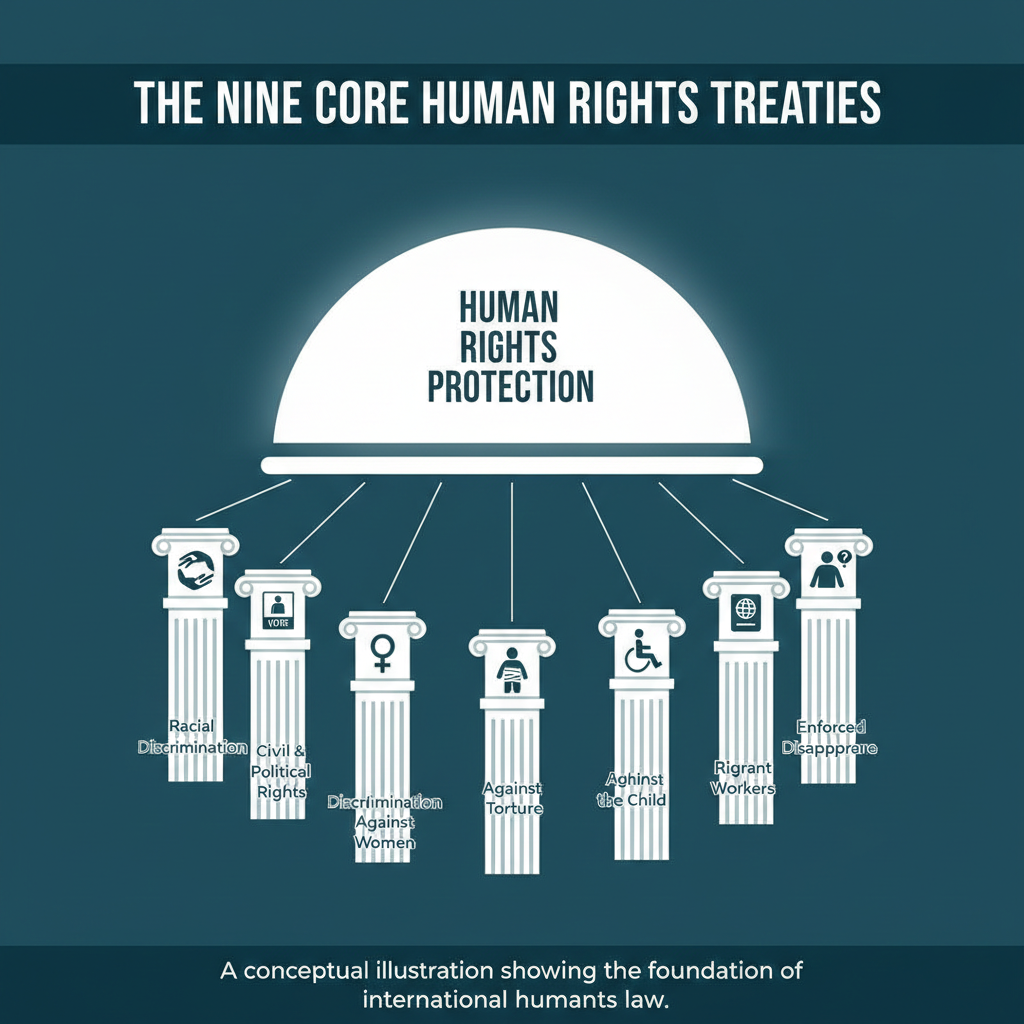
While the Universal Declaration of Human Rights provides the moral foundation, nine core international treaties translate those values into legal obligations. These include:
- Racial Discrimination: Eliminating all forms of racial bias.
- Civil and Political Rights: Protecting individual liberties and the right to participate in government.
- Economic, Social, and Cultural Rights: Ensuring access to education, work, and health.
- Discrimination Against Women: Focused on gender equality and women’s rights.
- Against Torture: Preventing cruel, inhuman, or degrading treatment.
- Rights of the Child: Specific protections for minors in all circumstances.
- Migrant Workers: Protecting the rights of migrants and their families.
- Disabilities: Ensuring full equality for persons with disabilities.
- Enforced Disappearance: Protecting individuals from secret state detentions.
The Role of Treaty Bodies
Each treaty is monitored by a specific committee of independent experts—the “treaty bodies.” These committees, ranging from 10 to 25 members, are nominated by states but act in their personal capacity. Their primary functions include:
- Reviewing State Reports: Assessing how well a country is living up to its treaty obligations.
- Adopting General Comments: Providing interpretations of treaty provisions to guide states.
- Handling Individual Complaints: Most committees can receive petitions from individuals who claim their rights have been violated.
- Conducting Inquiries: Investigating reliable information of grave or systematic violations.
The Reporting Cycle: A Constructive Dialogue
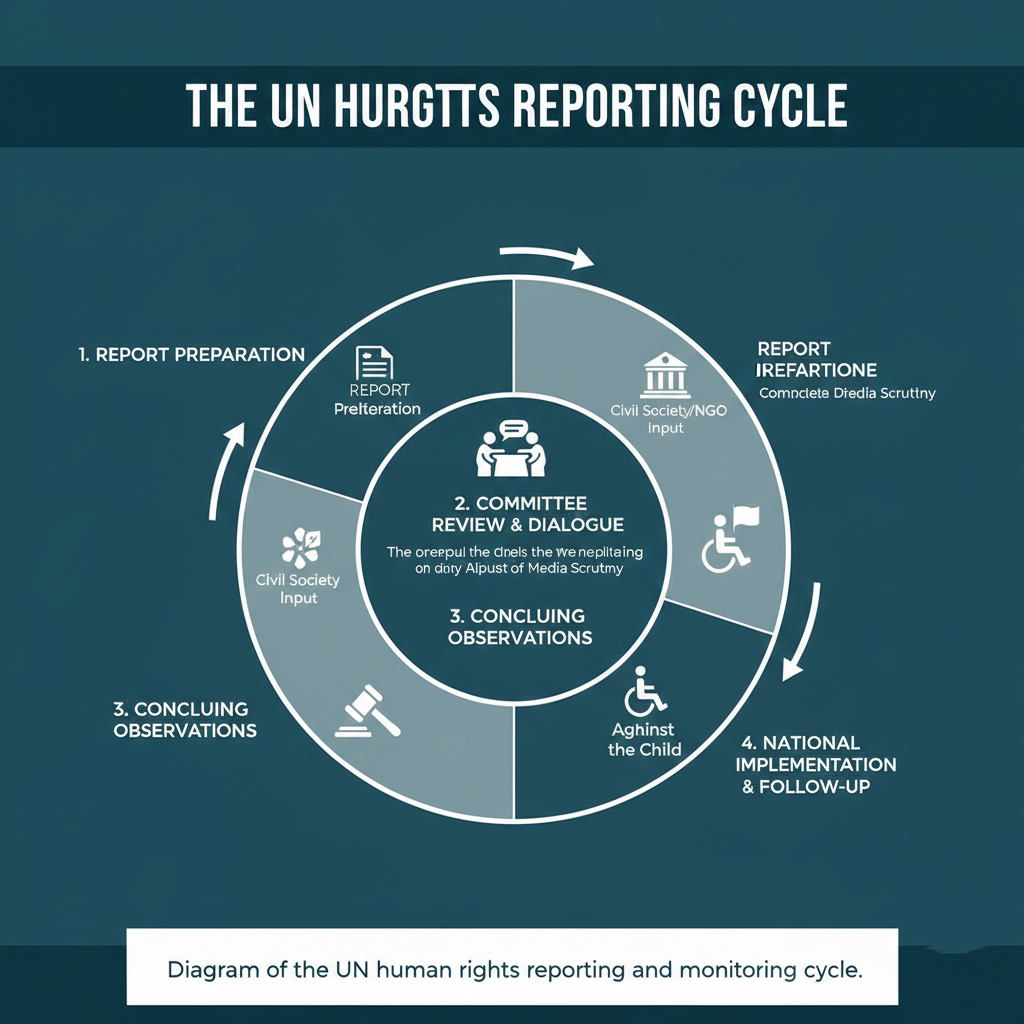
The monitoring process is designed as a continuous cycle rather than a one-time event. It involves several key stages:
- Preparation: States draft reports on their human rights situation, ideally consulting with civil society and NGOs.
- List of Issues: The committee reviews the report and sends a list of specific questions to the state.
- Constructive Dialogue: A face-to-face meeting between the state delegation and the committee members to discuss progress and challenges.
- Concluding Observations: The committee issues a public document highlighting achievements and areas for improvement.
- Follow-up: The state is expected to implement the recommendations at the national level, supported by the media and civil society.
Individual Complaints and Inquiries
In cases where a state has accepted the procedure, individuals can bring complaints directly to the UN committees after exhausting local legal options. This “test of goodwill” allows the committees to recommend specific remedies, such as compensation, release from prison, or legislative changes.
Furthermore, committees dealing with torture, women’s rights, and disability rights have the power to conduct confidential inquiries and even visit countries to investigate serious allegations of systematic abuse.
The UN Human Rights Treaty Body system serves as a vital bridge between international law and national reality. By fostering a “politics of recognition” and maintaining a constant dialogue with states, these bodies work to ensure that the promise of dignity and equality is realized for every human being.













Leave a comment