


We have all been there. You finish your fifth 7-hour “Zero to Hero” coding bootcamp video. You feel productive. You feel ready. Then, you open VS Code to start a project from scratch, and… blank stare. You can’t type a single line without checking a guide.
This is Tutorial Hell: the spiral of passively consuming coding content without producing any non-tutorial software.
If you are ready to stop watching and start building, here is a proven two-part program to break the cycle.
The 3 Prerequisites
Before you start this rehab program, you need three things:
- Basic Concepts: You must understand variables, loops, conditionals, and functions. (If you are doing frontend, add HTML/CSS basics).
- A Narrow Stack: Pick one lane (e.g., Frontend Web Dev, Mobile Dev, or Backend). Don’t try to learn everything at once.
- The Promise: You must promise not to watch another tutorial until you finish this exercise. No Udemy, no YouTube, no “wholesome looking dudes from freeCodeCamp.”
Phase 1: The 50 Small Projects Challenge
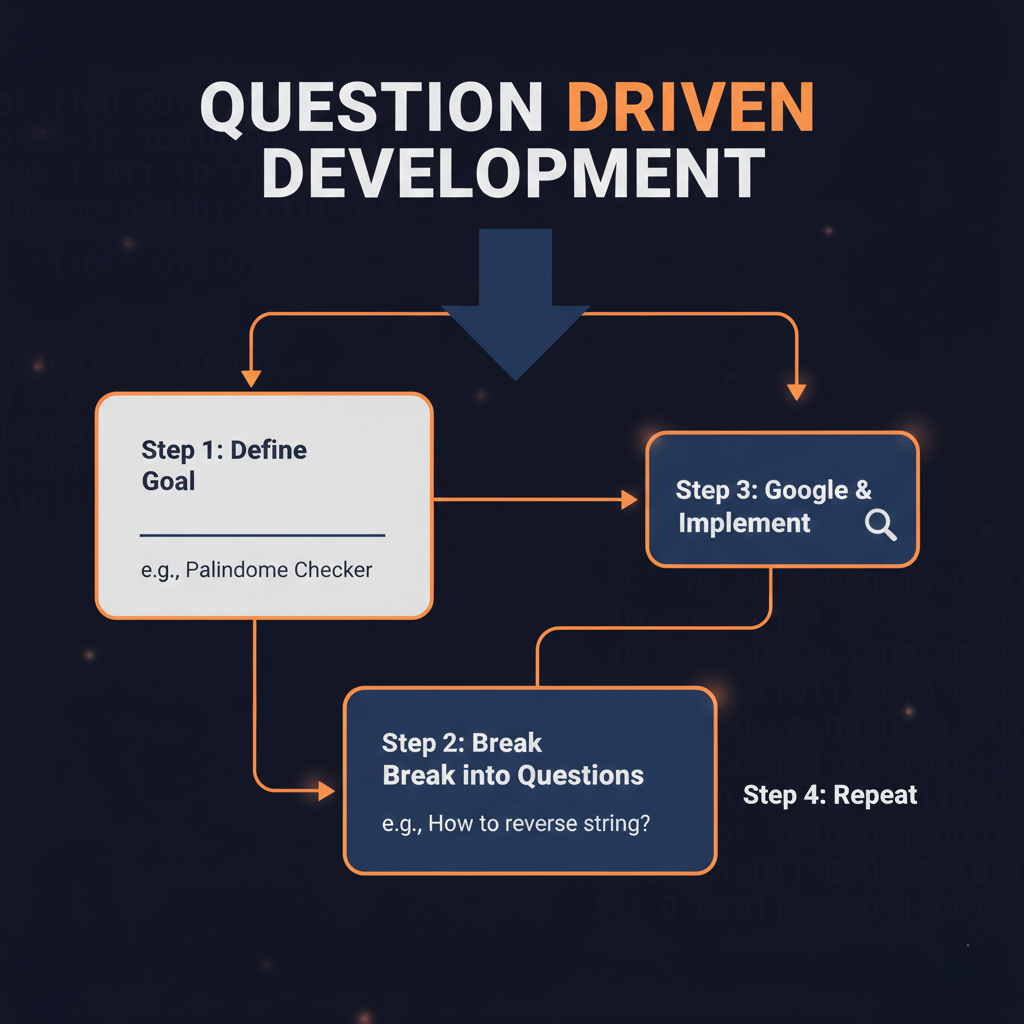
The first step to independence is Question Driven Development (QDD), a framework coined by Nick Janetakis that mimics real-life software engineering.
The Goal: Build 50 small projects. The Rule: Each project must be less than 100 lines of unique code (no boilerplate).
How QDD Works
Instead of following a recipe, you start with a goal and break it down into questions that you Google.
- Find a Problem: Search for “Beginner exercises in [Your Language].” You will find prompts like “Create a temperature converter” or “Check if a word is a palindrome.”
- Ask Questions: For a palindrome checker, don’t look up a tutorial on “How to make a palindrome checker.” Break it down:
- Question 1: “How do I reverse a string in JavaScript?” -> Google it.
- Question 2: “How do I compare two strings in JavaScript?” -> Google it.
- Assemble: You will likely copy-paste snippets from Stack Overflow. That’s okay! The skill you are learning is how to stitch those snippets together into working logic.
Why this works: It creates a positive feedback loop. You solve small problems, get a dopamine hit, and warm up your brain without overwhelming it.
Phase 2: Clone 10 Websites
Once you have warmed up with 50 tiny scripts, it’s time to level up. Your next task is to clone 10 websites that you find cool or unique.
Why Clone?
Beginners often get stuck on “What should I build?” or “How should it look?” Cloning removes these obstacles. You don’t have to think about design or functionality choices; you just have to reverse-engineer them.
The MVP Strategy
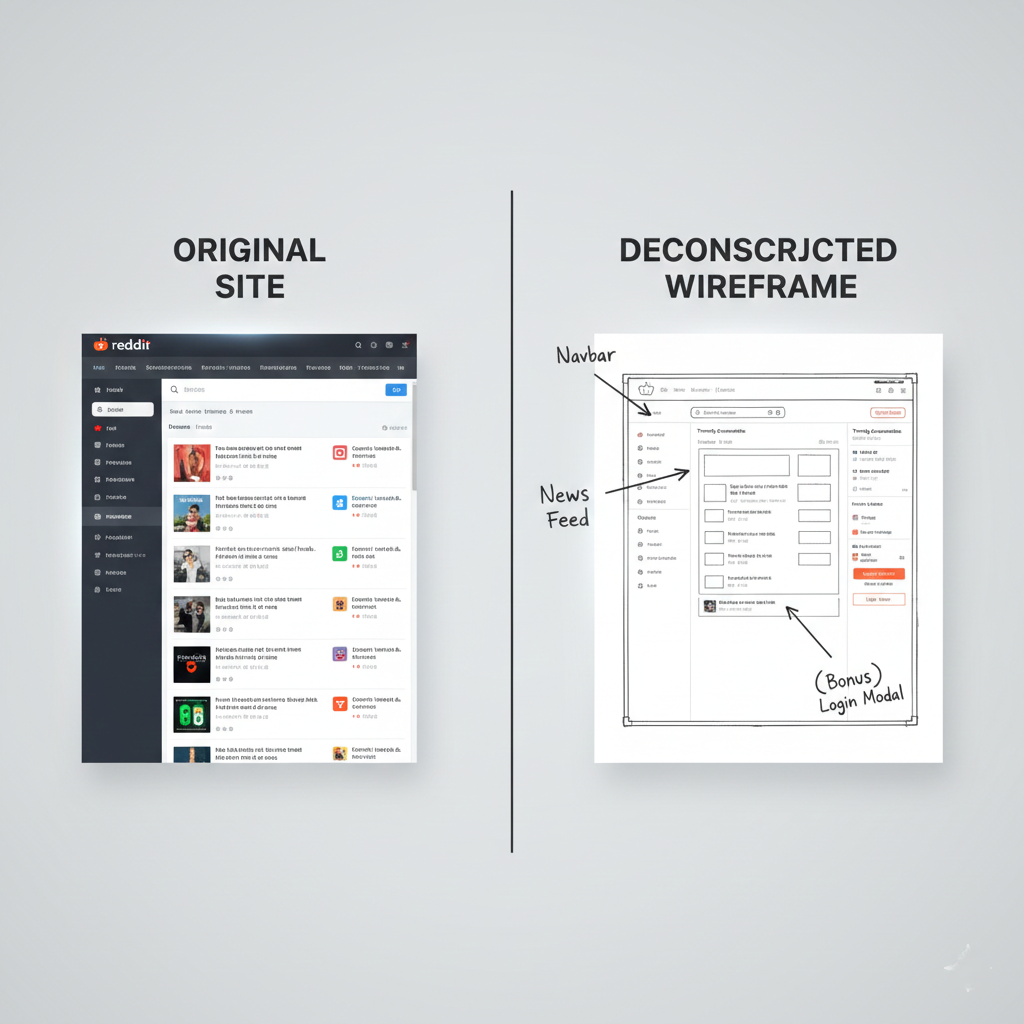
Don’t try to build Facebook in a day. Use Decomposition to break the site down into a Minimum Viable Product (MVP).
If you are cloning the Reddit landing page, your MVP list might look like this:
- Navbar
- Sidebar
- News Feed
- (Bonus) Pop-up Login Modal
Treat each of these features as a “mini-project” from Phase 1.
- How do I make a navbar? -> Break it down: “How do I make a search bar?” “How do I add an icon?”
- How do I make a sidebar? -> “How to use Flexbox for columns?”
Decomposition is the most vital skill for any developer. It turns a terrifyingly large project into a checklist of solvable Google queries.
Maintenance: The “Learn Then Build” Rule
Eventually, you will need to watch tutorials again to learn new technologies. To ensure you don’t relapse into tutorial hell, follow this golden rule:
For every tutorial section you watch, build 3 tiny projects using what you just learned.
If you watch a video on “Forms and Inputs,” close the video and immediately build three crappy, ugly forms on your own. This reinforces the knowledge and proves you can use it without a guide holding your hand












Leave a comment