



The $150,000 Demand: Ownership vs. Usage
One of the most explosive claims made by Kwesi Arthur was that he was being asked to pay $150,000 just to use images of himself. According to Ground Up Chale’s lawyer, this is a significant “misinterpretation” of the facts.
The label clarifies that the demand is not a claim to “own” the artist’s person or image, but rather a legal notice regarding commissioned intellectual property. The imagery in question—photos and videos from past album campaigns—was financed and directed by the label. Using these assets for new, independent projects without a license constitutes a copyright violation. The $150k figure represents the retroactive and ongoing licensing fees for the commercial exploitation of these specific assets.
The Financial Records: “Not a Single Dime”?
Kwesi Arthur alleged that he had not made a dime from his music during his time with the label. However, Ground Up Chale has presented email chains and accounting reports as evidence to the contrary.
According to the legal team:
- Royalty Distributions: Over £91,000 has been distributed to the artist as royalties.
- Direct Advances: The artist allegedly went behind the label to a third-party distributor and collected an advance of approximately $118,000 on the Son of Jacob project.
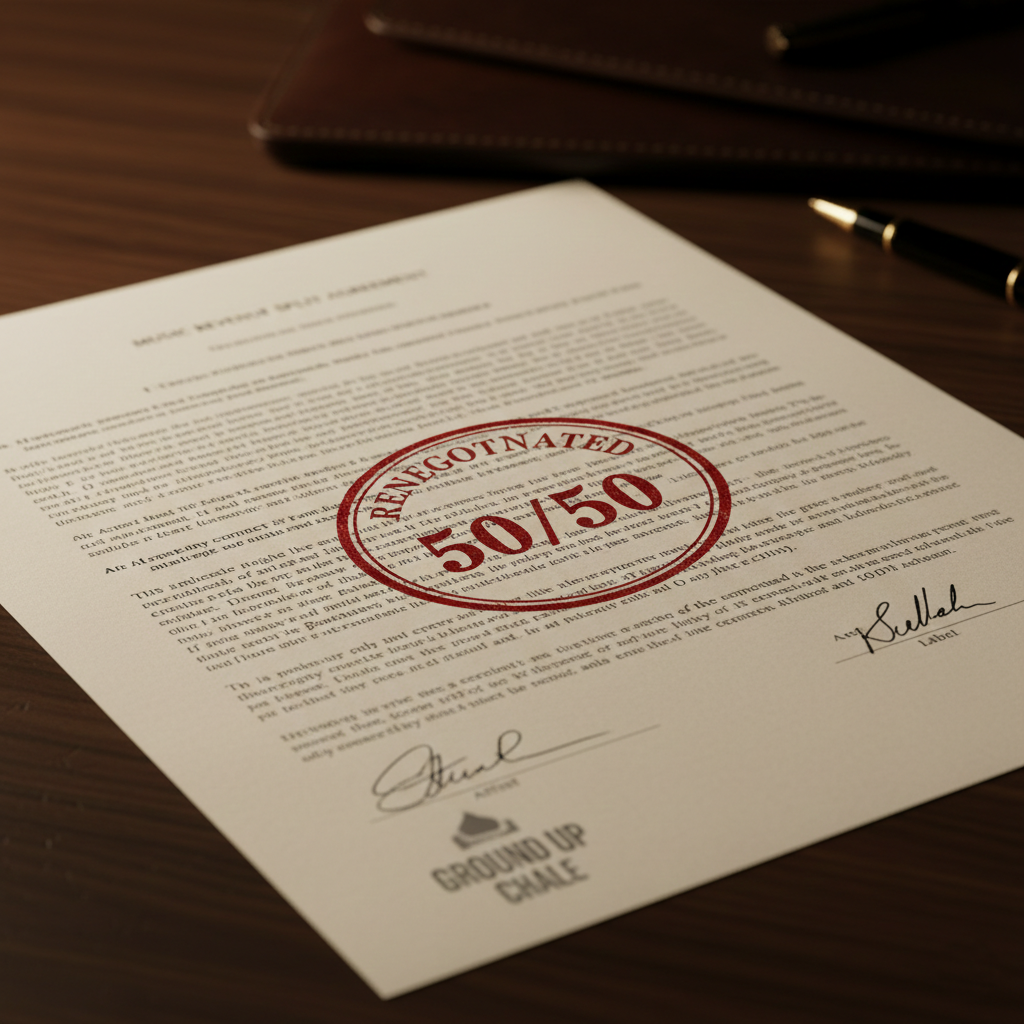
- Revenue Splits: The original 2017 contract (60/40 split) was renegotiated to a more favorable 50/50 split in 2021 to recognize the artist’s growing status.

The Contractual “Walk Away”
A major point of contention is the status of the artist’s contract. Ground Up Chale states that Kwesi Arthur signed a 4-year deal in 2017 with a 2-year renewal option that would have lasted until 2023. The label alleges that the artist “walked away” from his obligations in 2022, shortly after the release of Son of Jacob, without properly terminating the agreement or fulfilling promotional duties.
The Human Element: Attempts at Mediation
Despite the escalating legal threats, Ground Up Chale’s team claims they have consistently sought an amicable resolution. The lawyer shared that meetings were arranged with Kwesi Arthur’s father to mediate the situation, but the artist allegedly failed to attend.
The label emphasizes that their goal is not to stop the artist from releasing music, but to protect the “economic risk” taken by the investors who bootstrapped the artist’s career from an unknown talent to a household name.
A Cautionary Tale for the Culture
The Kwesi Arthur vs. Ground Up Chale saga serves as a critical lesson in the importance of legal literacy and business management in the music industry. While the “mob behavior” of social media often picks a side instantly, the reality is often buried in the fine print of contracts and accounting ledgers. As this case moves toward a potential legal showdown, the industry is watching closely to see how the balance between artist freedom and investor rights will be settled.















Leave a comment