


The streaming wars just went nuclear. In a move that has shaken Hollywood to its core, Netflix has reportedly offered a staggering $83 billion to acquire Warner Bros. Discovery.
This isn’t just another corporate merger. According to a deep-dive analysis by popular culture critic Captain Midnight, this deal represents a fundamental clash of philosophies that could permanently alter the movies we watch, the theaters we visit, and the prestige TV we love.
Is this the dawn of a new super-platform, or the death knell for the “Golden Age” of cinema? Let’s break down the details, the rivals, and the risks.
The Deal: Cherry-Picking the Crown Jewels
Netflix isn’t trying to buy all of Warner Bros. Discovery. They are trying to buy the future while discarding the past.
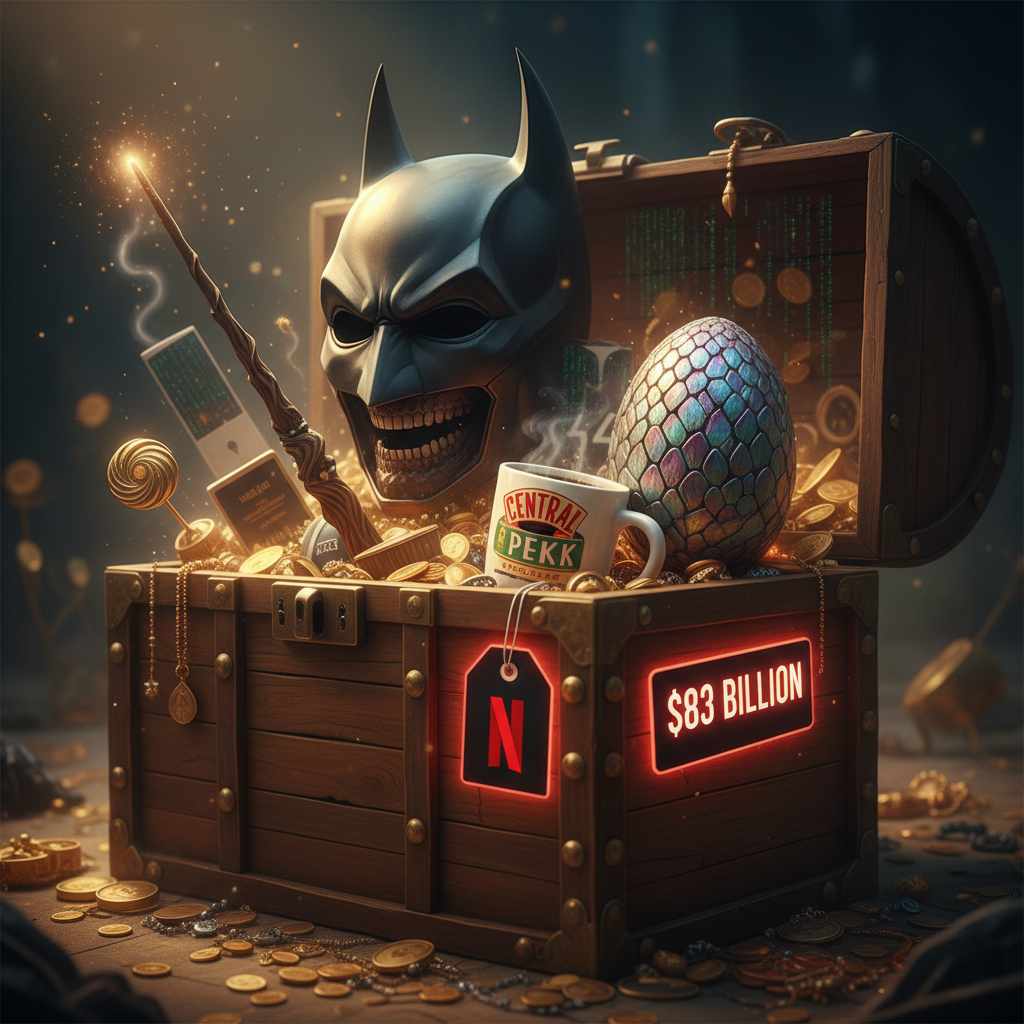
The structure of the deal is unique. Netflix is primarily interested in the Warner Bros. Film Studio and the HBO/Max streaming service. These assets hold some of the most valuable Intellectual Property (IP) in history:
- Harry Potter
- DC Comics (Batman, Superman, Joker)
- Game of Thrones
- The Matrix
- Friends
The “Bad Bank” Strategy
So, what happens to the rest? Netflix plans to take the massive debt load of Warner Bros. and the dying linear television channels (like CNN, TNT, and The Discovery Channel) and spin them off into a separate, debt-ridden company—effectively a “bad bank.”
This creates a lean, IP-rich Netflix super-entity, leaving the old cable world to sink on its own.
The Rival: Paramount’s Hostile Takeover
Netflix isn’t the only shark in the water. Paramount, backed by Skydance and the Ellison family, is launching what Captain Midnight describes as a “hostile takeover.”
Unlike Netflix, Paramount wants the whole package—cable channels included. They view the declining cable assets not as dead weight, but as cash cows that can still be milked for profit. This sets the stage for a brutal bidding war:
- Netflix: Offers a higher stock price and a modern streaming exit strategy.
- Paramount: Offers to keep the company whole but comes with its own baggage.
The “Death of Cinema” Argument
The biggest fear highlighted in Captain Midnight’s analysis is not financial—it’s cultural. Netflix does not care about movie theaters.
Warner Bros. has spent 100 years building its reputation as a “filmmaker-first” studio that champions the theatrical experience. Netflix, conversely, is a tech company focused on user retention.
The Sinners Example
Take Ryan Coogler’s upcoming vampire thriller, Sinners. Warner Bros. is giving it a massive global push, filming it with IMAX cameras, and marketing it as a “must-see” theatrical event.
If Netflix owned that movie? It would likely drop on the app on a random Friday with zero fanfare, designed simply to keep you subscribed for one more month.
Key Insight: “Netflix sees movies as ‘content’—filler to keep you on the app. Warner Bros. sees movies as ‘events.’ If they merge, the Event Movie might die.”
Will The Algorithm Kill HBO?
Perhaps the most terrifying prospect for TV fans is the fate of HBO. For decades, HBO has been the gold standard of television (The Sopranos, The Wire, Succession), relying on careful human curation to pick hits.
Netflix relies on The Algorithm.
Netflix’s strategy is often described as “throwing spaghetti at the wall”—making massive amounts of “slop” content to see what sticks. If Netflix acquires HBO, there is a legitimate fear that the “HBO brand” will be diluted. Instead of carefully crafted dramas, we might see the platform flooded with cheap reality TV and algorithm-generated content, forcing HBO’s creative executives to bow to data rather than art.
Conclusion: The Warner Bros. We Knew Is Gone
Whether Netflix wins with its $83 billion bid or Paramount succeeds with its hostile takeover, one thing is clear: Warner Bros. Discovery as an independent entity is finished.
We are looking at the end of an era. The studio that defined the 20th century of cinema is about to be absorbed by the tech giants of the 21st. The only question left is: will the new owners respect the legacy, or sell it off for parts?
What do you think? Would you trust Netflix with the DC Universe, or would they ruin it? Let us know in the comments below!












Leave a comment