


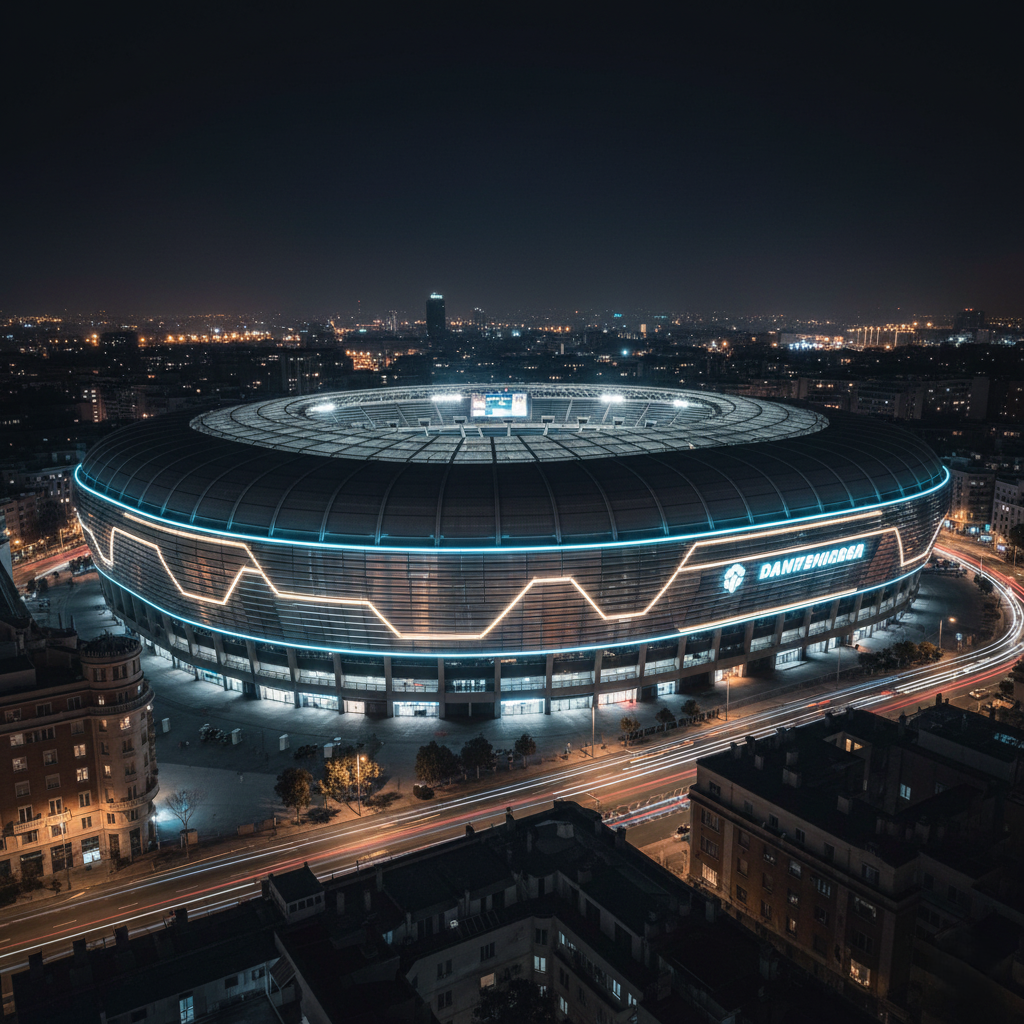
In the heart of Madrid, one of the most ambitious engineering projects in sports history has just been completed. The Santiago Bernabéu, home to Real Madrid since 1947, has undergone a $1.1 billion renovation that is less about adding seats and more about reinventing the business of football.
As documented by National Geographic’s Megastructures, this wasn’t just a facelift—it was a total structural heart transplant. The goal? To transform a 19th-century sports model into a 21st-century, 365-day revenue engine.
1. The Hypogeum: An Underground Garden
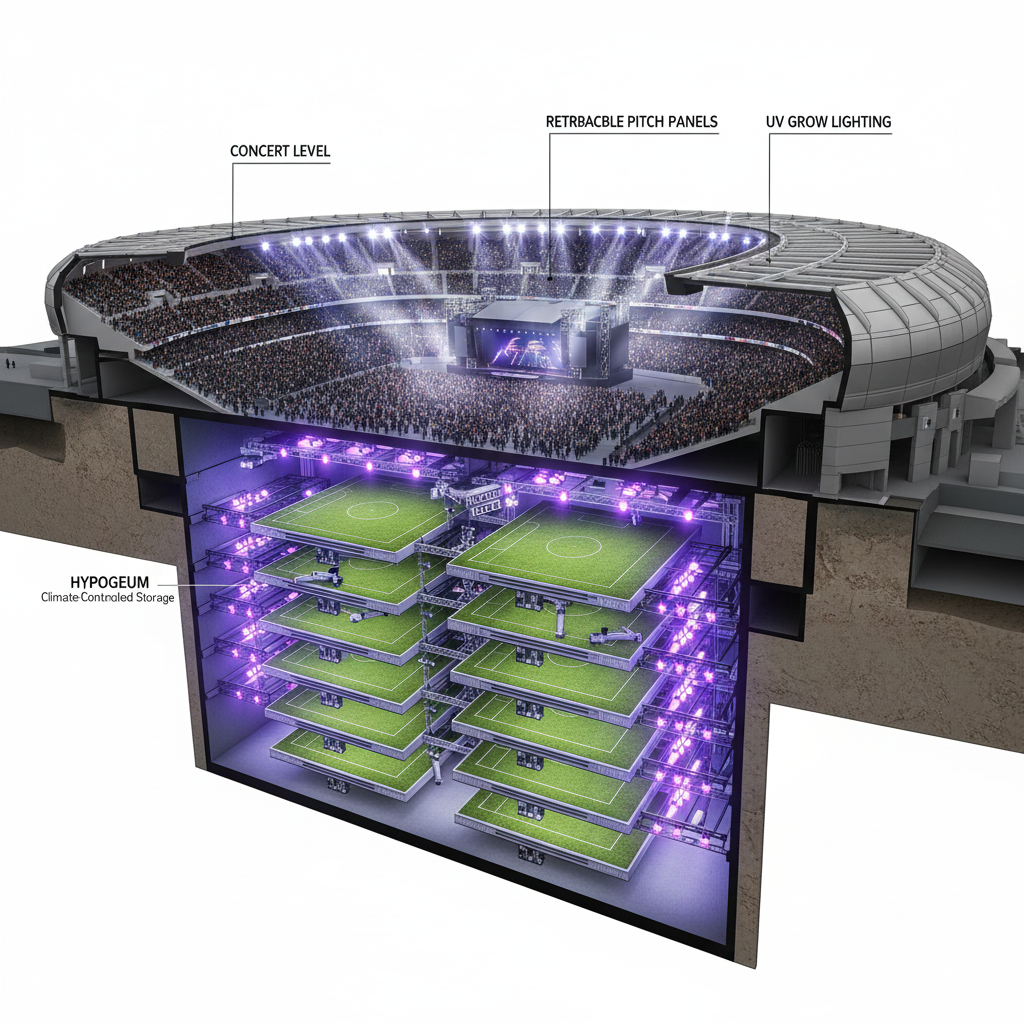
The most revolutionary feature of the new Bernabéu is hidden 30 meters beneath the ground. Known as the Hypogeum, this underground greenhouse allows the stadium to host non-sporting events without damaging the world-class turf.
- How it Works: The pitch is divided into six automated trays that slide into a subterranean chamber.
- Maintenance: While underground, the grass is pampered with ultraviolet lighting, automated irrigation, and specialized climate control systems.
- Versatility: This technology allows the Bernabéu to host concerts (like Taylor Swift’s 2024 tour), basketball games, and even NFL regular-season games (starting in 2025) while the grass rests safely below.
2. The “Metal Skin” Facade
The stadium’s new look is defined by its futuristic, flowing stainless steel facade.
- The Design: Composed of 13,200 unique steel slats, the facade reflects light differently depending on the time of day.
- Engineering Challenge: Engineers spent a year studying the “sheen” of the steel to ensure it wouldn’t blind drivers on the surrounding Paseo de la Castellana or overheat the neighboring buildings.
- Ventilation: The slats are angled to allow natural airflow through the stadium while protecting fans from the elements.
3. A Digital Revolution: The 360° Scoreboard
Inside the bowl, fans are treated to an immersive visual experience thanks to the new 360-degree LED video scoreboard.
- Scale: Covering over 4,000 square meters, it is one of the largest continuous displays in any sports venue.
- Integration: The screen is custom-built to follow the unique curvature of the stadium’s corners, providing every seat in the house a perfect view of stats, replays, and entertainment.

4. Engineering the Impossible: Playing While Building
The most insane feat of the project? Real Madrid never stopped playing at home.
- The Logistic Ring: Construction teams worked around the match schedule, using a specialized “logistics ring” tunnel to move heavy machinery and 2,000-ton trusses without interfering with the pitch or fan access.
- Precision Lifting: The massive roof trusses, weighing twice as much as the Eiffel Tower, were lifted into place with millimeter precision in the middle of a dense urban center.
Conclusion: The Benchmark for 21st-Century Arenas
The new Santiago Bernabéu is more than a stadium; it is a technological platform. By integrating the Hypogeum, a retractable roof, and world-class hospitality, Real Madrid has created a template for how stadiums can remain profitable every single day of the year.
Watch the full engineering documentary here: Real Madrid’s $1 Billion Super Stadium Upgrade | Megastructures
















Leave a comment