


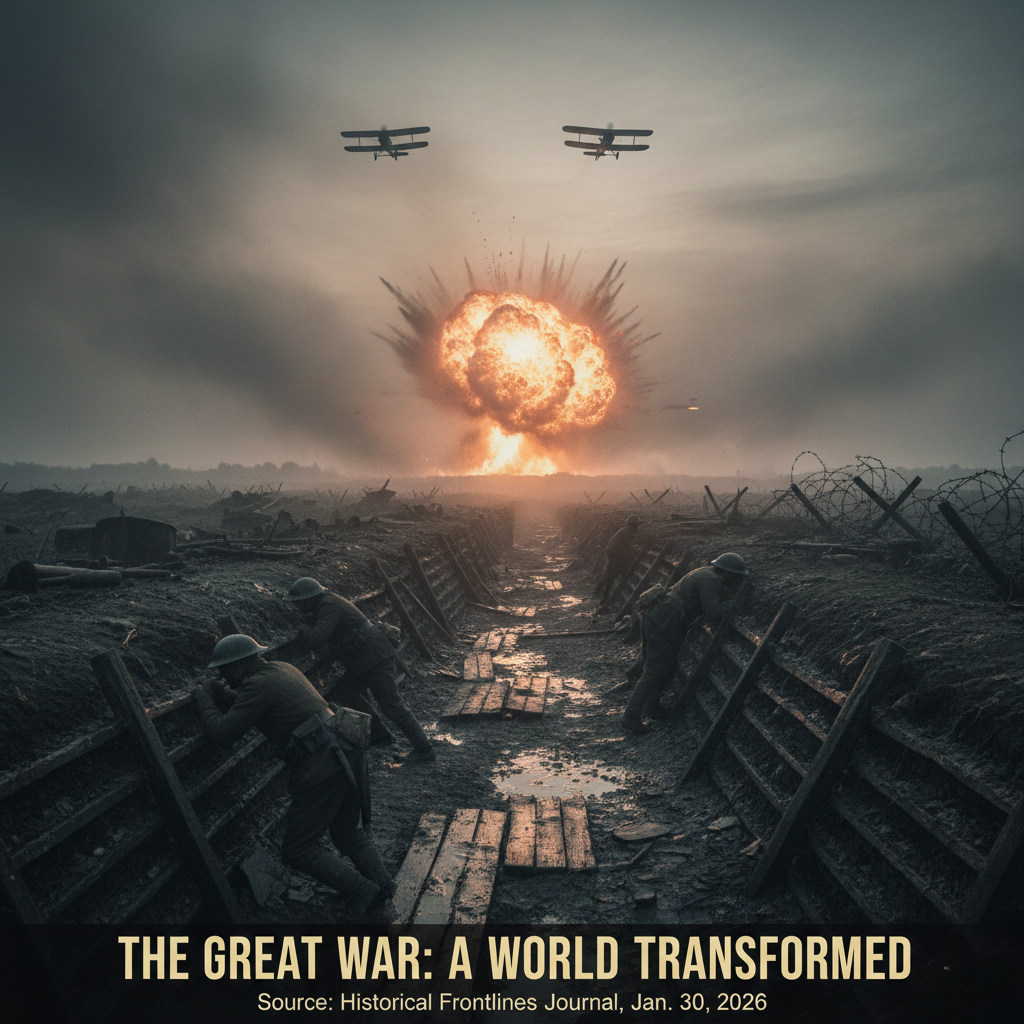
The Great War: A Journey Through World War 1 (1914–1918)
In 1914, the world was plunged into a conflict so vast and destructive that it was simply known as “The Great War.” What was expected to be a short, glorious campaign transformed into a four-year struggle that claimed millions of lives and dismantled the existing world order.
1914: The Spark and the Schlieffen Plan
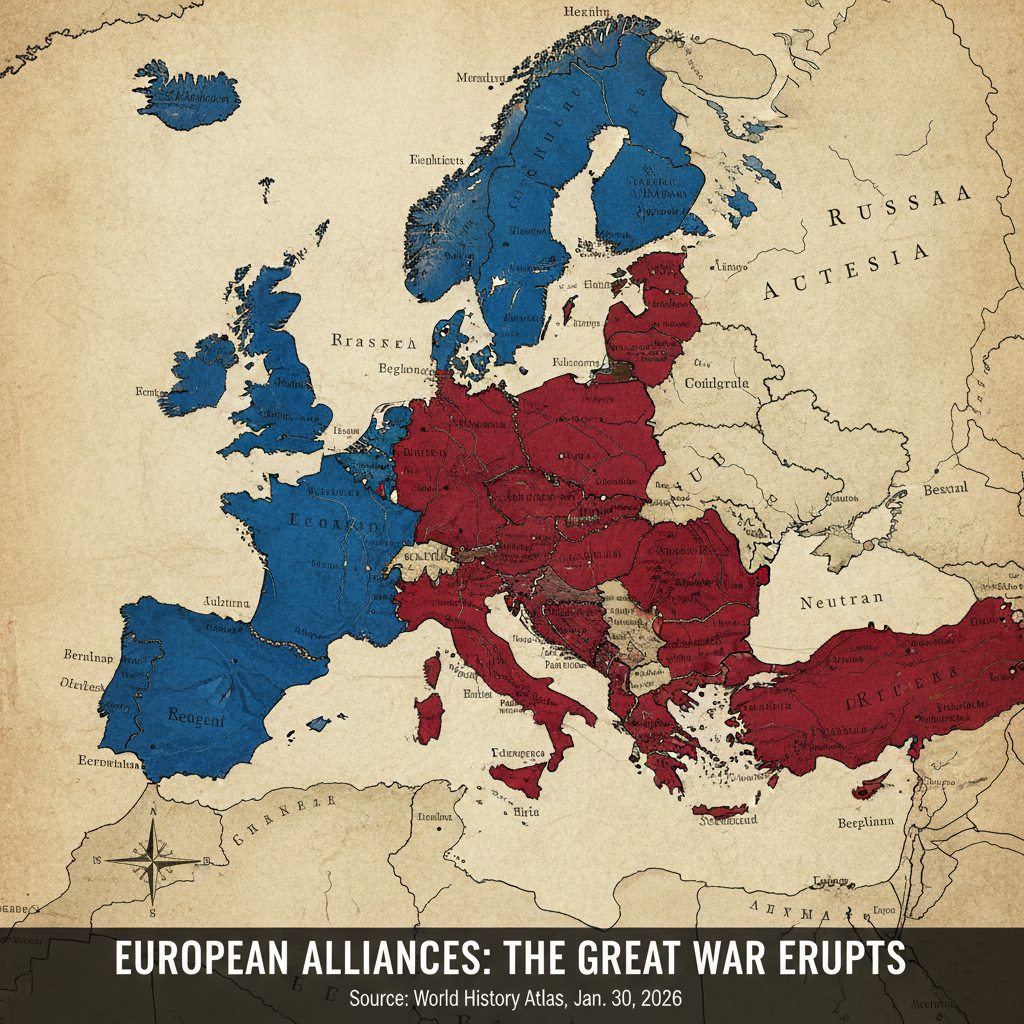
The conflict was ignited on June 28, 1914, in Sarajevo, with the assassination of Archduke Franz Ferdinand, heir to the Austro-Hungarian throne. This event triggered a complex web of alliances. Austria-Hungary declared war on Serbia, drawing in Russia to defend its Slavic ally. Germany, allied with Austria-Hungary, declared war on Russia and its ally, France.
Germany’s strategy, the Schlieffen Plan, aimed for a swift victory by invading neutral Belgium to encircle Paris. This violation of neutrality brought Britain into the war. While the German advance was halted at the River Marne, the resulting stalemate led to the creation of a 350-mile line of trenches stretching from the English Channel to Switzerland. Trench warfare had begun.
1915: Chemical Warfare and Global Conflict
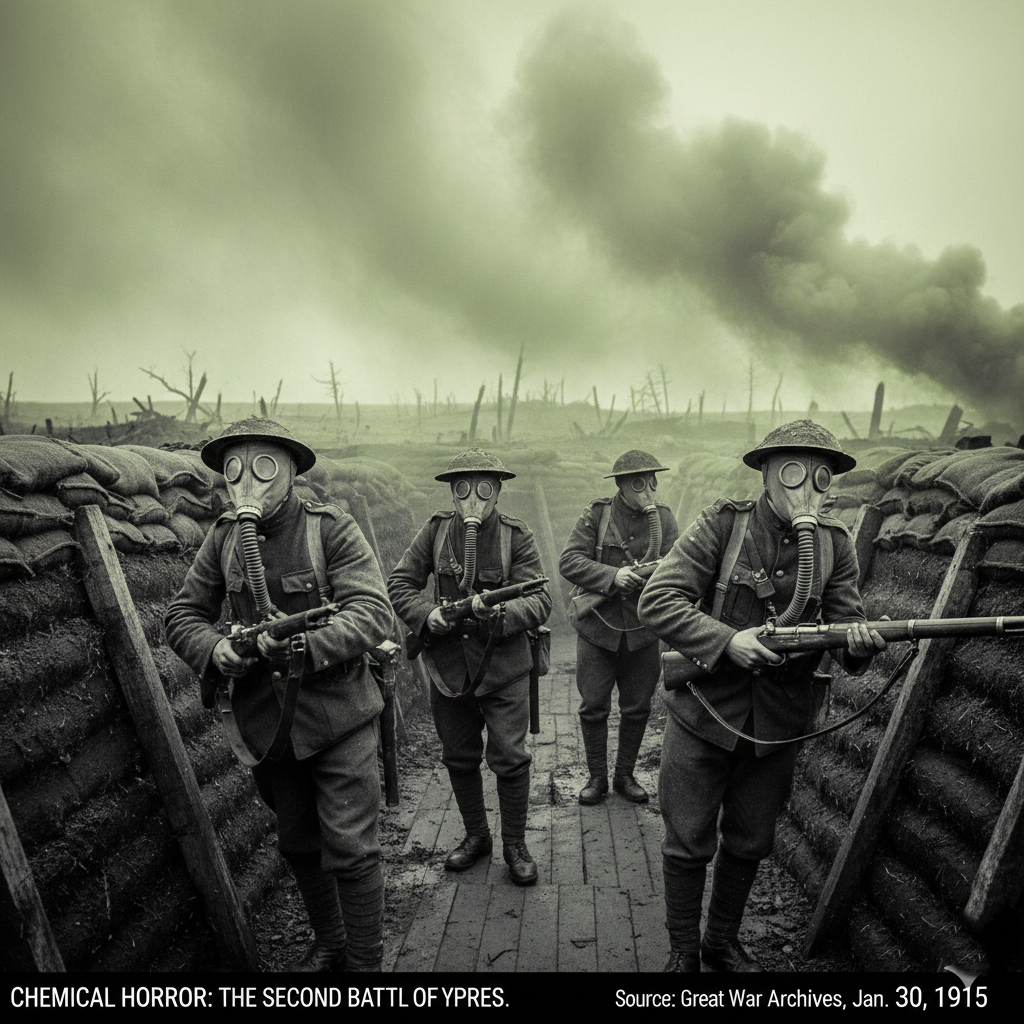
As the stalemate on the Western Front deepened, the war expanded. Germany launched the first strategic bombing campaigns using giant Zeppelins and introduced the horrors of poison gas at the Second Battle of Ypres. At sea, the introduction of the submarine, or U-boat, challenged British naval supremacy, most notably with the sinking of the passenger liner Lusitania.
In the East, the Ottoman Empire joined the Central Powers, leading to the disastrous Gallipoli campaign, where Allied forces suffered heavy losses against determined Turkish resistance. This year also saw the tragic systematic deportation and murder of ethnic Armenians, an event the Allies condemned as a crime against humanity.
1916: The Year of Attrition
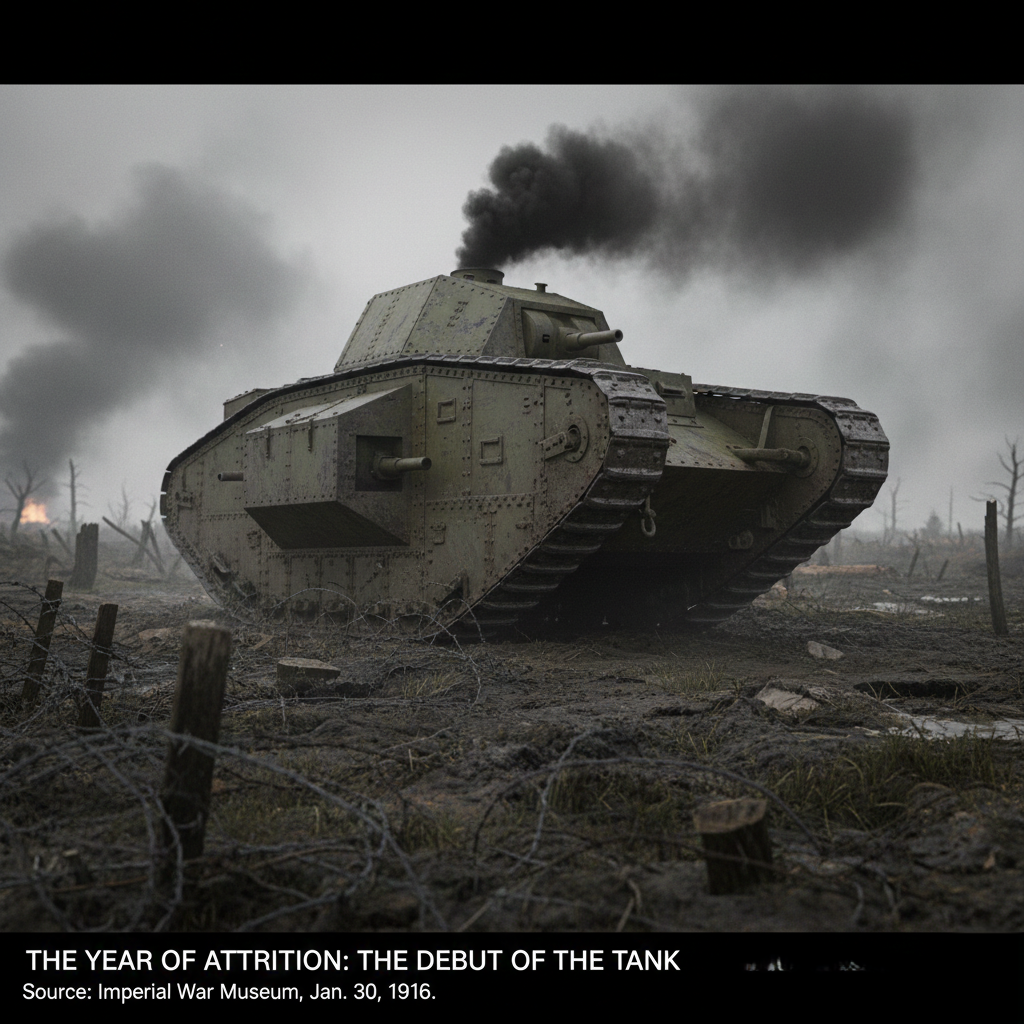
By 1916, the war had become a battle of attrition. At Verdun, the French and Germans fought one of the bloodiest battles in human history, characterized by the phrase “They shall not pass.” To relieve pressure on the French, the British launched the Battle of the Somme, which saw the first use of the tank.
The Eastern Front remained fluid but equally deadly, with the Russian Brusilov Offensive inflicting massive casualties on Austro-Hungarian forces. Meanwhile, the Battle of Jutland—the war’s only major naval engagement—confirmed British control of the North Sea despite heavy losses.
1917: Turning Points
1917 was a year of profound change. In Russia, the pressure of the war led to revolution, the abdication of the Tsar, and eventually a peace treaty with the Central Powers that allowed Germany to move its Eastern armies to the West.
However, Germany’s gamble on unrestricted submarine warfare and the interception of the Zimmerman Telegram—which suggested a German-Mexican alliance against the U.S.—brought the United States into the war. Though it would take months for American resources to fully mobilize, the arrival of fresh manpower shifted the balance of power.
1918: The End of the War
Desperate for a decisive blow before American strength peaked, Germany launched the Spring Offensive of 1918. While they made significant gains, the offensive eventually stalled. The Allies, now under the supreme command of General Ferdinand Foch, launched the “Hundred Days Offensive,” breaking the Hindenburg Line and forcing a general German retreat.
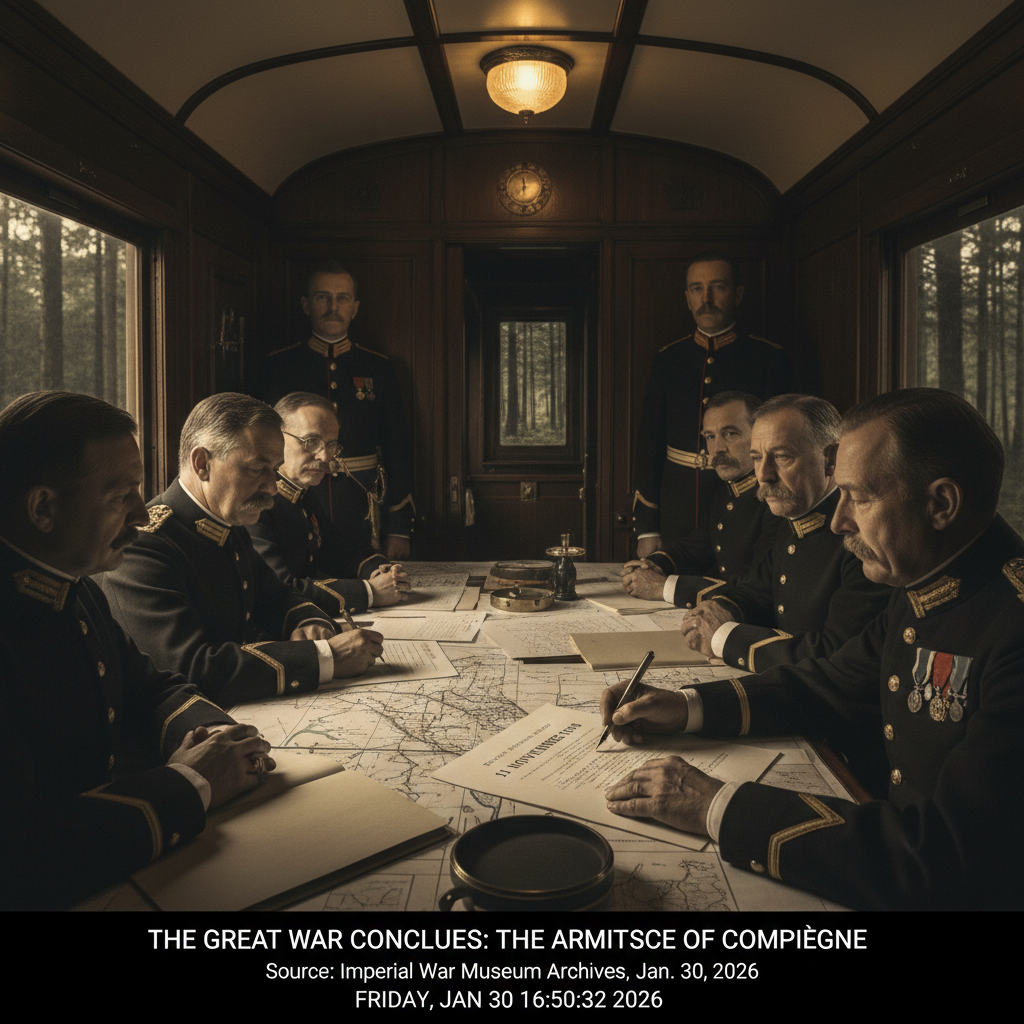
With the collapse of the Central Powers—Bulgaria, the Ottoman Empire, and Austria-Hungary—Germany was left alone. On November 11, 1918, an armistice was signed, bringing the fighting to an end at 11:00 a.m.
The Legacy of Versailles
The war officially concluded with the Treaty of Versailles in 1919. The map of Europe was redrawn, new nations were born, and the League of Nations was established to prevent future conflicts. However, the harsh terms imposed on Germany and the carving up of the Middle East sowed the seeds of future discord. The Great War had ended, but its shadows would linger for decades to come.













Leave a comment