



In the mid-90s, the CDC and Kaiser Permanente discovered an exposure that dramatically increases the risk for seven out of ten of the leading causes of death in the United States.
This exposure isn’t a pesticide or a chemical—it is Childhood Trauma. As Dr. Nadine Burke Harris explains, severe adversity in childhood “gets under our skin” and changes our physiology forever.
The ACE Study: Understanding the “Dose”
The Adverse Childhood Experiences (ACE) Study surveyed 17,500 adults about their history of exposure to trauma, including abuse, neglect, and household dysfunction (like parental mental illness or substance abuse).
The results revealed a terrifying “dose-response” relationship: the higher your ACE score, the worse your health outcomes.
| ACE Score | Increased Risk Factor |
| Score of 4+ | 2.5x risk of COPD and Hepatitis; 12x risk of suicidality. |
| Score of 7+ | 3x lifetime risk of lung cancer; 3.5x risk of heart disease. |
| General Impact | High doses lead to a 20-year difference in life expectancy. |
The Biology of Toxic Stress
For a long time, these health issues were dismissed as “bad behavior”—the result of drinking or smoking to cope with a rough childhood. However, the science shows that the trauma itself changes the body.
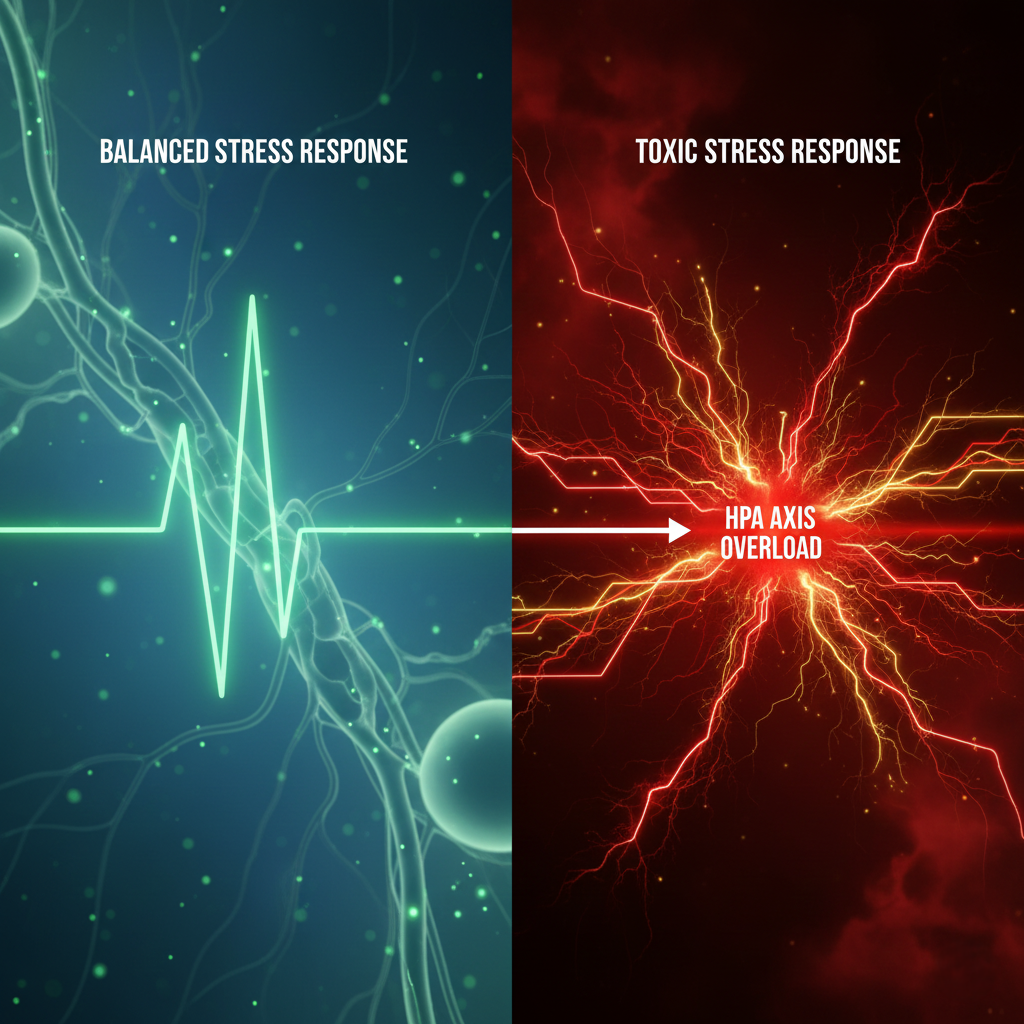
When a child experiences severe, pervasive threats, their “fight or flight” response—the Hypothalamic-Pituitary-Adrenal (HPA) axis—is activated over and over again. This is called Toxic Stress.
- Brain Structure: High doses of adversity inhibit the prefrontal cortex (impulse control) and over-activate the amygdala (the brain’s fear center).
- Immune System: Constant stress hormones like adrenaline and cortisol damage the developing immune and hormonal systems.
- DNA: Trauma even affects how our DNA is read and transcribed.
Treatment and Prevention: A Movement for Healing
Dr. Burke Harris argues that since we understand the mechanism of the disease, we must use the science for treatment. At the Center for Youth Wellness, this means a new clinical protocol:
- Routine Screening: Every child is screened for ACEs during regular physicals.
- Multidisciplinary Teams: Reducing the “dose” of adversity through home visits, mental health care, and holistic nutrition.
- Public Education: Teaching parents about toxic stress the same way we teach them about lead poisoning or electrical outlets.

Conclusion: It Applies to All of Us
ACEs are not just an issue for “those kids in those neighborhoods.” The original study was 70% Caucasian and 70% college-educated.
The single greatest unaddressed public health threat today is Adverse Childhood Experiences. By looking the problem in the face and using the science of prevention, we can begin to interrupt the progression from early adversity to early death.














Leave a comment