


Introduction: The Monster in the Lake
For billions of years, a microscopic war has raged in the water—one usually harmless to humans. But there is one exception that stars in the most terrifying headlines: Naegleria fowleri, the brain-eating amoeba.
This microscopic predator is one of the deadliest parasites on Earth. It doesn’t hunt humans on purpose; it’s just looking for bacteria. But if it accidentally finds its way up your nose, it transforms from a harmless blob into an unstoppable killing machine with a 97% fatality rate.
How does something so small defeat the human immune system so easily?
👃 The Entry: A Splash of Water
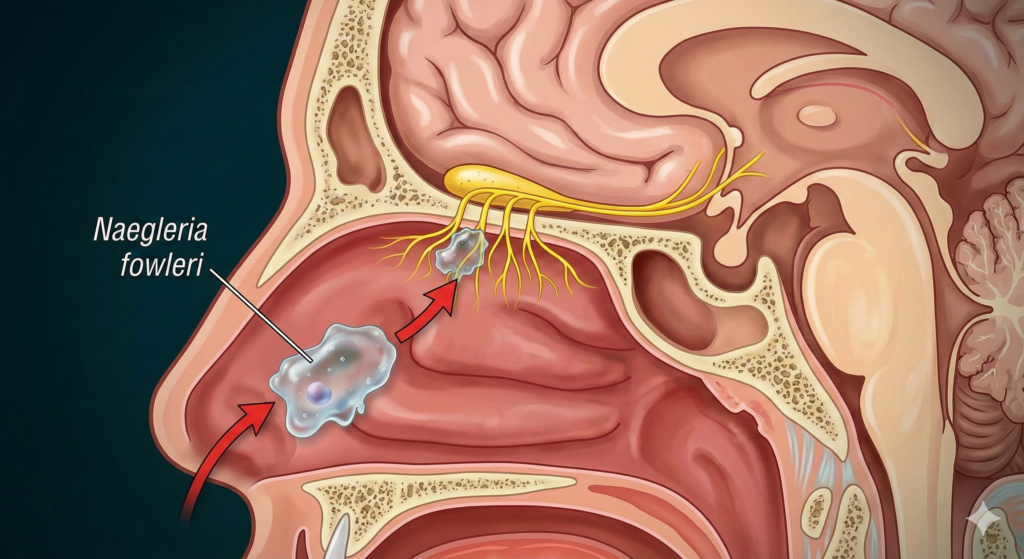
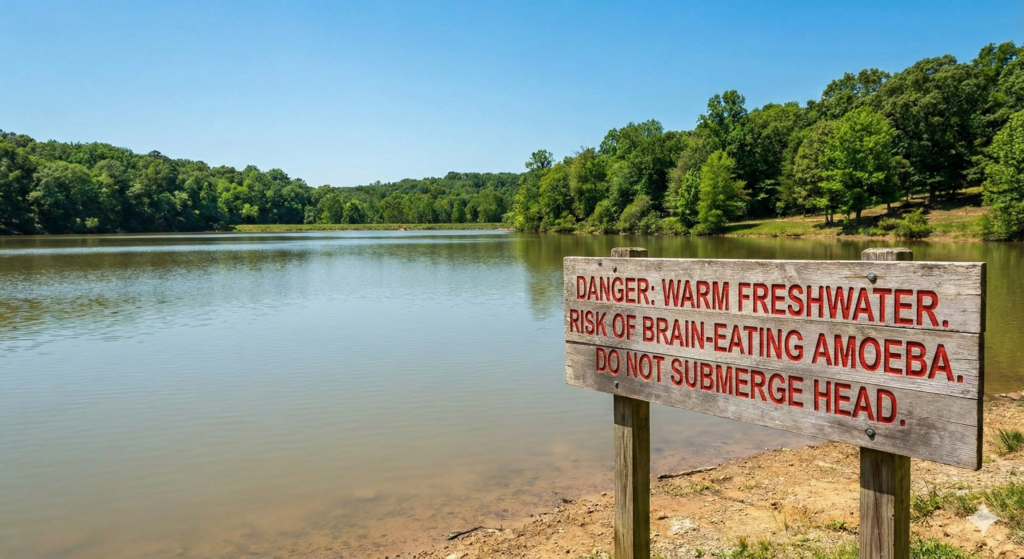
Naegleria fowleri thrives in warm freshwater: lakes, rivers, hot springs, and even poorly maintained swimming pools. Most of the time, contact is harmless. The danger begins only when water splashes high up into your nose.
Inside your nose, the amoeba stumbles upon your olfactory nerve cells. Through sheer evolutionary bad luck, the amoeba has receptors that are irresistibly attracted to the chemical signals your nerves use. It follows this signal like a moth to a flame, climbing your nerves directly into your brain.
🧠 The Invasion: Why Your Immune System Fails
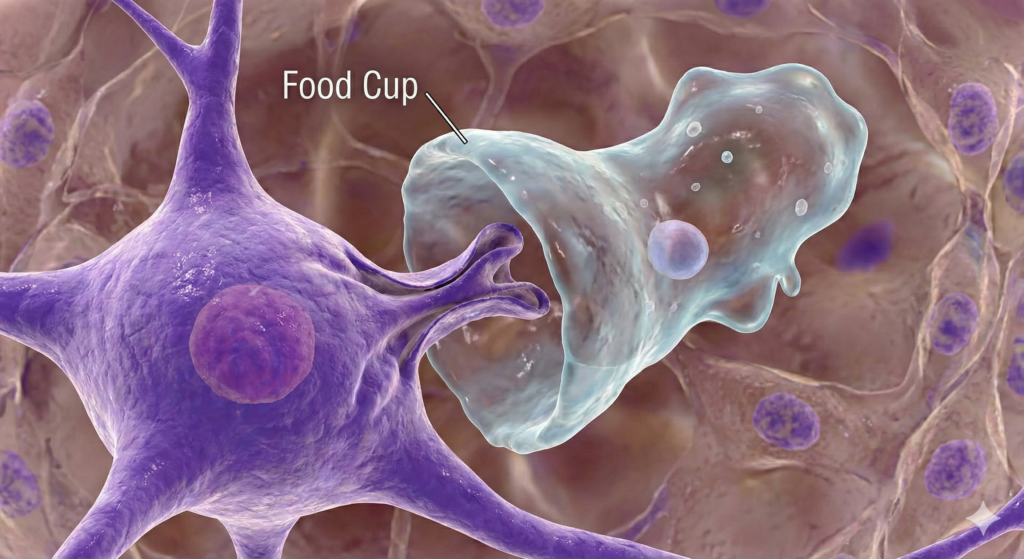
Once inside the brain, the amoeba realizes it has found an all-you-can-eat buffet. It uses terrifying structures called food cups—giant, eerie mouths—to rip chunks out of your brain cells while they are still alive.
The Failed Defense
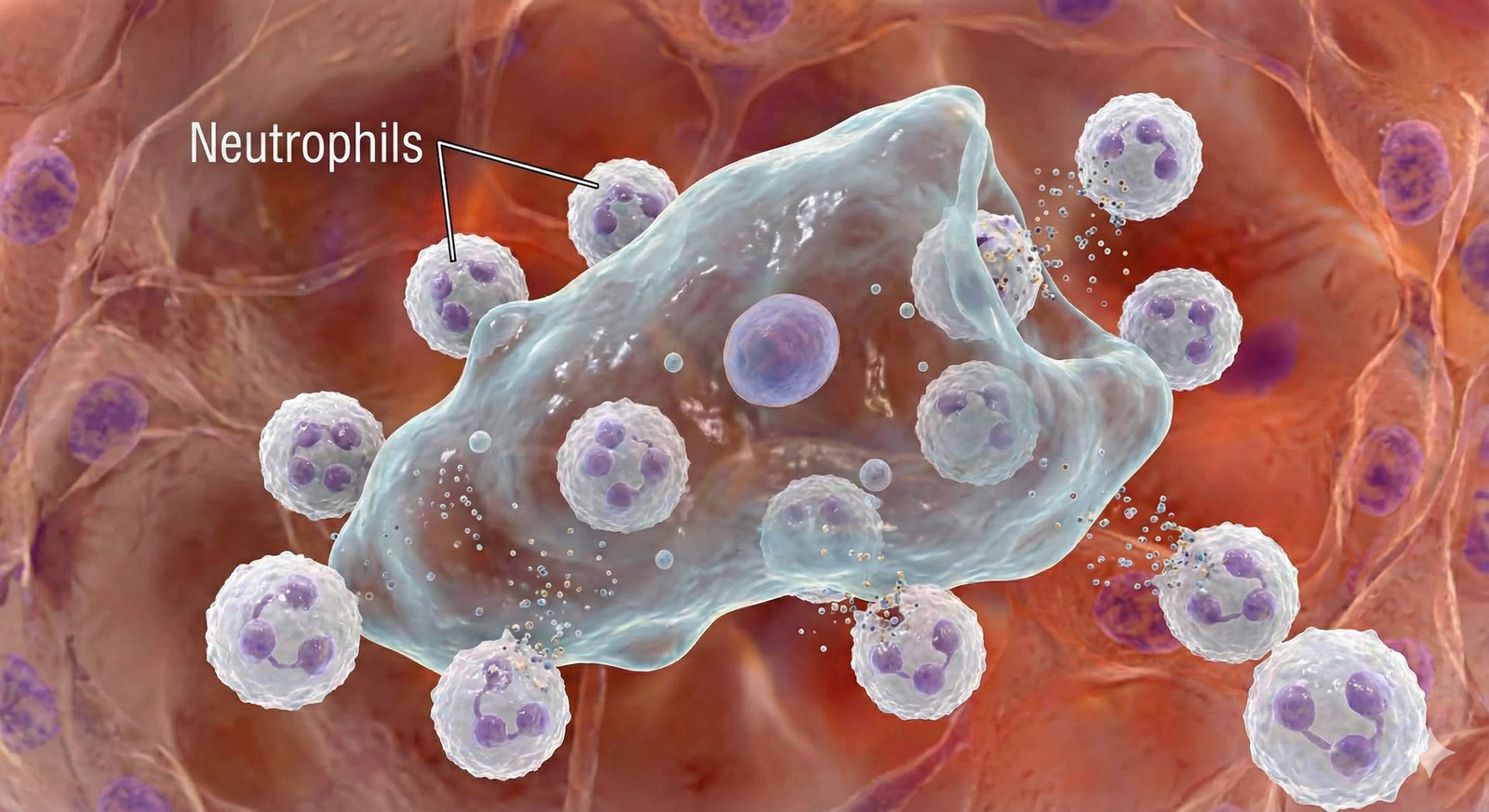
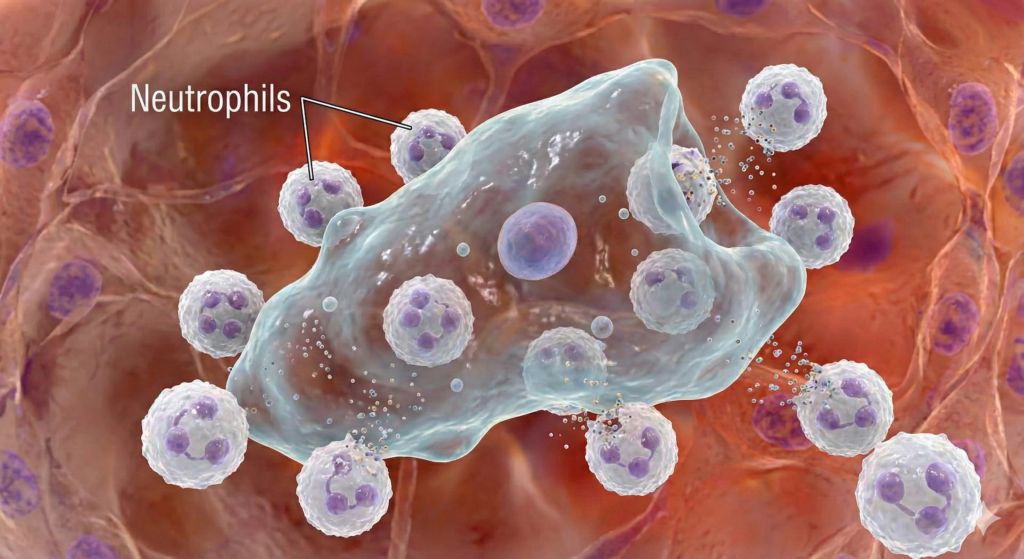
Your immune system notices the massacre and sends in its “SWAT team”: Neutrophils. They swarm the amoeba, but it is too big and too tough. The amoeba fights back, killing the immune cells and causing massive inflammation. Your brain swells, and with nowhere to expand inside your skull, the pressure becomes fatal.
⚠️ Symptoms & How to Stay Safe
The infection moves frighteningly fast, usually killing the patient within a week. While the disease is horrific, it is incredibly rare.
Prevention Tips:
- Avoid diving or splashing in warm, stagnant freshwater.
- Use nose clips when swimming in lakes or rivers.
- Ensure your swimming pools are properly chlorinated.
🔮 Conclusion: A Rare but Deadly Accident
Naegleria fowleri isn’t evil; it’s just a biological accident. It’s a reminder that nature is full of ancient, powerful organisms that have no interest in us—until we cross their path.
Stay safe, enjoy the water, but maybe keep your nose dry next time you visit a warm lake.















Leave a comment