


The 7 Articles of Impeachment: A Comprehensive Accusation
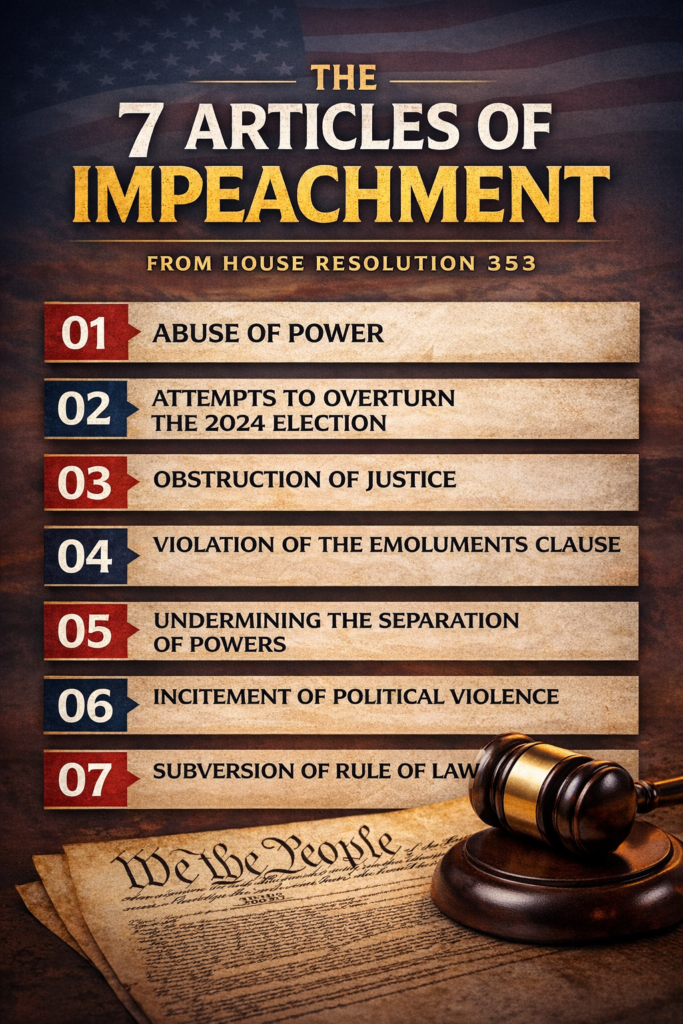
At the heart of this impeachment is House Resolution 353, introduced in April 2025. Unlike previous impeachments, this resolution meticulously details seven distinct grounds for removal, painting a stark picture of a presidency operating outside constitutional constraints.
- Obstruction of Justice: Allegations of blocking investigations into himself and his allies.
- Usurpation of Congressional Spending Power: Appropriating authority reserved for the legislative branch.
- Abuse of Trade Powers: Improper use of tariffs and international aggression.
- Violation of First Amendment Rights: The alleged suppression of critics’ speech.
- Creating an Unlawful Office: Operating offices not authorized by statute.
- Bribery and Corruption: Questionable exchanges of favors and misuse of authority.
- Tyranny: The culminating charge, described as the exercise of power without constitutional constraint.
The Iran Strikes and the War Powers Clause

Adding to the fire is House Resolution 537, which focuses specifically on Trump’s unauthorized military strikes on Iranian nuclear sites in June 2025. The resolution accuses the President of launching an unconstitutional war in direct violation of the War Powers Clause, which reserves the power to declare war exclusively for Congress. While the House initially tabled this resolution, it has fueled a broader narrative of a slide toward autocratic rule.
The Supreme Court and Presidential Immunity
A critical backdrop to this impeachment is the Supreme Court’s landmark ruling on presidential immunity. The Court established that presidents possess absolute immunity from criminal prosecution for “core official acts”. This ruling led to the dismissal of the last active criminal case against Trump—the Georgia election subversion case.
With no pending criminal cases, the onus of accountability has shifted decisively to Congress through impeachment and to the electorate in the upcoming 2026 midterms.
Outrage and Celebration: The President Reacts

Predictably, Donald Trump has characterized the impeachment as an “illegal coup” and labeled his proponents “traitors”. Simultaneously, he has framed the Supreme Court’s immunity ruling as a “total exoneration”. This fusion of triumph over the courts and fury toward Congress has intensified the national divide, making the 2026 elections a pivotal test for the future of American self-governance.
















Leave a comment